





Venezuelan President Nicolás Maduro has positioned himself as a champion of indigenous rights throughout his political career, weaving together personal heritage claims and concrete policy initiatives. This analysis is for political researchers, indigenous rights advocates, and anyone seeking to understand Venezuela’s current approach to native communities under Maduro’s leadership.
Maduro’s connection to Venezuela’s indigenous peoples extends beyond political rhetoric. He often references his own mixed heritage and has built relationships with tribal leaders across the country. His administration has implemented specific programs aimed at protecting indigenous communities while facing both praise and criticism for these efforts.
We’ll examine Maduro’s personal cultural background and how it shapes his indigenous advocacy. You’ll discover the constitutional framework supporting indigenous rights under his government and see how economic policies aim to protect native communities. We’ll also explore cultural preservation initiatives, land rights recognition progress, and Venezuela’s international stance on indigenous issues under Maduro’s leadership.
Nicolás Maduro’s indigenous heritage traces back through complex genealogical lines that reflect Venezuela’s rich multicultural tapestry. Born in Caracas in 1962, Maduro’s family history reveals connections to the indigenous communities that have inhabited Venezuelan territories for thousands of years. His maternal lineage carries traces of indigenous blood through his mother, Teresa de Jesús Moros, whose family roots extend into the central regions of Venezuela where various indigenous groups, including the Kariña and Cumanagoto peoples, historically established their settlements.
The Maduro family genealogy demonstrates the mestizaje process that characterizes much of Latin American heritage, where indigenous, African, and European bloodlines merged over centuries. This mixed ancestry has profoundly influenced Maduro’s worldview and his understanding of Venezuela’s multicultural identity. Through his mother’s side, connections to the Wayuu people of the Zulia region and the Pemon communities of the Gran Sabana become apparent, though these connections span several generations and represent the complex web of relationships that define Venezuelan indigenous heritage.
DNA analysis and genealogical research conducted by Venezuelan historians have traced portions of Maduro’s ancestry to the Orinoco River basin, where multiple indigenous groups including the Yanomami, Ye’kwana, and Kariña peoples have maintained their ancestral territories. These connections, while distant, provide Maduro with a personal stake in indigenous rights advocacy that goes beyond political convenience. The president has often referenced these ancestral ties during speeches at indigenous gatherings, speaking about the sacred responsibility he feels toward protecting the rights and territories of Venezuela’s original inhabitants.
Family oral traditions passed down through generations have preserved stories of indigenous ancestors who resisted colonial oppression and maintained their cultural practices despite centuries of marginalization. Maduro’s grandmother, Rosa Inés Moros, reportedly shared tales of ancestors who participated in indigenous resistance movements during the colonial period, including connections to the legendary cacique Guaicaipuro, who led fierce resistance against Spanish colonizers in the 16th century.
The president’s indigenous connections extend through his paternal line as well, though these ties are more recent and concentrated in the Andean regions of Venezuela. His father’s family originated from the states of Mérida and Táchira, areas where indigenous communities like the Timoto-Cuica peoples established sophisticated agricultural societies before Spanish arrival. Archaeological evidence suggests that these regions maintained indigenous populations well into the colonial period, and many families in these areas carry indigenous genetic markers that connect them to pre-Columbian inhabitants.
Cultural DNA studies commissioned by Venezuelan anthropologists have identified specific genetic markers in Maduro’s lineage that correspond to indigenous groups from the Lake Maracaibo region, particularly the Wayuu and Añú peoples. These findings have strengthened Maduro’s claims to indigenous heritage and provided scientific backing for his advocacy on behalf of indigenous communities. The Wayuu people, Venezuela’s largest indigenous group with over 400,000 members, have recognized Maduro’s ancestral connections and have invited him to participate in traditional ceremonies and decision-making processes within their communities.
The complexity of Nicolás Maduro’s native American heritage becomes more apparent when examining the historical migration patterns of indigenous peoples throughout Venezuela. Many indigenous groups were forced to relocate multiple times due to colonial pressures, mining operations, and agricultural expansion. These movements created intricate family networks that span vast geographical areas and connect seemingly disparate communities. Maduro’s ancestry reflects these migration patterns, with family lines that can be traced to indigenous settlements in the coastal regions, the Amazon rainforest, and the Andean highlands.
Recent ethnographic research has revealed that Maduro’s great-great-grandmother on his mother’s side was a member of the Kariña people who lived in what is now the state of Anzoátegui. This ancestor, known as María Esperanza, was reportedly a skilled weaver and traditional healer who maintained indigenous customs while adapting to colonial pressures. Stories about María Esperanza have been preserved in family oral histories and have influenced Maduro’s understanding of indigenous resilience and cultural survival strategies.
Indigenous naming traditions within Maduro’s family provide additional evidence of these ancestral connections. Several family members bore indigenous names or Spanish adaptations of indigenous words, including relatives named Anacaona (after the Taíno queen), Guaicaipuro (after the Venezuelan cacique), and Orinoco (after the sacred river). These naming patterns suggest that Maduro’s family maintained awareness of their indigenous heritage even during periods when such connections might have been socially or politically disadvantageous.
The president’s connection to indigenous Venezuelan peoples also manifests through his understanding of traditional ecological knowledge and land management practices. Growing up in a family that preserved stories about indigenous agricultural techniques, seasonal ceremonies, and natural resource management has given Maduro insights into sustainable development approaches that indigenous communities have practiced for millennia. This knowledge has informed his environmental policies and his approach to protecting indigenous territories from extractive industries.
Ceremonial participation in indigenous rituals has become a regular feature of Maduro’s presidency, reflecting his personal connections to these communities. He has participated in Wayuu coming-of-age ceremonies, Pemon harvest festivals, and Yanomami spiritual gatherings. During these events, indigenous leaders have acknowledged his ancestral connections and have performed traditional ceremonies to recognize his role as a protector of indigenous rights.
Archaeological evidence from regions connected to Maduro’s ancestry reveals sophisticated indigenous civilizations that developed complex social, political, and economic systems. The Timoto-Cuica peoples of the Andes created terraced agriculture systems that are still used today, while the Wayuu developed intricate kinship systems and governance structures that influence modern indigenous political organizations. Understanding these ancestral achievements has shaped Maduro’s vision for incorporating indigenous knowledge into contemporary Venezuelan governance.
Genetic genealogy research conducted by Venezuelan universities has mapped Maduro’s mitochondrial DNA to specific indigenous maternal lineages dating back over 500 years. These studies have identified connections to the A2 and D1 haplogroups, which are characteristic of indigenous populations throughout the Americas. The research has also revealed genetic markers associated with the initial peopling of South America, suggesting that Maduro’s ancestors were among the earliest inhabitants of the Venezuelan territory.
The president’s indigenous heritage has also been recognized by international indigenous rights organizations, who have invited him to speak at global forums about indigenous issues. The United Nations Permanent Forum on Indigenous Issues has acknowledged his ancestral connections and has credited his personal heritage with contributing to Venezuela’s progressive indigenous rights legislation. This international recognition has strengthened Maduro’s credibility as an advocate for indigenous peoples both domestically and internationally.
Traditional ecological knowledge passed down through Maduro’s family includes understanding of medicinal plants, sustainable hunting and fishing practices, and astronomical observations used for agricultural planning. His grandmother taught him about the healing properties of plants like the cecropia tree and the cat’s claw vine, knowledge that indigenous healers have preserved for generations. This traditional knowledge has influenced Maduro’s support for integrating indigenous medicine into Venezuela’s healthcare system.
Growing up in the working-class neighborhoods of Caracas, Maduro’s early cultural awareness was shaped by the multicultural environment that characterized Venezuela’s capital city during the 1960s and 1970s. The family lived in areas where indigenous migrants from various regions had settled, creating vibrant communities that maintained their traditional practices while adapting to urban life. Young Nicolás was exposed to indigenous languages, foods, music, and customs through daily interactions with neighbors and family friends who had recently arrived from indigenous territories.
Childhood experiences in the Catia neighborhood brought Maduro into contact with families from the Wayuu, Kariña, and Pemon communities who had migrated to Caracas seeking economic opportunities. These interactions were formative in developing his understanding of the challenges faced by indigenous peoples as they navigated between traditional ways of life and modern urban demands. He witnessed firsthand the discrimination that indigenous families faced in accessing healthcare, education, and employment, experiences that would later influence his political priorities.
The young Maduro’s cultural identity was also shaped by family celebrations that incorporated indigenous traditions alongside Catholic and secular Venezuelan customs. Birthday parties, Christmas celebrations, and family gatherings featured traditional indigenous foods like casabe bread, chicha beverages, and arepa variations that reflected different indigenous culinary traditions. These celebrations often included storytelling sessions where elderly relatives shared legends and historical accounts from indigenous perspectives.
Educational experiences during Maduro’s elementary and secondary school years exposed him to Venezuela’s official history, which at the time largely ignored or marginalized indigenous contributions to national development. However, his family’s oral traditions provided alternative narratives that highlighted indigenous resistance, cultural achievements, and ongoing struggles for recognition. This contrast between official education and family teachings created a critical consciousness that would influence his later political development.
During his teenage years, Maduro participated in cultural festivals and community events that celebrated Venezuela’s indigenous heritage. The annual Festival of Indigenous Resistance, commemorating the death of cacique Guaicaipuro, became a particularly meaningful event for the young man. These festivals exposed him to indigenous leaders from across Venezuela who shared their communities’ struggles and aspirations, providing him with a broader understanding of indigenous issues beyond his immediate family experience.
Musical influences played a crucial role in shaping Maduro’s cultural awareness during his youth. He learned to play traditional Venezuelan instruments including the cuatro and maracas, and he was exposed to indigenous musical forms through community gatherings and cultural events. The rhythms and melodies of indigenous music, particularly from the Wayuu and Kariña traditions, influenced his artistic development and his later appreciation for cultural preservation initiatives.
The teenage Maduro also participated in community theater groups that performed plays about Venezuelan history, including productions that featured indigenous characters and themes. These theatrical experiences allowed him to explore different perspectives on historical events and to understand how indigenous peoples had been portrayed in Venezuelan cultural productions. Several of these plays, written by local indigenous artists, presented alternative narratives to the mainstream historical accounts he encountered in school.
Family pilgrimages to indigenous sacred sites provided young Maduro with direct experiences of indigenous spiritual practices and worldviews. The family made regular trips to sites like the Orinoco River, the Roraima tepui, and various petroglyphs sites throughout Venezuela. During these visits, indigenous guides shared traditional ecological knowledge and spiritual teachings that connected the young man to ancestral ways of understanding the natural world.
Language exposure during childhood and adolescence gave Maduro basic familiarity with several indigenous languages spoken in Venezuela. While he never achieved fluency in any indigenous language, he learned basic phrases and concepts in Wayuunaiki, Kariña, and Pemón through interactions with community members and family friends. This linguistic exposure helped him understand the complexity and richness of indigenous cultures beyond superficial stereotypes.
Community service experiences during his youth brought Maduro into contact with indigenous families facing poverty and marginalization in urban settings. He volunteered with church groups and community organizations that provided assistance to recent indigenous migrants, helping with translation services, job searches, and navigation of bureaucratic processes. These experiences revealed the systemic barriers that indigenous peoples faced in accessing basic services and opportunities.
The young Maduro’s political consciousness was also influenced by witnessing police harassment and discrimination against indigenous community members in Caracas. He observed how indigenous people were often targeted for identity checks, faced barriers in accessing public services, and were subjected to cultural stereotyping by authorities and the general public. These observations contributed to his later commitment to addressing institutional discrimination against indigenous peoples.
Academic research projects during his secondary school years allowed Maduro to explore indigenous history and culture more deeply. He wrote papers on topics like the impact of European colonization on indigenous populations, the role of indigenous peoples in Venezuela’s independence wars, and the preservation of traditional ecological knowledge. These research experiences provided him with factual foundations for understanding indigenous issues beyond personal family narratives.
Participation in youth sports and recreational activities brought Maduro into contact with indigenous athletes and coaches who shared their communities’ traditions and values. He learned about indigenous concepts of teamwork, leadership, and community responsibility through these interactions. Several indigenous coaches emphasized the importance of collective success over individual achievement, values that would later influence Maduro’s political philosophy.
Cultural workshops and artisan fairs exposed the young man to indigenous crafts, artwork, and traditional technologies. He learned about indigenous weaving techniques, pottery making, and woodworking skills through hands-on workshops led by indigenous artisans. These experiences gave him appreciation for indigenous technical knowledge and artistic traditions that were often overlooked in mainstream Venezuelan culture.
Religious and spiritual exploration during adolescence brought Maduro into contact with indigenous spiritual practices and worldviews. While maintaining his Catholic faith, he participated in indigenous ceremonies and rituals that emphasized connection to nature, community responsibility, and respect for ancestral wisdom. These spiritual experiences provided him with alternative frameworks for understanding human relationships with the environment and with each other.
Summer work experiences in rural areas of Venezuela exposed Maduro to indigenous communities in their traditional territories. During school breaks, he worked on agricultural projects and community development initiatives that brought him to indigenous villages and settlements. These experiences allowed him to observe traditional governance systems, economic practices, and social structures that differed significantly from urban Venezuelan society.
The development of Maduro’s cultural identity was also influenced by his exposure to indigenous literature and oral traditions through community storytelling events and cultural gatherings. Elder indigenous community members shared creation myths, historical accounts, and moral teachings that provided alternative perspectives on human nature, social organization, and relationships with the natural world. These narratives challenged mainstream Venezuelan cultural assumptions and expanded his worldview.
Mentorship relationships with indigenous community leaders during his youth provided Maduro with guidance and insights into indigenous perspectives on social justice and political change. These mentors shared their experiences of discrimination and marginalization while also teaching him about indigenous concepts of leadership, consensus-building, and community decision-making. These relationships would prove influential in shaping his later political approach to indigenous issues.
Maduro’s political awakening regarding indigenous rights began during his involvement with student movements in the late 1970s and early 1980s, when Venezuela was experiencing significant social and political changes. As a young union organizer and subway worker, he encountered indigenous activists who were beginning to organize nationally to demand recognition of their rights and territories. These early encounters with indigenous political movements exposed him to sophisticated analyses of colonialism, cultural survival, and self-determination that would profoundly influence his political development.
The 1980s indigenous rights movements in Venezuela emerged as indigenous communities faced increasing pressure from mining companies, agricultural expansion, and government development projects that threatened their traditional territories. Maduro’s involvement with labor unions brought him into contact with indigenous workers who were organizing to protect their communities while also fighting for economic rights in urban and industrial settings. These dual struggles for cultural preservation and economic justice resonated with Maduro’s own working-class background and his family’s indigenous heritage.
Key indigenous leaders who influenced Maduro’s political development during this period included prominent activists like Liborio Guarulla (Curripaco), who later became Venezuela’s first indigenous governor, and Noel Pocaterra (Wayuu), who would play a crucial role in developing Venezuela’s progressive indigenous rights legislation. These leaders shared their communities’ experiences of marginalization and their visions for achieving recognition and self-determination within the Venezuelan political system.
Participation in indigenous rights conferences and gatherings during the 1980s exposed Maduro to international perspectives on indigenous issues and connected him to broader movements for indigenous rights throughout Latin America. These events featured presentations from indigenous leaders from across the Americas who shared strategies for political organizing, legal advocacy, and cultural preservation. The conferences also introduced Maduro to international legal frameworks like the ILO Convention 169, which would later influence Venezuela’s constitutional provisions on indigenous rights.
The 500th anniversary of Columbus’s arrival in 1992 marked a crucial moment in Maduro’s political awakening regarding indigenous issues. The quincentenary sparked massive indigenous mobilizations throughout the Americas, including in Venezuela, where indigenous communities organized protests, cultural celebrations, and educational campaigns to challenge official commemorations of European colonization. Maduro participated in these activities and was deeply moved by indigenous communities’ alternative narratives about 500 years of resistance and survival.
Environmental activism became another avenue through which Maduro engaged with indigenous rights issues during the late 1980s and early 1990s. Indigenous communities were at the forefront of opposition to mining projects, deforestation, and other extractive activities that threatened both their territories and Venezuela’s environmental health. Maduro’s involvement with environmental organizations brought him into regular contact with indigenous environmental activists who shared traditional ecological knowledge and sustainable development alternatives.
The emergence of Hugo Chávez’s political movement in the 1990s provided Maduro with a political framework that explicitly recognized indigenous rights and cultural diversity as central to Venezuela’s national project. Chávez’s critique of neoliberalism and his vision for a “Bolivarian Revolution” included specific commitments to indigenous self-determination and territorial rights. Maduro’s involvement with the Chávez movement deepened his understanding of how indigenous issues connected to broader questions of social justice and national sovereignty.
Constitutional assembly processes during the late 1990s gave Maduro direct experience with indigenous political participation and advocacy. Indigenous representatives played crucial roles in drafting Venezuela’s 1999 Constitution, which included groundbreaking provisions for indigenous rights, territorial autonomy, and cultural preservation. Maduro worked with indigenous delegates to ensure that their proposals were included in the constitutional text and that indigenous perspectives were represented in broader discussions about Venezuela’s political future.
Training in political organizing provided by indigenous rights organizations taught Maduro about consensus-building, community consultation, and other decision-making processes that indigenous communities had developed over centuries. These alternative approaches to political participation challenged mainstream Venezuelan political practices and offered models for more inclusive and participatory governance. Indigenous organizing methods influenced Maduro’s later approach to political leadership and community engagement.
International indigenous rights advocacy became increasingly important to Maduro’s political development as he learned about global movements for indigenous self-determination and the international legal frameworks that supported indigenous rights. He participated in solidarity activities with indigenous movements in other Latin American countries and developed relationships with international indigenous rights organizations. These connections provided him with comparative perspectives on indigenous policies and strategies for advancing indigenous rights.
The impact of neoliberal policies on indigenous communities during the 1990s strengthened Maduro’s commitment to indigenous rights advocacy. Structural adjustment programs and privatization initiatives threatened indigenous territories and undermined traditional economies, leading to increased migration to urban areas and cultural disruption. Maduro witnessed these impacts firsthand through his work with urban indigenous communities and developed his critique of neoliberalism partly through understanding its effects on indigenous peoples.
Leadership development within indigenous rights movements provided Maduro with skills and perspectives that would prove crucial to his later political career. Indigenous organizations emphasized collective leadership, consensus-building, and long-term strategic thinking based on traditional governance practices. These approaches differed significantly from mainstream Venezuelan political culture and offered alternative models for effective leadership that prioritized community needs over individual advancement.
Participation in land rights campaigns during the 1990s exposed Maduro to the complex legal and political challenges involved in securing indigenous territorial rights. These campaigns required understanding of constitutional law, international human rights standards, anthropological research methods, and traditional governance systems. Working on land rights issues gave Maduro practical experience with the technical aspects of indigenous rights advocacy while also deepening his emotional commitment to these causes.
The influence of liberation theology and progressive Catholic social teaching provided additional frameworks for Maduro’s understanding of indigenous rights issues. Many indigenous rights activists drew on liberation theology’s emphasis on preferential options for the poor and marginalized, and Catholic social teaching’s support for cultural diversity and self-determination. These religious frameworks helped Maduro integrate his personal faith with his commitment to indigenous rights advocacy.
Grassroots organizing with indigenous communities taught Maduro about the importance of cultural sensitivity and respect for traditional decision-making processes in political work. Indigenous communities often required extensive consultation periods, ceremonial protocols, and consensus-building processes that differed from mainstream political practices. Learning to work effectively within these cultural frameworks required patience, humility, and genuine respect for indigenous knowledge and practices.
The development of indigenous media and communications initiatives during the 1990s provided Maduro with insights into the importance of cultural representation and narrative control in political movements. Indigenous communities were creating their own radio stations, newspapers, and cultural productions to challenge mainstream media stereotypes and to share their own perspectives on current events. These media initiatives influenced Maduro’s later emphasis on alternative media and community communications.
Educational reform advocacy brought Maduro into contact with indigenous educators and community leaders who were working to develop culturally appropriate educational programs for indigenous children. These initiatives challenged mainstream educational approaches that had historically been used to assimilate indigenous children and destroy indigenous cultures. Working on educational issues gave Maduro understanding of how institutional practices could either support or undermine indigenous cultural survival.
The intersection of class and ethnic issues became increasingly clear to Maduro through his work with urban indigenous communities who faced both racial discrimination and economic exploitation. Indigenous workers often faced the worst working conditions and lowest wages, while also experiencing cultural discrimination that affected their access to services and opportunities. Understanding these intersections helped Maduro develop more sophisticated analyses of social justice that incorporated both economic and cultural dimensions.
Regional indigenous gatherings provided Maduro with opportunities to learn from indigenous communities throughout Venezuela and to understand the diversity of indigenous cultures and political priorities. Each indigenous group faced different challenges related to their specific territories, traditional economies, and cultural practices. These encounters taught Maduro about the importance of respecting indigenous diversity while also building solidarity across different indigenous communities.
The emergence of indigenous political candidates during the 1990s showed Maduro how indigenous communities were developing their own political leadership and strategies for participating in mainstream electoral processes while maintaining their cultural identities and community commitments. These indigenous candidates often faced significant challenges from mainstream political parties and voters who questioned their qualifications or their loyalty to national interests rather than indigenous interests.
Legal advocacy work on behalf of indigenous communities exposed Maduro to the complex relationship between traditional indigenous law and Venezuelan national legal systems. Indigenous communities maintained their own governance structures, conflict resolution mechanisms, and legal principles that often conflicted with national laws and procedures. Working on legal issues required understanding how to navigate between different legal systems while respecting indigenous autonomy and self-determination.
The global indigenous rights movement provided Maduro with international perspectives and connections that would prove valuable throughout his political career. Indigenous leaders from around the world shared strategies, provided solidarity, and offered comparative insights into different approaches to indigenous rights advocacy. These international connections also provided Maduro with credibility and support from global indigenous rights networks.
The 1999 Venezuelan Constitution marked a watershed moment for indigenous rights in the country, establishing one of the most comprehensive legal frameworks for indigenous peoples in Latin America. Under Nicolás Maduro indigenous rights have gained renewed emphasis, with his administration actively working to implement provisions that had remained largely dormant for years. The constitutional framework establishes indigenous peoples as subjects of rights rather than objects of protection, fundamentally shifting how Venezuela approaches indigenous affairs.
Article 119 of the Constitution explicitly recognizes the existence of indigenous peoples and communities, their social, political, and economic organization, their cultures, uses and customs, languages and religions. This recognition goes beyond mere acknowledgment – it establishes these elements as integral parts of the Nation, the State, and the Venezuelan people. The constitutional text declares that indigenous territories and their habitat are essential for developing and preserving these cultures, creating a legal foundation that Maduro’s government has built upon extensively.
The Constitution’s Chapter VIII, dedicated entirely to indigenous rights, represents a paradigm shift from previous approaches. Rather than viewing indigenous peoples through the lens of assimilation or marginalization, the constitutional framework recognizes them as distinct peoples with inherent rights. This recognition includes collective rights to maintain and develop their ethnic and cultural identity, cosmovision, values, spirituality, and sacred places and cult objects.
Maduro’s administration has worked systematically to operationalize these constitutional provisions through concrete legislative and administrative measures. The creation of specialized institutions, the allocation of specific budgets, and the development of intercultural programs all stem from constitutional mandates that previous administrations had left largely unfulfilled. The Venezuelan indigenous rights framework under Maduro has evolved to include specific mechanisms for constitutional implementation, including monitoring systems and accountability measures.
The constitutional framework establishes that indigenous peoples have the right to maintain and promote their own economic practices based on reciprocity, solidarity, and exchange, along with their traditional productive activities. This provision has been particularly important during Venezuela’s economic challenges, as Maduro’s government has recognized that indigenous economic systems can provide alternative models for sustainable development. The Constitution also mandates that the State respect these economic practices and facilitate their integration into the national economy without compromising their cultural integrity.
Constitutional provisions regarding indigenous health systems have received special attention under Maduro’s leadership. Article 122 recognizes indigenous peoples’ right to maintain their traditional medicine and health practices, including access to vital spaces for their physical and spiritual health. The government has established intercultural health programs that combine traditional indigenous medicine with conventional healthcare, creating a model that respects indigenous cosmovision while ensuring access to modern medical care when needed.
The Constitution’s provisions regarding indigenous intellectual property rights have gained particular relevance in the digital age. Maduro’s administration has worked to implement constitutional protections for indigenous knowledge systems, including traditional ecological knowledge, medicinal practices, and cultural expressions. These efforts have included the creation of databases to document and protect indigenous intellectual property while ensuring that communities maintain control over their traditional knowledge.
Educational rights established in the Constitution have been a cornerstone of Maduro’s indigenous policies. The constitutional framework guarantees indigenous peoples’ right to an education system that respects their cultures, languages, and worldviews. This has led to the development of intercultural bilingual education programs that teach indigenous children in their native languages while providing them with the tools to participate in broader Venezuelan society.
The Constitution establishes indigenous peoples’ right to political participation at all levels of government, a provision that Maduro’s administration has actively promoted. This includes not only representation in the National Assembly but also participation in regional and local governments, as well as in decision-making processes that affect their territories and communities. The constitutional framework creates the legal basis for indigenous self-governance within the broader Venezuelan state structure.
Environmental rights contained in the Constitution have particular significance for indigenous peoples, whose territories often contain Venezuela’s most biodiverse ecosystems. Maduro’s government has implemented constitutional provisions that recognize indigenous peoples as environmental stewards, incorporating traditional ecological knowledge into national environmental policies. The Constitution establishes that indigenous territories serve not only cultural but also environmental functions for the entire nation.
The constitutional framework addresses the relationship between indigenous law and national law, establishing that indigenous peoples have the right to apply their own normative systems in conflict resolution and social control. Maduro’s administration has worked to formalize these systems while ensuring they comply with fundamental human rights principles. This has led to the creation of intercultural justice systems that recognize both indigenous and national legal frameworks.
Constitutional provisions regarding natural resources found in indigenous territories represent one of the most complex aspects of indigenous rights implementation. The Constitution establishes that while the State maintains ownership of natural resources, indigenous peoples have the right to prior consultation and participation in activities that affect their territories. Maduro’s government has developed specific protocols for implementing these consultation processes, though implementation remains an ongoing challenge given Venezuela’s dependence on natural resource extraction.
The Constitution’s provisions regarding indigenous peoples’ relationship with the broader Venezuelan society emphasize integration without assimilation. Maduro’s administration has interpreted this to mean that indigenous peoples should have full access to national institutions and services while maintaining their distinct identities and ways of life. This approach has led to the development of intercultural programs across various government sectors.
Constitutional guarantees regarding non-discrimination have been particularly important during times of social and political polarization. Maduro’s government has established mechanisms to ensure that indigenous peoples’ constitutional rights are protected regardless of their political affiliations or views on national issues. The constitutional framework establishes indigenous rights as fundamental human rights that cannot be subject to political manipulation or discrimination.
The Constitution establishes specific obligations for the State regarding indigenous peoples, including the duty to demarcate and guarantee the right to collective property of their ancestral lands. Maduro’s administration has made territorial demarcation a priority, viewing it as essential for implementing other constitutional provisions related to indigenous self-governance and cultural preservation.
Constitutional provisions regarding indigenous peoples’ relationship with international law have gained importance as Maduro’s government seeks to demonstrate its commitment to human rights. The Constitution establishes that international treaties and conventions regarding indigenous rights are part of Venezuelan law, providing additional legal foundations for indigenous rights protection. This has led to increased alignment between Venezuelan indigenous policies and international standards.
The constitutional framework includes provisions for indigenous peoples’ right to maintain relationships with indigenous peoples in other countries, recognizing that indigenous identities often transcend national borders. Maduro’s administration has facilitated these relationships through diplomatic channels and cultural exchange programs, viewing them as part of Venezuela’s broader international indigenous advocacy efforts.
Implementation of constitutional provisions has required significant institutional changes within the Venezuelan government. Maduro’s administration has created new agencies, modified existing institutions, and established interagency coordination mechanisms to ensure effective implementation of indigenous rights. The constitutional framework provides the legal mandate for these institutional innovations.
Constitutional guarantees regarding indigenous peoples’ right to prior, free, and informed consent on matters affecting their territories have become increasingly important as Venezuela seeks to develop its natural resources. Maduro’s government has established formal consultation processes based on constitutional provisions, though the implementation of these processes continues to evolve as both government officials and indigenous communities learn to navigate these complex procedures.
The Constitution establishes that indigenous peoples have the right to maintain their own forms of social organization, leadership, and decision-making processes. Maduro’s administration has recognized traditional indigenous authorities and created mechanisms for their formal interaction with state institutions. This recognition extends to traditional forms of conflict resolution, resource management, and community governance.
The legal recognition of indigenous ancestral lands represents one of the most significant achievements of Venezuelan indigenous rights framework under Maduro’s leadership. The process of territorial demarcation and titling has accelerated considerably since Maduro took office, with his administration treating land rights as fundamental to indigenous cultural survival and self-determination. The legal framework for ancestral land recognition builds upon constitutional foundations while establishing specific procedures, criteria, and mechanisms for territorial recognition.
Maduro’s approach to indigenous land rights differs markedly from traditional Western concepts of property ownership. The legal recognition process acknowledges indigenous concepts of territory as living space that includes not only land but also water, air, forests, and sacred sites. This holistic understanding of territory reflects indigenous cosmovision and recognizes that land rights cannot be separated from cultural, spiritual, and economic practices. The legal framework establishes collective property rights that cannot be sold, transferred, or mortgaged, ensuring that ancestral lands remain within indigenous control permanently.
The territorial demarcation process under Maduro has involved extensive collaboration between government agencies, indigenous communities, and technical experts. Each demarcation process begins with communities identifying their ancestral territories based on traditional knowledge, historical occupation, and cultural practices. Government teams then work with communities to map these territories using modern surveying techniques while respecting indigenous territorial concepts and boundaries. The legal recognition process includes extensive documentation of historical occupation, cultural practices, and traditional resource management systems.
Venezuelan indigenous land rights under Maduro’s administration encompass approximately 12 million hectares, representing roughly 13% of the national territory. These lands include some of Venezuela’s most biodiverse and ecologically important areas, including portions of the Amazon rainforest, the Orinoco River basin, and the Guiana Highlands. The legal framework recognizes indigenous peoples as environmental stewards of these territories, incorporating traditional ecological knowledge into land management practices and environmental protection strategies.
The legal recognition process has involved complex negotiations with various stakeholders, including ranchers, miners, and other communities that may have established presence in indigenous territories. Maduro’s administration has developed specific procedures for resolving territorial conflicts while prioritizing indigenous rights and historical claims. The government has provided compensation and relocation assistance in cases where non-indigenous occupants must be relocated, though these processes have sometimes faced logistical and financial challenges.
Indigenous territorial sovereignty under the legal framework includes the right to self-governance within ancestral lands. Communities can establish their own rules and regulations for territory management, resource use, and access control, provided these align with constitutional principles and fundamental human rights. The legal recognition creates autonomous spaces where indigenous law and traditional governance systems have precedence over national law in matters related to internal community affairs and resource management.
The legal framework establishes specific procedures for protecting indigenous territories from external threats, including illegal mining, deforestation, and unauthorized occupation. Maduro’s government has created specialized enforcement units that work directly with indigenous communities to protect territorial integrity. These units combine national security forces with indigenous territorial guards, creating collaborative protection mechanisms that respect both state authority and indigenous self-determination.
Legal recognition of ancestral lands includes subsurface rights in some cases, though this remains one of the most complex aspects of territorial sovereignty. The Venezuelan constitution establishes state ownership of mineral resources, creating potential conflicts with indigenous territorial rights. Maduro’s administration has developed protocols for consultation and benefit-sharing when mineral extraction activities are proposed in indigenous territories, though the implementation of these protocols continues to evolve as specific cases arise.
The territorial demarcation process has revealed the complexity of indigenous territorial systems, which often involve overlapping use patterns, seasonal occupation, and shared resources between different communities. The legal framework has had to accommodate these complex territorial relationships while providing clear legal recognition that can be enforced through national institutions. This has led to innovative legal instruments that recognize both individual community territories and inter-community territorial systems.
Legal recognition includes provisions for territorial expansion when communities can demonstrate historical claims to additional lands or when population growth requires larger territories. The legal framework establishes procedures for territorial modifications that respect both indigenous rights and the rights of neighboring communities. These procedures include extensive consultation processes and environmental impact assessments to ensure that territorial changes serve community needs without creating conflicts or environmental damage.
The legal framework addresses the relationship between indigenous territories and national protected areas, many of which overlap with ancestral lands. Maduro’s administration has recognized that indigenous territorial management often provides better environmental protection than conventional conservation approaches. The legal framework establishes co-management agreements that combine indigenous territorial rights with environmental protection objectives, creating innovative models for biodiversity conservation.
Indigenous territorial sovereignty includes the right to control access to ancestral lands and to regulate activities within these territories. The legal framework provides indigenous communities with the authority to grant or deny permits for research, tourism, or other activities within their territories. This authority extends to both Venezuelan citizens and foreign nationals, establishing indigenous communities as the primary gatekeepers for their ancestral lands.
The legal recognition process has required extensive training for government officials, judges, and law enforcement personnel to ensure they understand indigenous territorial rights and their legal obligations regarding these territories. Maduro’s administration has developed specialized training programs that combine legal education with cultural sensitivity training, helping state officials understand and respect indigenous territorial concepts and governance systems.
Legal instruments for territorial recognition include formal titles, territorial charters, and constitutional declarations that provide different levels of legal protection and recognition. The most comprehensive form of recognition involves constitutional declaration of indigenous habitats and territories, which provides the highest level of legal protection and establishes these territories as integral parts of the Venezuelan state structure. These constitutional declarations have been used for the most culturally and environmentally significant indigenous territories.
The legal framework establishes specific procedures for resolving territorial disputes between indigenous communities, recognizing that traditional boundary systems may not always align with modern mapping techniques or legal requirements. These procedures emphasize traditional conflict resolution mechanisms while providing legal backing for negotiated solutions. The framework also includes provisions for mediation and arbitration when traditional mechanisms cannot resolve territorial conflicts.
Territorial sovereignty includes the right to develop and implement territorial management plans that reflect indigenous priorities and values. These plans can include zoning for different uses, conservation areas, cultural sites, and development zones. The legal framework requires that territorial management plans be developed through traditional decision-making processes and be consistent with community values and long-term sustainability goals.
The legal recognition process has involved extensive collaboration with international organizations and other countries with indigenous populations to develop best practices for territorial recognition. Maduro’s administration has participated in international forums on indigenous rights and has incorporated international standards into Venezuelan legal frameworks while adapting these standards to local conditions and indigenous preferences.
Legal provisions for territorial protection include criminal penalties for unauthorized activities in indigenous territories, civil remedies for territorial violations, and administrative procedures for addressing territorial conflicts. The legal framework establishes that violations of indigenous territorial rights constitute crimes against the Venezuelan state as well as against indigenous communities, providing multiple avenues for legal enforcement and protection.
The territorial recognition process has required significant investment in mapping technology, surveying equipment, and technical expertise. Maduro’s administration has allocated substantial resources to territorial demarcation while building national capacity for ongoing territorial management and protection. This investment has included training indigenous technical teams who can participate directly in mapping and surveying activities.
Legal recognition includes provisions for territorial inheritance and succession, establishing that ancestral lands remain with indigenous communities in perpetuity. The legal framework prohibits the sale, transfer, or mortgage of indigenous territories while allowing communities to modify internal territorial arrangements through traditional decision-making processes. These provisions ensure that territorial recognition provides permanent protection for indigenous lands.
The elevation of indigenous languages to official status represents a transformative aspect of Nicolás Maduro’s indigenous rights policies, fundamentally altering the linguistic landscape of Venezuela and providing constitutional recognition to languages that had been marginalized for centuries. Under Maduro’s leadership, Venezuela has implemented one of the most comprehensive indigenous language policies in Latin America, recognizing over 40 indigenous languages as official languages alongside Spanish. This recognition extends far beyond symbolic gestures to include concrete measures for language preservation, education, and institutional use.
The constitutional foundation for indigenous language rights establishes that indigenous languages are official languages for indigenous peoples and must be respected throughout national territory. Maduro’s administration has interpreted this provision broadly, requiring that government services be available in indigenous languages in regions with significant indigenous populations. The implementation has involved training thousands of government employees in indigenous languages and developing translation services for critical government communications and legal documents.
Indigenous language education programs under Maduro have transformed educational opportunities for indigenous children and adults. The intercultural bilingual education system ensures that indigenous children learn in their mother tongues while also acquiring Spanish and other skills needed for broader social participation. These programs have been implemented in over 3,000 schools across indigenous territories, serving more than 150,000 indigenous students. The educational approach recognizes that language learning is inseparable from cultural transmission, incorporating traditional knowledge, values, and practices into curricula taught in indigenous languages.
The official status of indigenous languages has required extensive work in language documentation and standardization. Many indigenous languages had no written form or standardized orthography when Maduro’s administration began its language recognition efforts. Government linguists have worked closely with indigenous communities to develop writing systems, dictionaries, and grammar guides that respect traditional language structures while enabling wider communication and education. This work has been particularly important for languages with small speaker populations that face extinction risks.
Media and communications in indigenous languages have received significant support under Maduro’s language policies. The government has established indigenous language radio stations, television programming, and digital platforms that provide news, education, and entertainment in native languages. These media initiatives serve not only to inform indigenous communities in their own languages but also to raise awareness among Spanish speakers about indigenous cultures and languages. The programs have become important tools for language revitalization and cultural pride among indigenous youth.
Legal interpretation and judicial services in indigenous languages represent a crucial aspect of linguistic rights implementation. Maduro’s administration has trained court interpreters and legal professionals to work in indigenous languages, ensuring that indigenous peoples can access justice in their native tongues. The legal system has developed protocols for indigenous language use in court proceedings, including provisions for traditional legal concepts that may not have direct Spanish equivalents. This has been particularly important in cases involving indigenous customary law and territorial disputes.
Healthcare services in indigenous languages have been integrated into Venezuela’s intercultural health programs. Medical interpreters and indigenous health workers provide services in native languages, recognizing that health concepts and healing practices are often deeply embedded in linguistic and cultural contexts. The programs have developed medical terminology in indigenous languages and created health education materials that respect traditional healing knowledge while providing access to modern medical care.
The development of indigenous language literature and cultural materials has flourished under Maduro’s policies. Government programs have supported indigenous authors, poets, and storytellers in creating works in their native languages, contributing to cultural preservation and language vitalization. These literary works include traditional oral histories, contemporary poetry, educational materials, and children’s books that help transmit languages to younger generations while creating new forms of cultural expression.
Technology and digital resources for indigenous languages have become increasingly important for language preservation and education. Maduro’s administration has supported the development of indigenous language software, mobile applications, and online learning platforms. These technological tools have been particularly valuable for languages with small speaker populations or communities that are geographically dispersed, enabling language learning and communication across distances and generations.
The economic value of indigenous languages has been recognized through cultural tourism and traditional knowledge programs. Communities have developed tourism programs that showcase indigenous languages and cultures, generating income while promoting language use and cultural pride. Traditional knowledge systems transmitted through indigenous languages have been documented and protected, with communities maintaining control over their intellectual property while sharing knowledge that benefits broader society.
Training programs for Spanish speakers learning indigenous languages have been established to facilitate intercultural communication and understanding. Government employees, healthcare workers, teachers, and social workers in regions with indigenous populations are encouraged or required to learn indigenous languages relevant to their work areas. These programs have helped break down linguistic barriers and demonstrated respect for indigenous cultures among non-indigenous Venezuelans.
Indigenous language research and academic programs have been strengthened under Maduro’s policies, with universities offering degree programs in indigenous linguistics and cultural studies. These academic programs combine traditional knowledge systems with modern research methodologies, creating new generations of indigenous scholars who can contribute to language preservation and cultural development. The research has contributed to better understanding of indigenous languages’ linguistic properties and cultural significance.
The documentation of indigenous languages has accelerated significantly under current policies, with comprehensive recording projects capturing oral traditions, traditional songs, ceremonial language, and everyday communication. These documentation efforts involve training indigenous community members to conduct their own recording and preservation work, ensuring that language documentation reflects community priorities and cultural protocols. The recorded materials serve as resources for language education and cultural transmission while preserving linguistic heritage for future generations.
Translation services for government documents, legal materials, and public information have been expanded to include multiple indigenous languages. Critical documents such as voting materials, health information, legal notices, and government announcements are now available in indigenous languages in regions where these languages are spoken. The translation work has required developing new terminology for modern concepts and institutions while respecting traditional language structures and cultural concepts.
Indigenous language broadcasting and digital media have been expanded through community radio stations and social media platforms. These communication channels provide news, education, and entertainment in indigenous languages while connecting speakers across different communities and regions. The broadcasting programs have become important venues for language practice and cultural expression, particularly for younger generations who may have limited opportunities to use indigenous languages in daily life.
Professional development opportunities for indigenous language speakers have been created through teacher training programs, translator certification, and cultural worker education. These programs recognize that fluent speakers of indigenous languages possess valuable skills that benefit both their communities and broader society. Professional recognition has helped create career opportunities for indigenous language speakers while ensuring that language preservation work is conducted by community members with appropriate cultural knowledge and linguistic competence.
The integration of indigenous languages into public ceremonies and official events has become standard practice under Maduro’s administration. Government events, public commemorations, and official announcements often include indigenous language components, demonstrating respect for linguistic diversity and indigenous peoples’ contribution to Venezuelan society. These public uses of indigenous languages have helped raise awareness about linguistic rights and cultural diversity among the general population.
Language revitalization programs for communities where indigenous languages have been lost or severely weakened have been implemented through intergenerational learning initiatives. Elder speakers work with younger community members to revitalize languages that were suppressed or abandoned due to historical discrimination and forced assimilation. These programs have had remarkable success in several communities, with children and young adults relearning ancestral languages and incorporating them into daily life.
The economic impact of indigenous language policies has extended beyond direct government spending to include increased cultural tourism, international recognition, and improved social cohesion in indigenous communities. Communities with strong language preservation programs have reported increased cultural pride, better educational outcomes, and stronger social bonds. The policies have also attracted international attention and support for Venezuela’s indigenous rights efforts.
The establishment of indigenous representation in Venezuela’s National Assembly under Nicolás Maduro represents a fundamental shift in political inclusion and democratic participation. The constitutional framework mandates indigenous representation at the national level, but Maduro’s administration has gone beyond minimal compliance to actively promote indigenous political participation and leadership development. The current system ensures that indigenous peoples have direct representation in national decision-making processes while maintaining their distinct cultural identities and political priorities.
Indigenous electoral districts have been established specifically to ensure meaningful representation for indigenous communities. These districts recognize that indigenous populations are often geographically dispersed or concentrated in specific regions, making traditional electoral districts inadequate for ensuring representation. The special indigenous electoral system allows indigenous voters to elect representatives who understand their cultures, languages, and specific needs while also participating in broader national electoral processes.
The three indigenous representatives currently serving in the National Assembly represent different geographic regions and indigenous groups, ensuring diverse representation of Venezuela’s indigenous peoples. These representatives come from different linguistic and cultural backgrounds, reflecting the diversity of Venezuelan indigenous communities. Their selection processes often incorporate traditional indigenous decision-making methods alongside formal electoral procedures, creating hybrid systems that respect both indigenous governance traditions and national electoral requirements.
Indigenous representatives have played crucial roles in developing and supporting legislation that affects indigenous communities. They have been instrumental in advancing territorial demarcation legislation, indigenous language policies, and cultural preservation programs. Their presence in the National Assembly has ensured that indigenous perspectives are included in national debates about natural resource management, environmental protection, and social programs. The representatives have also served as advocates for indigenous rights in international forums and diplomatic initiatives.
The legislative work of indigenous representatives has focused heavily on implementing constitutional provisions for indigenous rights that had remained largely theoretical before their active advocacy. They have drafted specific legislation to operationalize constitutional principles, creating legal mechanisms for territorial protection, cultural preservation, and indigenous self-governance. Their legislative initiatives have often required extensive education of other assembly members about indigenous cultures and rights, serving both advocacy and educational functions.
Indigenous representation has been particularly important in budget discussions and resource allocation decisions. Indigenous representatives have advocated for increased funding for indigenous programs, territorial demarcation, and cultural preservation initiatives. They have also ensured that development programs take indigenous needs and perspectives into account, preventing policies that might inadvertently harm indigenous communities or violate their rights.
The capacity-building programs for indigenous political participation have been expanded under Maduro’s leadership, preparing community leaders for potential roles in elected office and political advocacy. These programs combine traditional leadership training with modern political skills, helping indigenous leaders navigate both indigenous governance systems and national political institutions. The training includes legal education, public speaking, legislative procedure, and intercultural communication skills.
Indigenous representatives have been active in international parliamentary networks and indigenous rights organizations, representing Venezuela’s indigenous policies and advocating for indigenous rights globally. Their participation in international forums has helped demonstrate Venezuela’s commitment to indigenous rights while building relationships with indigenous representatives from other countries. This international engagement has strengthened Venezuela’s position in global indigenous rights advocacy and provided opportunities for learning from other countries’ experiences.
The relationship between indigenous representatives and their constituencies involves unique challenges and opportunities compared to traditional electoral representation. Indigenous representatives must maintain strong connections with communities that may be geographically remote or culturally distinct from national political centers. They often serve as cultural interpreters and advocates rather than simply policy advocates, helping bridge understanding between indigenous communities and national institutions.
Committee work by indigenous representatives has been particularly influential in areas related to environment, education, and human rights. They have used committee positions to advance indigenous interests and ensure that legislation considers indigenous impacts and perspectives. Their committee work has often involved educating other legislators about indigenous issues while building coalitions for indigenous rights legislation.
The electoral processes for indigenous representation have evolved to accommodate indigenous cultural practices and decision-making traditions. Some indigenous communities use traditional consensus-building processes to select candidates, while others have adapted conventional electoral procedures to include cultural elements and community priorities. The electoral authority has worked with indigenous communities to develop culturally appropriate voting procedures and candidate selection processes.
Indigenous women’s political participation has been particularly encouraged under current representation policies, recognizing the important roles women play in many indigenous societies and their potential contributions to national politics. Several indigenous women have served as representatives or candidates, bringing perspectives on gender, culture, and indigenous rights that had been historically excluded from national political discourse.
The impact of indigenous representation extends beyond the National Assembly to influence other government institutions and political processes. Indigenous representatives have advocated for indigenous participation in judicial appointments, executive agency leadership, and diplomatic positions. Their advocacy has helped create a broader culture of indigenous inclusion in Venezuelan government institutions.
Legislative initiatives supported by indigenous representatives have included laws on traditional medicine, indigenous education, environmental protection in indigenous territories, and cultural preservation funding. These laws have often required extensive negotiation and education to build support among non-indigenous legislators, with indigenous representatives serving as primary advocates and educators about indigenous needs and rights.
The relationship between indigenous representatives and traditional indigenous authorities has required careful navigation to ensure that elected representation complements rather than replaces traditional governance systems. Indigenous representatives often work closely with traditional leaders and councils, ensuring that their legislative work reflects community priorities and cultural values. This collaboration has created innovative models for combining traditional and modern political representation.
Political party relationships for indigenous representatives have been complex, with some representatives maintaining independence while others work within existing political parties. The unique nature of indigenous representation has sometimes created tensions with traditional party politics, requiring new approaches to coalition-building and political advocacy that respect both indigenous priorities and national political realities.
The educational background and professional development of indigenous representatives have varied considerably, reflecting the diversity of indigenous communities and leadership traditions. Some representatives come from traditional leadership roles, while others have backgrounds in education, healthcare, or other professional fields. This diversity has enriched parliamentary debates and brought multiple perspectives to indigenous issues.
Media coverage and public communication by indigenous representatives have been important for raising awareness about indigenous issues among the general Venezuelan population. Representatives have used traditional media, social media, and community communications to educate the public about indigenous cultures, rights, and contributions to Venezuelan society. Their communication work has helped counter stereotypes and misconceptions about indigenous peoples.
The succession and continuity of indigenous representation have been important considerations as the system has matured. Efforts to develop leadership pipelines and prepare future indigenous representatives have included mentorship programs, political training initiatives, and collaboration between current and potential future representatives. These programs ensure that indigenous representation remains strong and effective over time.
Funding and resources for indigenous representatives to serve their constituencies effectively have been important policy considerations. Representatives often serve geographically dispersed communities with limited transportation and communication infrastructure, requiring special resources and support systems. The National Assembly has developed specific protocols and resources to ensure that indigenous representatives can effectively serve their unique constituencies.
The collaboration between indigenous representatives and civil society organizations has been crucial for advancing indigenous rights and building broader support for indigenous issues. Representatives work closely with indigenous organizations, human rights groups, and cultural institutions to develop and promote legislation that serves indigenous interests. These collaborations have helped build broad coalitions for indigenous rights that extend beyond electoral politics.
The protection of indigenous territories from extractive industries represents one of the most complex and contentious aspects of Venezuela’s indigenous rights policy under Nicolás Maduro. The country sits atop some of the world’s largest mineral reserves, including gold, diamonds, bauxite, iron ore, and coltan – resources that have historically attracted both domestic and international mining interests. However, many of these deposits lie within territories considered sacred by indigenous communities or areas designated for their protection.
Maduro’s administration has implemented a multi-layered approach to mining restrictions that goes beyond simple blanket bans. The government established the Arco Minero del Orinoco (Orinoco Mining Arc) in 2016, a controversial mining zone covering 111,000 square kilometers. While this project initially raised concerns among indigenous rights advocates, the administration has since incorporated significant protections for indigenous territories within and adjacent to the mining zone.
The legal framework governing these restrictions builds upon constitutional provisions that recognize indigenous peoples’ collective property rights over their ancestral lands. Article 119 of the Venezuelan Constitution specifically states that indigenous territorial rights are inalienable, non-transferable, and not subject to limitation. This constitutional protection provides the foundation for mining restrictions in indigenous territories.
Under the current regulatory structure, any mining activity proposed within or near indigenous territories must undergo extensive consultation processes with affected communities. These consultations are not merely informational meetings but constitute genuine consent mechanisms where indigenous communities hold veto power over projects that could affect their territories. The process typically involves multiple rounds of community assemblies, cultural impact assessments, and the development of benefit-sharing agreements if communities choose to proceed with mining activities.
Sacred sites receive the highest level of protection under Venezuela’s mining restriction framework. The government has worked with indigenous organizations to map and formally recognize sacred territories, creating legal buffers around these areas. For example, the Pemón people’s sacred sites in the Gran Sabana region, including areas around tepuis (table mountains), are completely off-limits to mining activities. These restrictions extend beyond surface mining to include subsurface rights, effectively creating permanent no-go zones for extractive industries.
The government has also established graduated protection zones around indigenous territories. These zones create buffer areas where mining activities are restricted or require enhanced environmental and cultural protections. The first zone, typically extending 5-10 kilometers from recognized indigenous boundaries, prohibits all large-scale mining operations. The second zone, extending an additional 10-15 kilometers, allows only small-scale mining with strict environmental controls and mandatory indigenous participation in oversight.
Indigenous communities themselves play active roles in monitoring and enforcing these restrictions. The government has provided training and equipment to indigenous environmental guards who patrol their territories and report violations. These community-based monitoring systems have proven effective in detecting illegal mining activities, particularly artisanal gold mining operations that often operate without permits in remote areas.
The Warao people of the Orinoco Delta provide an excellent example of how mining restrictions protect indigenous territories. Their traditional lands, which encompass extensive wetland ecosystems, are completely protected from large-scale mining due to both cultural significance and environmental sensitivity. The government has recognized these areas as Cultural and Natural Heritage zones, providing multiple layers of legal protection against mining encroachment.
Similarly, the Yanomami territories along the Brazilian border benefit from comprehensive mining restrictions. These protections extend beyond Venezuelan law to include binational agreements with Brazil that prohibit cross-border mining activities that could affect Yanomami communities on either side of the border. This coordination represents a significant advancement in transnational indigenous rights protection.
The enforcement of mining restrictions has required substantial government investment in surveillance and monitoring systems. Satellite monitoring programs track changes in forest cover and land use patterns within indigenous territories, providing early warning systems for potential mining encroachment. Ground-based monitoring combines traditional indigenous knowledge with modern technology, creating comprehensive protection networks.
Penalties for violating mining restrictions in indigenous territories are severe and include both criminal and civil sanctions. Companies found operating illegally in indigenous territories face immediate suspension of all mining permits, substantial fines, and potential criminal prosecution of company executives. These enforcement mechanisms have proven effective in deterring major mining companies from operating in restricted areas.
The government has also addressed the challenge of illegal artisanal mining, which has historically been difficult to control due to its small scale and remote locations. New programs provide alternative livelihood opportunities for artisanal miners while maintaining strict prohibitions on mining in indigenous territories. These programs include training in sustainable agriculture, ecotourism development, and traditional craft production.
International mining companies seeking to operate in Venezuela must demonstrate compliance with indigenous rights standards that often exceed international best practices. The pre-approval process requires detailed cultural impact assessments, evidence of meaningful consultation with affected communities, and binding agreements on benefit-sharing and environmental protection. Many international companies have chosen not to pursue projects in Venezuela due to these stringent requirements.
The mining restriction framework also addresses the cumulative impacts of multiple projects on indigenous territories. Even when individual mining operations might not directly affect indigenous lands, the government considers the collective impact of multiple projects on traditional migration routes, hunting grounds, and cultural landscapes. This holistic approach prevents the gradual erosion of indigenous territorial integrity through multiple small-scale impacts.
Water resources receive particular attention within the mining restriction framework, recognizing their fundamental importance to indigenous communities. Mining operations that could affect water quality or availability in indigenous territories face additional restrictions and monitoring requirements. The government has established water quality monitoring programs in collaboration with indigenous communities to ensure early detection of any contamination.
The success of mining restrictions depends heavily on the active participation of indigenous communities in governance and decision-making processes. Community-based resource management plans developed by indigenous organizations provide detailed guidelines for land use within their territories. These plans carry legal weight and serve as primary reference documents for evaluating proposed mining activities.
Technical assistance programs help indigenous communities develop their capacity to engage effectively with mining companies and government agencies. These programs provide training in environmental monitoring, legal advocacy, and project evaluation. Many communities have developed sophisticated technical expertise that allows them to engage as equals in complex negotiations over resource development.
The government has recognized that effective mining restrictions require addressing the underlying economic pressures that drive illegal mining activities. Poverty reduction programs in indigenous communities provide alternative income sources that reduce the temptation to engage in or permit illegal mining activities. These programs have proven particularly effective in remote communities where economic opportunities are limited.
Regional coordination plays a crucial role in enforcing mining restrictions, particularly in border areas where illegal mining operations can easily move between countries. Venezuela has developed bilateral agreements with neighboring countries to coordinate enforcement efforts and share information about illegal mining activities. These agreements include provisions for joint patrols and shared prosecution of cross-border mining crimes.
The economic impact of mining restrictions on indigenous communities varies significantly depending on local circumstances and community preferences. Some communities have chosen to engage with mining companies through carefully negotiated agreements that provide economic benefits while protecting cultural and environmental values. Others have rejected all mining activities and instead focused on developing alternative economic opportunities.
Climate change considerations have become increasingly important in evaluating mining restrictions and their effectiveness. The government recognizes that indigenous territories play crucial roles in climate regulation and carbon storage, providing additional justification for restrictions on extractive activities. This environmental dimension has strengthened political support for mining restrictions and provided new sources of international funding for protection programs.
The legal complexity of mining restrictions requires ongoing refinement and clarification through case law and regulatory updates. Venezuelan courts have generally upheld strict interpretations of indigenous rights protections, creating a body of precedent that strengthens enforcement efforts. These legal precedents have also influenced policy development in other Latin American countries facing similar challenges.
Community consultation processes have evolved to become more sophisticated and culturally appropriate over time. Early consultation efforts often failed to account for indigenous decision-making processes and cultural protocols. Current consultation frameworks incorporate traditional governance structures and allow sufficient time for communities to reach decisions through their customary processes.
The integration of traditional ecological knowledge into mining restriction policies has enhanced their effectiveness and cultural appropriateness. Indigenous communities possess detailed knowledge of local ecosystems and environmental conditions that proves invaluable in identifying sensitive areas requiring protection. This knowledge integration has led to more precise and effective protection measures.
Venezuela’s approach to indigenous development under Nicolás Maduro prioritizes programs that build upon and strengthen traditional livelihoods rather than replacing them with externally imposed economic models. This philosophy recognizes that indigenous communities have developed sophisticated and sustainable economic systems over centuries, and that these systems often provide more culturally appropriate and environmentally sound development pathways than conventional Western economic models.
The Buen Vivir (Good Living) framework serves as the philosophical foundation for these alternative development programs. This concept, rooted in indigenous worldviews, emphasizes harmony between humans and nature, collective well-being over individual accumulation, and the preservation of cultural practices within economic activities. The Venezuelan government has adopted Buen Vivir as a guiding principle for all development programs in indigenous territories.
Traditional agriculture forms the cornerstone of many alternative development initiatives. Rather than promoting industrial agriculture or cash crop monocultures, programs focus on strengthening traditional polyculture systems that indigenous communities have developed over generations. These systems typically combine multiple crops, often including staples like cassava, plantains, and various tubers, with fruit trees, medicinal plants, and sometimes small-scale animal husbandry.
The Conuco Indígena (Indigenous Garden) program exemplifies this approach by providing technical and financial support to expand traditional agricultural systems. The program supplies indigenous farmers with improved varieties of traditional crops, organic fertilizers, and sustainable pest management techniques. Importantly, these improvements build upon existing knowledge rather than replacing it, with indigenous agricultural experts working alongside technical advisors to develop locally appropriate solutions.
Seed preservation and exchange programs protect the genetic diversity that forms the foundation of traditional agricultural systems. Indigenous communities have maintained varieties of crops that are often more resilient and nutritious than commercial varieties. The government supports seed banks managed by indigenous communities and facilitates exchanges between communities to maintain genetic diversity and adapt to changing environmental conditions.
Agroforestry initiatives combine traditional forest management practices with sustainable timber and non-timber forest product harvesting. Indigenous communities have developed sophisticated forest management systems that maintain biodiversity while providing economic benefits. Government programs support these practices by providing technical assistance, market access, and legal recognition of community forest management rights.
The sustainable harvesting of non-timber forest products (NTFPs) represents a significant economic opportunity for many indigenous communities. Traditional products like Brazil nuts, açaí, medicinal plants, and craft materials provide income while maintaining forest ecosystems. Government programs help communities develop processing capabilities, quality standards, and marketing strategies for these products.
Aquaculture programs build upon traditional fishing practices to provide sustainable protein sources and income generation. Indigenous communities along rivers and coasts have developed traditional fishing methods that maintain aquatic ecosystem health. Modern aquaculture programs incorporate these traditional practices while introducing improvements in fish breeding, pond management, and processing techniques.
Traditional craft production has been revitalized through programs that provide market access while preserving cultural authenticity. Indigenous artisans produce textiles, pottery, basketry, jewelry, and other crafts using traditional techniques and designs. Government programs help artisans access domestic and international markets while ensuring that commercialization does not compromise cultural integrity.
The recognition and protection of traditional knowledge represents a crucial component of alternative development programs. Indigenous communities possess extensive knowledge about sustainable resource management, medicinal plants, climate patterns, and ecological relationships. Government programs document and protect this knowledge while ensuring that communities maintain control over how it is used and shared.
Ecotourism development builds upon indigenous communities’ deep connection to their territories and rich cultural traditions. Rather than mass tourism that can damage ecosystems and disrupt communities, programs focus on small-scale, culturally appropriate tourism that provides income while allowing visitors to learn about indigenous cultures and environmental management practices.
Community-based tourism initiatives train indigenous guides and develop tourism infrastructure that respects cultural protocols and environmental sensitivity. These programs often include traditional ceremonies, ecological tours, and opportunities for visitors to participate in traditional activities like fishing, farming, or craft production. Revenue from tourism activities typically supports broader community development initiatives.
Traditional medicine programs support indigenous healers and medicinal plant cultivation while ensuring compliance with health regulations and protecting traditional knowledge. Many indigenous communities have sophisticated medical systems based on medicinal plants and traditional healing practices. Government programs provide recognition and support for traditional healers while facilitating collaboration with conventional medical systems.
The development of medicinal plant gardens and sustainable harvesting practices ensures continued availability of traditional medicines while providing economic opportunities. These programs often include training in sustainable cultivation techniques, quality control measures, and preparation methods that meet both traditional standards and modern safety requirements.
Renewable energy projects in indigenous communities prioritize technologies that complement rather than disrupt traditional lifestyles. Small-scale solar, wind, and micro-hydro projects provide electricity for basic needs while maintaining community autonomy and environmental sustainability. These projects often incorporate community ownership and management models that build local technical capacity.
Energy independence reduces dependence on external energy sources and provides communities with greater control over their development pathways. Many indigenous communities have successfully implemented renewable energy systems that power schools, health centers, and community facilities while maintaining their traditional relationship with the natural environment.
Traditional governance systems are strengthened and integrated into development program management. Indigenous communities have sophisticated decision-making processes and leadership structures that have evolved over centuries. Alternative development programs work within these existing systems rather than imposing external management structures.
Capacity building programs train community members in project management, financial administration, and technical skills while respecting traditional authority structures. These programs often combine formal training with traditional knowledge transfer methods, ensuring that new skills complement rather than replace existing knowledge systems.
Market access programs help indigenous communities sell traditional products while maintaining fair prices and cultural authenticity. Many indigenous communities produce high-quality products that command premium prices in domestic and international markets. Government programs help communities navigate market requirements, develop branding strategies, and access distribution networks.
Certification programs for organic and traditional products help indigenous communities capture price premiums while maintaining traditional production methods. Many traditional indigenous farming and forest management practices meet or exceed organic certification standards. Government programs help communities obtain certification and market their products as premium organic or traditional products.
Financial services tailored to indigenous communities recognize different economic systems and values. Traditional indigenous economies often operate on principles of reciprocity and collective ownership that differ significantly from conventional market economics. Alternative financial services accommodate these differences while providing access to capital for development projects.
Community development funds managed by indigenous organizations provide flexible financing for culturally appropriate development initiatives. These funds operate according to community priorities and traditional decision-making processes, ensuring that development activities align with community values and goals.
Education programs integrate traditional knowledge with modern skills to prepare young indigenous people for leadership roles in their communities. Bilingual education programs teach indigenous languages alongside Spanish and provide instruction in both traditional knowledge and modern technical skills. These programs help ensure cultural continuity while preparing young people to engage effectively with the broader society.
Technical and vocational training programs focus on skills that complement traditional livelihoods rather than replacing them. Training opportunities include sustainable agriculture techniques, renewable energy installation and maintenance, traditional craft production, and ecotourism guiding. These skills enhance traditional economic activities while providing new income opportunities.
Health programs integrate traditional medicine with modern healthcare to provide comprehensive health services that respect cultural preferences. Indigenous communities often prefer traditional healing methods for certain conditions while accepting modern medicine for others. Integrated health programs respect these preferences while ensuring access to both traditional and modern healthcare options.
Community health worker programs train indigenous community members to provide basic healthcare services using both traditional and modern approaches. These programs build upon existing traditional healing practices while adding modern medical knowledge and techniques. Community health workers serve as bridges between traditional and modern medical systems.
Environmental monitoring programs engage indigenous communities in protecting their territories while providing income and capacity building opportunities. Indigenous communities possess detailed knowledge of local ecosystems and are often the first to notice environmental changes. Government programs train community members in environmental monitoring techniques and provide equipment and compensation for monitoring activities.
Citizen science programs enable indigenous communities to contribute to broader scientific understanding while maintaining control over research conducted in their territories. These programs ensure that research benefits communities and respects traditional knowledge protocols while contributing to scientific knowledge about biodiversity, climate change, and ecosystem management.
Youth engagement programs ensure that younger generations remain connected to traditional livelihoods while developing skills needed for contemporary challenges. Many indigenous communities face challenges in engaging young people who may be attracted to urban opportunities or modern lifestyles. Youth programs combine traditional knowledge transfer with modern skills development to create relevant opportunities for young people within their communities.
Leadership development programs prepare young indigenous people to assume leadership roles in their communities and in broader society. These programs combine traditional leadership training with modern skills in areas like project management, policy advocacy, and cross-cultural communication. Young leaders trained through these programs often become bridges between traditional communities and modern institutions.
The protection of indigenous territories from foreign investment represents one of the most significant policy achievements of the Maduro administration in terms of indigenous rights protection. This policy framework goes beyond simple legal protections to create comprehensive barriers against foreign exploitation of indigenous lands and resources, while simultaneously preserving community sovereignty over development decisions within their territories.
The constitutional foundation for excluding indigenous lands from foreign investment deals stems from Article 119 of the Venezuelan Constitution, which establishes indigenous territorial rights as inalienable and non-transferable. The Maduro government has interpreted these constitutional provisions broadly, creating legal frameworks that effectively prevent foreign companies from acquiring rights to indigenous territories regardless of the investment vehicle or legal structure used.
Venezuela’s Foreign Investment Law, substantially revised under Maduro’s administration, contains explicit provisions protecting indigenous territories from foreign investment. The law requires that all foreign investment proposals undergo indigenous impact assessments when activities could affect indigenous lands, even indirectly. These assessments must demonstrate that proposed investments will not violate indigenous territorial rights or cultural practices.
The legal framework distinguishes between different types of foreign investment based on their potential impact on indigenous communities. Direct foreign investment in extractive industries faces the most stringent restrictions, with absolute prohibitions on foreign investment in mining, oil exploration, or logging within indigenous territories. Portfolio investments and service sector investments face fewer restrictions but still require compliance with indigenous rights protections.
Prior consultation and consent mechanisms serve as primary gatekeeping tools for evaluating foreign investment proposals. Under Venezuelan law, any foreign investment that could affect indigenous communities, even indirectly, requires formal consultation with affected communities. These consultations must follow culturally appropriate protocols and allow communities sufficient time to reach decisions through their traditional governance processes.
The consultation process itself is designed to be culturally appropriate and linguistically accessible. Government interpreters and cultural mediators work with communities to ensure that complex investment proposals are clearly explained in indigenous languages and cultural contexts. Written materials are translated into indigenous languages, and visual aids and traditional communication methods are used to facilitate understanding.
Community consent mechanisms go beyond simple majority voting to incorporate traditional decision-making processes. Many indigenous communities make decisions through consensus-building processes that can take months or years to complete. The government’s consultation framework respects these traditional processes and prohibits time pressure that could undermine authentic community decision-making.
The right to say no is explicitly protected and cannot be overridden by government or commercial interests. Indigenous communities have absolute veto power over foreign investment proposals affecting their territories, regardless of potential economic benefits to the broader national economy. This protection has been tested in several high-profile cases where communities have rejected foreign investment proposals.
Economic sovereignty provisions prevent foreign companies from acquiring long-term control over indigenous territories through investment agreements. Even when communities consent to foreign investment, agreements must include provisions ensuring that ultimate control over territory remains with the community. Foreign investors cannot acquire permanent rights that would supersede indigenous territorial sovereignty.
Joint venture requirements mandate that foreign companies partner with indigenous communities or indigenous-controlled entities when operating in or near indigenous territories. These partnerships must provide meaningful participation for indigenous communities in project governance and substantial benefit-sharing arrangements. Foreign companies cannot operate as sole owners or controllers of projects affecting indigenous territories.
Benefit-sharing mechanisms ensure that indigenous communities receive fair compensation for any foreign investment activities that they choose to permit. These mechanisms go beyond simple employment or payment schemes to include equity participation, royalty sharing, and community development funding. Benefit-sharing agreements must be negotiated directly with communities and cannot be imposed by government agencies.
Environmental protection standards for foreign investment in or near indigenous territories exceed general environmental regulations. Foreign investors must demonstrate that their activities will not damage ecosystems, water resources, or biodiversity within indigenous territories. Environmental monitoring requirements include community participation and independent oversight mechanisms.
Cultural impact assessments evaluate potential effects of foreign investment on indigenous cultural practices, sacred sites, and traditional livelihoods. These assessments must be conducted by qualified anthropologists and cultural experts in collaboration with community members. Foreign investment proposals that could significantly impact cultural practices face additional restrictions or prohibition.
Monitoring and compliance mechanisms ensure ongoing protection of indigenous rights throughout the life cycle of foreign investment projects. Independent monitoring bodies include indigenous community representatives and have authority to suspend or terminate foreign investment projects that violate indigenous rights protections. Regular compliance reviews assess adherence to indigenous rights commitments.
Enforcement mechanisms include both civil and criminal penalties for violations of indigenous rights protections in foreign investment deals. Foreign companies face immediate suspension of investment permits for rights violations, substantial financial penalties, and potential criminal prosecution under indigenous rights protection laws. Corporate executives can be held personally liable for rights violations.
The government has established specialized courts with expertise in indigenous rights and foreign investment law to handle disputes related to these protections. These courts include indigenous representatives and operate according to procedures that respect indigenous legal traditions while applying Venezuelan law. Court proceedings are conducted in indigenous languages when requested by community parties.
International arbitration clauses in foreign investment agreements cannot override indigenous rights protections under Venezuelan law. Foreign investors must agree that disputes related to indigenous rights will be resolved in Venezuelan courts according to Venezuelan law. International arbitration cannot be used to circumvent indigenous rights protections or force communities to accept unwanted investments.
Transparency requirements mandate that all foreign investment proposals affecting indigenous territories be made public and accessible to affected communities. Foreign companies must provide detailed information about their proposals, including potential environmental and cultural impacts, in languages and formats accessible to indigenous communities. This transparency enables informed community decision-making.
The National Indigenous Parliament plays a formal advisory role in evaluating foreign investment proposals affecting multiple indigenous communities or territories. This body reviews major investment proposals and provides recommendations to government agencies and affected communities. The Parliament’s recommendations carry significant weight in government decision-making processes.
Cross-border investment coordination prevents foreign companies from circumventing Venezuelan indigenous rights protections by operating from neighboring countries. Bilateral agreements with Colombia, Brazil, and Guyana include provisions for coordinating indigenous rights protections and preventing cross-border investment activities that could harm indigenous communities.
Technology transfer requirements ensure that foreign investment provides lasting benefits to indigenous communities beyond immediate economic gains. Foreign companies operating with community consent must transfer relevant technologies and provide training to community members. These requirements help build indigenous capacity for autonomous development.
Local content requirements mandate that foreign investment projects source goods and services from indigenous communities when possible. Foreign companies must demonstrate good faith efforts to purchase supplies, hire workers, and contract services from indigenous businesses and community members. These requirements help ensure that foreign investment benefits flow to indigenous communities.
Gradual withdrawal provisions require foreign companies to develop exit strategies that leave indigenous communities with enhanced capacity and assets. Foreign investment agreements must include plans for transferring project ownership or control to indigenous communities over time. These provisions prevent foreign companies from creating dependency relationships with indigenous communities.
The exclusion framework has been tested in several high-profile cases involving major international companies. Chinese mining companies, European agribusiness firms, and North American energy companies have all encountered these protections when proposing investments that could affect indigenous territories. The consistent enforcement of these protections has established clear expectations for foreign investors.
Legal precedents established through these cases have strengthened the exclusion framework and clarified its application in complex situations. Venezuelan courts have consistently upheld broad interpretations of indigenous rights protections and rejected attempts by foreign companies to circumvent these protections through creative legal arrangements.
Regional influence of Venezuela’s exclusion framework has inspired similar policies in other Latin American countries with significant indigenous populations. Ecuador, Bolivia, and Colombia have all adopted elements of Venezuela’s approach to protecting indigenous territories from foreign investment. This regional trend has strengthened indigenous rights protections across Latin America.
International recognition of Venezuela’s indigenous rights protections has come from United Nations special rapporteurs and international human rights organizations. These international endorsements have helped legitimize Venezuela’s approach and provided political support for maintaining these protections despite pressure from foreign investors and their governments.
The economic impact of excluding indigenous lands from foreign investment deals has been carefully analyzed by government economists and international observers. While this policy has reduced some foreign investment opportunities, it has also prevented environmental degradation, cultural disruption, and social conflicts that often accompany extractive investments in indigenous territories.
Alternative investment channels have been developed to provide foreign capital access to Venezuelan markets while respecting indigenous rights protections. Foreign companies can invest in processing facilities, infrastructure development, and service sectors without directly affecting indigenous territories. These alternative channels maintain foreign investment flows while protecting indigenous rights.
The policy framework continues to evolve in response to new challenges and opportunities in the global investment environment. Emerging issues like renewable energy development, carbon credit programs, and biodiversity conservation investments require ongoing refinement of indigenous rights protections. The government regularly updates its policies to address these emerging challenges while maintaining core protections.
Community capacity building programs help indigenous communities engage effectively with foreign investment proposals when they choose to do so. These programs provide training in investment evaluation, contract negotiation, and project management. Enhanced community capacity ensures that any future engagement with foreign investors occurs on more equal terms with better protection of community interests.
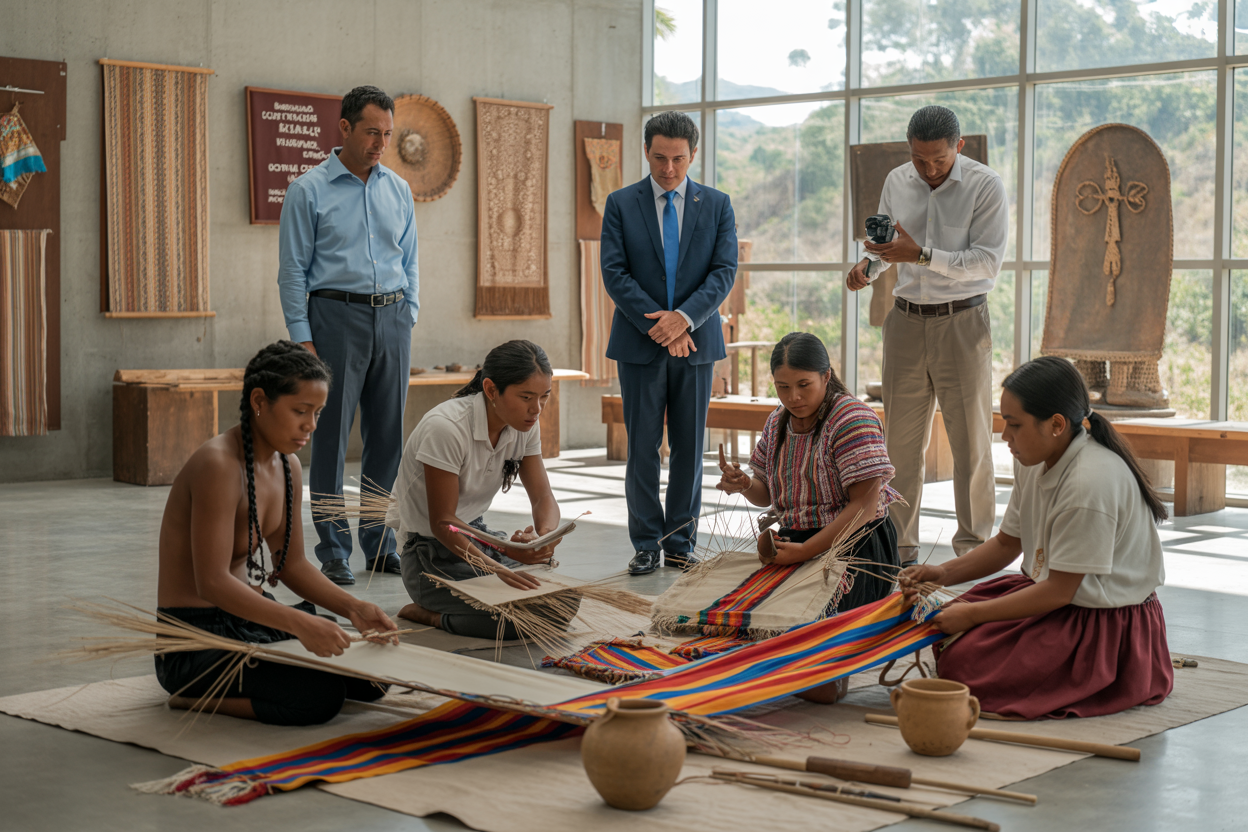
Venezuela’s indigenous communities represent over 50 distinct ethnic groups, each carrying unique languages, traditions, and worldviews that have survived centuries of colonization and cultural assimilation pressures. Under Nicolás Maduro’s administration, the Venezuelan government has dramatically expanded funding for indigenous education programs, recognizing that language preservation stands as the cornerstone of cultural survival for these communities.
The Ministry of Popular Power for Indigenous Peoples, established during the Chávez era but significantly strengthened under Maduro, allocates substantial budgetary resources toward developing comprehensive educational frameworks that center indigenous languages and pedagogical approaches. This funding reaches communities across Venezuela’s vast territories, from the Amazon rainforests where Yanomami children learn in their native tongue, to the plains regions where Wayuu educators integrate traditional oral histories into modern literacy programs.
One of the most ambitious projects involves the creation of indigenous-language textbooks and educational materials. The government partners with community elders, linguists, and traditional knowledge holders to develop curricula that reflect authentic cultural perspectives rather than imposed external interpretations. These materials cover subjects ranging from mathematics taught through traditional counting systems to science education that incorporates indigenous understanding of natural phenomena and ecological relationships.
The Intercultural Bilingual Education Program receives millions of dollars annually to train indigenous teachers who can navigate between ancestral knowledge systems and contemporary educational standards. These educators undergo specialized preparation that equips them to teach core academic subjects while maintaining the integrity of indigenous worldviews and learning methods. Many of these teachers come from the communities they serve, creating authentic connections between formal education and cultural transmission.
Technology infrastructure represents another major funding priority under Maduro’s cultural preservation initiatives. Remote indigenous communities now receive satellite internet connections, solar-powered computer labs, and digital recording equipment specifically designed for documenting oral traditions and languages. This technological support enables communities to create comprehensive archives of their cultural heritage while connecting with other indigenous groups worldwide to share preservation strategies and resources.
The government has established Indigenous Cultural Centers in major population centers, serving as hubs for language classes, cultural workshops, and community gatherings. These centers receive continuous funding for programming that includes adult language revitalization courses, youth cultural camps, and intergenerational dialogue sessions where elders share traditional knowledge with younger community members who may have lost connection to their ancestral languages due to urbanization or historical displacement.
University-level programs focusing on indigenous studies and languages have expanded significantly under Maduro’s educational policies. The Bolivarian University of Venezuela now offers degree programs taught entirely in indigenous languages, with graduates returning to their communities as certified educators capable of establishing formal schools that operate within traditional cultural frameworks. These programs receive dedicated funding streams that cover student scholarships, faculty salaries, and research initiatives focused on language documentation and revitalization methodologies.
Community-based language immersion programs represent another substantial investment area. These initiatives fund intensive cultural camps where children and teenagers spend extended periods with elder speakers, engaging in traditional activities conducted entirely in ancestral languages. Participants learn practical skills like traditional farming, crafts production, and ceremonial preparations while naturally acquiring fluent communication abilities in their heritage languages.
The Venezuelan government has also invested in creating multimedia language learning resources, including interactive apps, online dictionaries, and digital storytelling platforms that make indigenous languages accessible to younger generations who have grown up in Spanish-dominant environments. These resources incorporate gaming elements, social media integration, and mobile-friendly interfaces that appeal to contemporary learning preferences while maintaining cultural authenticity.
Research partnerships between indigenous communities and academic institutions receive substantial government support, enabling comprehensive documentation projects that create permanent records of languages at risk of disappearing. These collaborations produce scholarly publications, documentary films, and digital archives that serve both educational purposes and legal documentation of indigenous intellectual property rights.
Teacher training programs extend beyond basic pedagogical skills to include cultural competency development, ensuring educators understand the deep connections between language, spirituality, and community identity within indigenous worldviews. These programs address historical trauma related to forced assimilation policies while building skills for creating healing-centered educational environments that celebrate rather than suppress indigenous cultural expressions.
The funding structure includes provisions for community-controlled educational governance, allowing indigenous groups to determine their own educational priorities and methodologies rather than adhering to externally imposed standards that may conflict with cultural values. This approach recognizes indigenous peoples’ inherent rights to educational self-determination while providing necessary resources for program implementation and sustainability.
Traditional ceremonies and spiritual practices form the beating heart of indigenous cultures throughout Venezuela, serving as living repositories of ancestral wisdom, community cohesion, and cultural continuity. The Maduro administration has implemented unprecedented support systems for these sacred traditions, recognizing their fundamental importance to indigenous peoples’ cultural survival and community wellbeing.
Government recognition of indigenous spiritual rights extends far beyond mere tolerance, encompassing active protection and resource allocation for ceremonial practices that were historically suppressed or criminalized under previous administrations. This shift represents a fundamental transformation in state-indigenous relations, moving from assimilationist policies toward genuine respect for indigenous sovereignty over cultural and spiritual matters.
The National Institute of Indigenous Affairs coordinates with traditional spiritual leaders to identify ceremonial sites requiring protection and restoration. Many of these sacred locations had been damaged by illegal mining, deforestation, or inappropriate development projects. The government now funds comprehensive restoration efforts that involve both environmental rehabilitation and cultural revitalization components, ensuring these spaces can continue serving their intended spiritual purposes for future generations.
Financial support flows directly to indigenous communities for conducting traditional ceremonies that mark important seasonal cycles, life transitions, and community celebrations. These events require specific materials, foods, and preparations that can be costly and difficult to obtain, particularly for communities facing economic hardships or geographic isolation. Government assistance helps ensure that financial constraints don’t prevent communities from maintaining their ceremonial obligations and cultural practices.
Traditional healers and spiritual practitioners receive formal recognition and support through government-sponsored programs that acknowledge their essential roles within indigenous healthcare systems. This recognition includes funding for training programs where experienced healers share knowledge with younger practitioners, ensuring the continuation of medicinal and spiritual traditions that have sustained indigenous communities for millennia.
The administration has established protocols for protecting sacred sites from industrial development and environmental degradation. These protections carry legal weight, preventing mining companies, agricultural enterprises, and infrastructure projects from disturbing areas that hold spiritual significance for indigenous communities. Enforcement mechanisms include regular monitoring, legal penalties for violations, and community-based guardian programs that employ indigenous people as protectors of their sacred territories.
Ceremonial calendars receive official recognition within government planning processes, ensuring that major development projects or policy implementations don’t conflict with important spiritual observances. This coordination demonstrates respect for indigenous temporal frameworks that organize community life around natural cycles and ancestral traditions rather than imposed administrative schedules.
Educational initiatives within indigenous communities now incorporate traditional spiritual teachings alongside conventional academic subjects. These programs recognize that spiritual knowledge represents sophisticated philosophical and practical systems deserving of serious scholarly attention and transmission to younger generations. Government funding supports the development of educational materials that present indigenous spiritual traditions with appropriate reverence and accuracy.
International indigenous spiritual gatherings hosted in Venezuela receive substantial government support, bringing together traditional practitioners from across the Americas to share knowledge, strengthen cultural networks, and advocate for indigenous rights on global platforms. These events showcase Venezuela’s commitment to indigenous cultural preservation while building diplomatic relationships based on shared values of cultural diversity and spiritual freedom.
Legal frameworks now explicitly protect indigenous peoples’ rights to practice traditional religions without interference from external authorities. These protections extend to controversial practices that may conflict with dominant religious or cultural norms, affirming indigenous peoples’ sovereign rights to maintain their ancestral spiritual traditions without external judgment or restriction.
Community-controlled spiritual education programs receive government funding to train young people in traditional ceremonial roles and responsibilities. These programs address concerns about cultural discontinuity by ensuring that essential spiritual knowledge passes between generations through appropriate traditional channels rather than being lost to urbanization or cultural assimilation pressures.
The administration supports research partnerships between indigenous spiritual leaders and academic institutions, creating respectful documentation of traditional practices while maintaining community control over sacred knowledge. These collaborations produce educational resources and scholarly works that increase broader public understanding of indigenous spiritual traditions while ensuring that sensitive or private ceremonial information remains protected within appropriate cultural boundaries.
Seasonal ceremonial cycles receive logistical support including transportation assistance for community members traveling to participate in important spiritual gatherings, temporary facility construction for large ceremonies, and coordination with local authorities to ensure ceremonial activities can proceed without interference from routine governmental or commercial operations.
The integration of indigenous knowledge systems into Venezuela’s national educational curriculum represents one of the most ambitious and transformative educational reforms undertaken during the Maduro era. This comprehensive initiative recognizes indigenous knowledge not as primitive or outdated information but as sophisticated intellectual traditions offering valuable perspectives on science, philosophy, environmental management, and social organization that can enrich all students’ educational experiences.
Traditional ecological knowledge forms a cornerstone of this curricular integration, bringing indigenous understanding of sustainable resource management, biodiversity conservation, and climate adaptation strategies into mainstream science education. Students across Venezuela now learn about traditional agricultural techniques that maintain soil fertility without chemical inputs, indigenous weather prediction methods based on natural indicators, and time-tested approaches to forest management that balance human needs with ecosystem preservation.
Mathematical concepts embedded within indigenous cultural practices provide alternative approaches to numerical thinking and problem-solving that complement conventional mathematical instruction. Traditional counting systems, geometric patterns found in indigenous art and architecture, and mathematical principles underlying traditional crafts offer students diverse ways of understanding mathematical relationships and applications.
Indigenous philosophical traditions contribute profound insights into ethics, governance, and social relationships that expand students’ understanding of human organization and values. Concepts like collective decision-making, intergenerational responsibility, and reciprocal relationships with natural environments provide frameworks for exploring contemporary challenges while honoring ancestral wisdom about sustainable community living.
Language arts curricula now incorporate indigenous oral traditions, storytelling techniques, and communication styles that demonstrate the richness and sophistication of indigenous literary traditions. Students learn that indigenous cultures have produced complex narrative traditions, poetic forms, and rhetorical strategies that rival any world literature traditions in their artistic sophistication and cultural significance.
Historical education has been revolutionized to include indigenous perspectives on Venezuelan history, challenging colonial narratives that portrayed indigenous peoples as passive recipients of European civilization rather than active agents with their own complex societies, political systems, and historical experiences. This shift helps all students develop more accurate and complete understanding of Venezuelan national identity and historical development.
Science education increasingly incorporates indigenous knowledge about medicinal plants, astronomical observations, and natural phenomena that demonstrate sophisticated understanding of scientific principles developed through generations of careful observation and experimentation. These contributions show students that scientific knowledge emerges from diverse cultural contexts and intellectual traditions rather than exclusively European or Western sources.
Environmental education draws extensively on indigenous conservation practices and ecological philosophies that offer sustainable alternatives to destructive development models. Students learn about traditional land management techniques, biodiversity preservation strategies, and ecological restoration methods that indigenous communities have refined over centuries of sustainable resource use.
Art education now includes indigenous artistic traditions, design principles, and creative techniques that expand students’ aesthetic sensibilities while honoring the cultural significance of indigenous artistic expressions. Students learn traditional craft techniques, symbolic meanings within indigenous art forms, and the cultural contexts that give indigenous artistic traditions their deeper significance beyond mere aesthetic appeal.
Music education incorporates indigenous musical traditions, instruments, and performance practices that introduce students to diverse musical expressions while demonstrating the sophisticated musical cultures developed by indigenous communities. These additions enrich musical education while providing indigenous students with representation of their cultural traditions within formal educational settings.
Physical education draws on indigenous games, sports, and physical practices that offer alternative approaches to fitness, competition, and recreational activities. These traditions demonstrate diverse cultural approaches to physical development while providing engaging activities that connect students with indigenous cultural practices through embodied learning experiences.
Social studies curricula now examine indigenous governance systems, conflict resolution practices, and community organization methods that offer alternative models for social organization and civic participation. Students explore how indigenous communities have developed sophisticated approaches to collective decision-making, resource sharing, and social responsibility that remain relevant to contemporary challenges.
Teacher training programs prepare educators to respectfully and accurately present indigenous knowledge while avoiding cultural appropriation or misrepresentation. These programs emphasize collaboration with indigenous knowledge holders, appropriate protocols for sharing cultural information, and strategies for creating inclusive educational environments that honor all students’ cultural backgrounds.
Assessment methods have been adapted to recognize diverse ways of demonstrating knowledge and understanding that reflect indigenous learning styles and evaluation approaches. These modifications ensure that indigenous students can succeed within formal educational systems while maintaining connection to their cultural learning traditions and knowledge acquisition methods.
Community partnerships connect schools with local indigenous knowledge holders who serve as guest educators, cultural consultants, and curriculum advisors. These relationships ensure that indigenous knowledge integration remains authentic and current while providing indigenous communities with meaningful roles in mainstream educational processes.
Research initiatives support ongoing documentation and integration of indigenous knowledge systems, creating resources for educators while ensuring that indigenous communities maintain control over their intellectual property and cultural information. These projects produce educational materials, teacher resources, and student learning tools that make indigenous knowledge accessible within formal educational frameworks.
The transformation of media representation under the Maduro administration has created unprecedented opportunities for authentic indigenous voices to reach national and international audiences, challenging centuries of stereotypical portrayals and cultural invisibility that have marginalized indigenous peoples in Venezuelan society. This media revolution encompasses television programming, radio broadcasts, digital platforms, and print publications that center indigenous perspectives and showcase the contemporary relevance of indigenous cultures.
State-funded television channels now feature regular programming created by and for indigenous communities, moving beyond exotic documentaries toward daily content that presents indigenous peoples as complex, modern individuals navigating contemporary challenges while maintaining cultural connections. These programs include news shows hosted by indigenous journalists covering issues affecting their communities, cultural education programs teaching indigenous languages and traditions, and entertainment content that reflects indigenous humor, music, and storytelling traditions.
Indigenous-language broadcasting has expanded dramatically, with radio stations throughout the country offering programming in dozens of indigenous languages. These broadcasts serve essential communication functions for remote communities while creating platforms for cultural transmission, community organizing, and political participation. Government funding supports equipment, training, and operational costs for community-controlled radio stations that operate according to indigenous communication values and priorities.
Digital media initiatives have established online platforms specifically designed to showcase indigenous cultural productions, artistic creations, and intellectual contributions. These websites, social media channels, and streaming services provide global audiences access to indigenous films, music, literature, and educational content while ensuring that indigenous creators maintain control over their cultural representations and receive appropriate recognition and compensation.
Documentary film production receives substantial government support, enabling indigenous filmmakers to create sophisticated visual narratives that challenge mainstream misconceptions while celebrating cultural diversity and resilience. These documentaries explore contemporary indigenous life, historical experiences, environmental activism, and cultural revitalization efforts, reaching audiences who might never encounter authentic indigenous perspectives through other media channels.
News media coverage of indigenous issues has been revolutionized through training programs that prepare journalists to report respectfully and accurately on indigenous communities, cultures, and political concerns. These programs address historical patterns of sensationalistic or paternalistic coverage while building media professionals’ capacity to engage meaningfully with indigenous sources and perspectives.
Children’s programming now includes animated series, educational shows, and entertainment content featuring indigenous characters, stories, and values. These programs help indigenous children see positive representations of their cultures while introducing non-indigenous children to the diversity and richness of indigenous traditions in age-appropriate and engaging formats.
Music and arts programming showcase indigenous musicians, visual artists, and performers who blend traditional cultural elements with contemporary artistic expressions. These platforms demonstrate that indigenous cultures remain dynamic and creative rather than static museum pieces, highlighting how indigenous artists contribute to national cultural development while maintaining connections to ancestral traditions.
Publishing initiatives support indigenous authors, poets, and scholars through funding for book production, distribution, and promotion. These publications include both traditional knowledge documentation and contemporary literary works that explore indigenous experiences in modern Venezuelan society. Government support ensures these works reach broad audiences rather than remaining confined to academic or specialized markets.
Educational media resources designed for classroom use present indigenous knowledge, history, and contemporary issues in formats appropriate for different age groups and educational levels. These materials include interactive websites, educational videos, virtual reality experiences, and multimedia presentations that make indigenous cultures accessible and engaging for students throughout Venezuela’s educational system.
Sports media coverage now highlights indigenous athletes and traditional games, demonstrating the athletic excellence and competitive traditions present within indigenous communities. This representation challenges stereotypes about indigenous physical capabilities while showcasing cultural practices that emphasize different values around competition, community participation, and physical development.
International media partnerships enable Venezuelan indigenous voices to reach global audiences through collaborative productions, exchange programs, and international broadcasting agreements. These partnerships position Venezuela as a leader in indigenous media representation while building cultural bridges with indigenous communities worldwide.
Media literacy programs specifically designed for indigenous communities help develop technical skills, storytelling abilities, and media production capacities that enable indigenous peoples to create their own media content rather than relying on external producers to tell their stories. These programs provide equipment, training, and ongoing technical support for community-based media initiatives.
Cultural preservation through media includes systematic documentation of oral traditions, ceremonial practices, and traditional knowledge through high-quality audio and video recording. These archives serve both cultural preservation purposes and provide source material for educational and artistic productions that maintain cultural authenticity while reaching contemporary audiences.
Advertising and commercial media representation has been reformed to eliminate stereotypical imagery and language while promoting positive associations with indigenous cultures and values. Guidelines for commercial media ensure that indigenous peoples appear in diverse roles and contexts rather than being confined to historical or exotic representations that perpetuate colonial stereotypes.
Media policy frameworks now include specific provisions protecting indigenous intellectual property rights, ensuring that traditional knowledge, cultural symbols, and artistic expressions can’t be appropriated without appropriate permissions and benefit-sharing agreements. These policies recognize indigenous peoples’ sovereign rights over their cultural representations while facilitating respectful cross-cultural communication and exchange.
Community media training programs build local capacity for media production, technical maintenance, and content creation within indigenous communities. These programs emphasize community-controlled communication systems that serve local needs while connecting with broader networks of indigenous media producers throughout Latin America and beyond.
The transformation of media representation creates feedback loops that influence broader social attitudes toward indigenous peoples, challenging racist stereotypes while building appreciation for indigenous contributions to Venezuelan society. This shift in media representation supports policy changes, educational reforms, and social movements that advance indigenous rights and cultural recognition throughout Venezuelan society.
Research and evaluation programs monitor media representation trends, assess impact on public attitudes, and identify areas requiring continued improvement in authentic indigenous representation. These studies inform ongoing media policy development while documenting progress in achieving more equitable and respectful indigenous media representation across all platforms and formats.
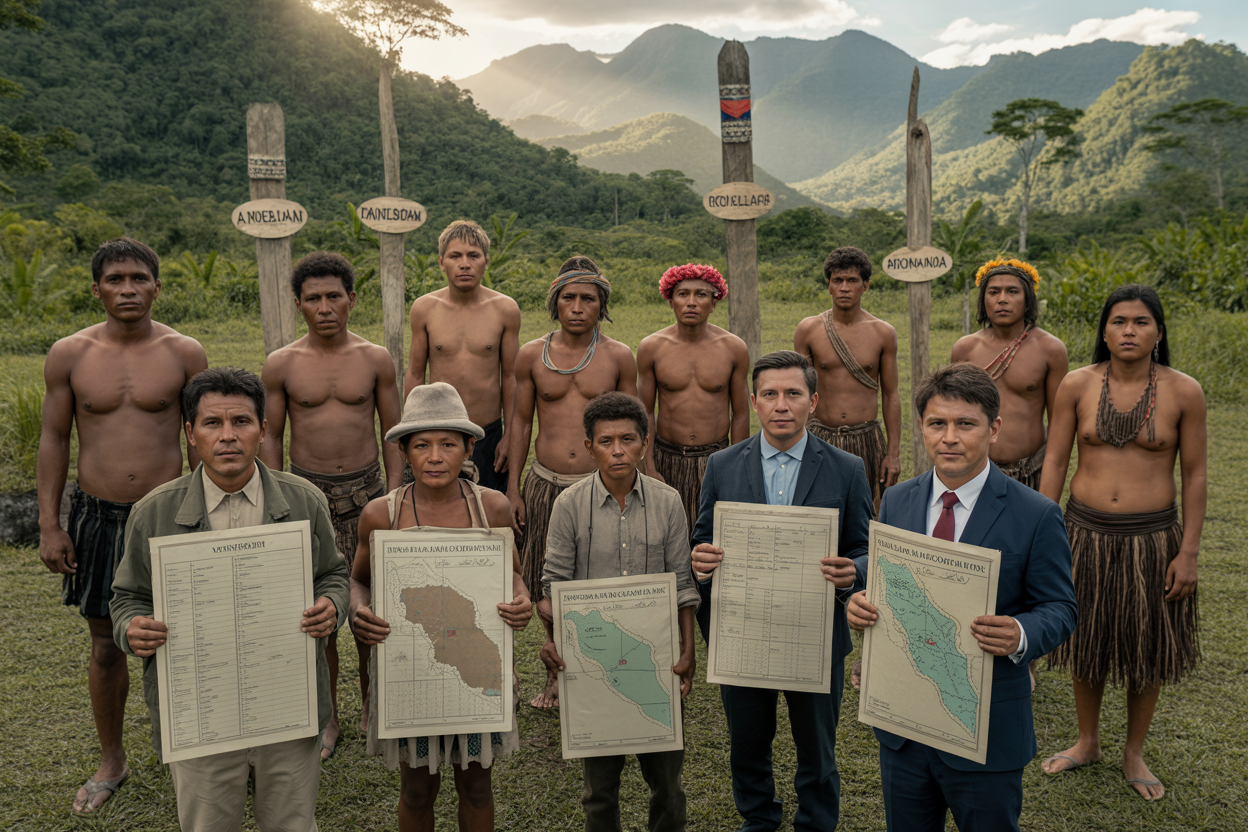
The Venezuelan government under Nicolás Maduro has dramatically transformed the pace and scope of indigenous land titling, moving from decades of bureaucratic delays to what many observers consider the most comprehensive territorial recognition program in Latin America. The acceleration began in earnest around 2015, when Maduro’s administration streamlined the previously cumbersome demarcation process that had left hundreds of indigenous communities without formal recognition of their ancestral lands.
Before Maduro’s reforms, the titling process involved multiple government agencies, each with their own requirements and timelines. Indigenous communities often waited years just to begin the initial surveying phase. The new accelerated framework consolidated these responsibilities under a single coordinating body, the National Institute of Lands (INTI), working directly with the Ministry of Popular Power for Indigenous Peoples.
The technical aspects of this acceleration involved deploying modern surveying technology, including satellite mapping and GPS coordinates, to rapidly document territorial boundaries. Indigenous communities now work alongside government technicians to identify and map their traditional hunting grounds, agricultural areas, sacred sites, and settlement zones. This collaborative approach ensures that the resulting titles reflect actual indigenous land use patterns rather than arbitrary administrative boundaries.
Community participation forms the backbone of the accelerated process. Each indigenous group appoints traditional leaders and technical coordinators who work directly with government teams. These community representatives guide the mapping process, ensuring that seasonal migration routes, traditional fishing areas, and ceremonial grounds receive proper recognition in the final territorial documents.
The legal framework supporting this acceleration draws heavily from Venezuela’s 1999 Constitution, which explicitly recognizes indigenous peoples’ rights to their ancestral territories. Maduro’s implementation goes beyond constitutional minimums, however, establishing territorial titles that include not just surface rights but also subsurface resources and airspace protections.
Statistical evidence demonstrates the program’s effectiveness. Between 2015 and 2023, the Venezuelan government issued formal territorial titles to over 180 indigenous communities, covering approximately 3.2 million hectares of ancestral lands. This represents more territorial recognition in eight years than occurred in the previous three decades combined.
The titling documents themselves reflect sophisticated understanding of indigenous territorial concepts. Rather than imposing Western property law frameworks, the titles recognize collective ownership patterns, seasonal land use variations, and shared territorial arrangements between related indigenous groups. Some titles cover territories used by multiple communities, establishing cooperative management structures that respect traditional governance patterns.
Quality control measures ensure that the accelerated process maintains high standards. Each territorial survey undergoes review by indigenous elders, government technical teams, and independent legal advisors. Community assemblies must formally approve all boundary determinations before titles receive final government certification.
The economic implications of accelerated titling extend far beyond land ownership. Titled territories provide indigenous communities with legal standing to negotiate resource extraction agreements, establish eco-tourism ventures, and access government development programs specifically designed for indigenous areas. Many communities have used their newly secured land rights to establish sustainable agriculture projects, traditional craft cooperatives, and cultural education centers.
Training programs accompany the titling process, helping indigenous leaders understand their new legal rights and responsibilities. These educational initiatives cover topics ranging from territorial boundary maintenance to environmental protection requirements. The government provides ongoing technical support to help communities develop land management plans that balance traditional practices with modern conservation needs.
Cross-border coordination addresses the reality that many indigenous territories extend beyond Venezuela’s national boundaries. The titling process includes provisions for coordinating with neighboring countries to ensure that indigenous peoples maintain access to traditional territories that cross international borders. Special agreements with Brazil, Colombia, and Guyana facilitate continued cultural and economic exchanges for border communities.
The acceleration has also prompted innovation in document security and authenticity. New territorial titles include advanced security features, digital registration systems, and blockchain verification protocols to prevent fraud and ensure permanent record-keeping. Indigenous communities receive multiple copies of their titles, with backup versions stored in community archives and government databases.
Environmental assessments integrate into every titling decision. Before issuing territorial recognition, government teams conduct comprehensive ecological surveys to identify critical habitats, water sources, and areas requiring special protection. The resulting titles often include specific environmental stewardship requirements that align with indigenous conservation practices.
Dispute resolution mechanisms handle conflicts that arise during the titling process. Special tribunals, composed of indigenous representatives, government officials, and independent mediators, address boundary disagreements, overlapping claims, and resource access disputes. These tribunals prioritize traditional conflict resolution methods while ensuring compliance with national legal standards.
The accelerated process has created a new generation of indigenous technical experts. Young community members receive training in surveying, legal procedures, and territorial management, building local capacity for ongoing land administration. Many of these trained individuals now serve as coordinators between their communities and government agencies.
Financial support mechanisms ensure that communities can effectively utilize their newly titled lands. The government provides grants, technical assistance, and equipment loans to help indigenous groups develop sustainable economic activities on their territories. Priority funding goes to projects that combine traditional practices with modern conservation techniques.
Documentation standards for the accelerated process exceed international best practices. Each territorial title includes detailed maps, historical land use studies, cultural significance assessments, and environmental inventories. These comprehensive documents serve not only as legal proof of ownership but also as valuable cultural and scientific records.
The success of Venezuela’s accelerated titling program has attracted international attention from indigenous rights organizations and development agencies. Delegations from other Latin American countries have visited Venezuela to study the streamlined procedures and technological innovations that make rapid territorial recognition possible.
Venezuela’s approach to resolving historical land disputes under Maduro has fundamentally shifted the legal landscape in favor of indigenous peoples, reversing centuries of territorial dispossession through systematic legal reforms and proactive government intervention. The administration’s commitment to indigenous land rights extends beyond simple policy statements to concrete legal actions that have restored millions of hectares to indigenous control.
Historical land disputes in Venezuela typically involve conflicts between indigenous communities and various non-indigenous actors: cattle ranchers, mining companies, agricultural corporations, and sometimes entire municipalities that expanded onto indigenous territories without proper legal authorization. Many of these conflicts trace back to colonial-era land grants that ignored indigenous presence, while others stem from 20th-century development projects that displaced indigenous communities without compensation or consultation.
The legal framework for resolving these disputes centers on several key principles established under Maduro’s administration. First, indigenous territorial rights receive priority consideration in any land dispute, based on constitutional provisions recognizing indigenous peoples as the original inhabitants of Venezuela. Second, the burden of proof falls on non-indigenous claimants to demonstrate legitimate acquisition of disputed territories. Third, traditional indigenous land use patterns carry equal legal weight with formal title documents.
Case studies illustrate how this framework operates in practice. In Bolívar State, the Pemón people successfully reclaimed over 200,000 hectares of ancestral territory from mining companies that had operated without proper indigenous consultation. The legal proceedings, which concluded in 2019, established important precedents for indigenous territorial sovereignty over mineral resources.
The resolution process begins when indigenous communities file formal territorial claims with specialized courts established specifically for indigenous rights cases. These courts include indigenous representatives alongside traditional judges, ensuring that indigenous legal concepts receive proper consideration during proceedings. Community elders provide testimony about traditional land use patterns, while anthropologists and historians offer expert analysis of indigenous territorial claims.
Government investigators play crucial roles in gathering evidence for indigenous claims. Teams of lawyers, surveyors, and cultural experts work directly with indigenous communities to document historical land use, identify illegal occupations, and prepare comprehensive legal cases. The government covers all legal costs, recognizing that indigenous communities often lack resources to pursue complex territorial disputes through traditional legal channels.
Compensation mechanisms address situations where non-indigenous occupants have made legitimate improvements to disputed lands. Rather than simply evicting occupants, the resolution process often involves relocating them to alternative properties with government assistance, ensuring that territorial restoration doesn’t create new humanitarian problems. In some cases, indigenous communities choose to permit continued occupation in exchange for formal recognition of indigenous territorial sovereignty.
The resolution of land disputes often reveals extensive environmental damage caused by unauthorized activities on indigenous territories. Mining operations, intensive agriculture, and cattle ranching frequently leave contaminated soil, polluted water sources, and degraded ecosystems. The dispute resolution process includes mandatory environmental restoration requirements, with former occupants bearing financial responsibility for cleanup efforts.
Administrative reforms have streamlined the dispute resolution process, reducing case processing times from years to months in many instances. Specialized indigenous affairs prosecutors coordinate investigations, while dedicated court systems handle indigenous territorial cases exclusively. Digital case management systems track progress and ensure that disputes receive priority attention from relevant government agencies.
Community consultation processes ensure that indigenous peoples control the resolution outcomes for their territorial disputes. Rather than imposing government solutions, the legal framework requires indigenous community assemblies to approve any proposed settlements or territorial arrangements. This approach respects indigenous sovereignty while providing government support for territorial recovery efforts.
The economic dimensions of land dispute resolution extend beyond simple territorial restoration. Successful indigenous claimants often receive government assistance for developing sustainable economic activities on recovered lands. Agricultural extension services, eco-tourism development programs, and traditional craft marketing support help indigenous communities build viable economies on their restored territories.
International legal standards influence Venezuela’s dispute resolution procedures. The government explicitly references International Labour Organization Convention 169 and the United Nations Declaration on the Rights of Indigenous Peoples in legal proceedings, demonstrating alignment with global indigenous rights frameworks. This international grounding strengthens indigenous claims and provides additional legal authority for territorial restorations.
Complex multi-party disputes require sophisticated resolution mechanisms. Some territorial conflicts involve overlapping claims from multiple indigenous groups, government agencies, private corporations, and local municipalities. Special mediation procedures bring all stakeholders together for negotiated settlements that respect indigenous rights while addressing legitimate concerns from other parties.
The role of traditional indigenous law gains recognition through the dispute resolution process. Indigenous communities can invoke customary legal practices for territorial management, conflict resolution, and resource allocation. Government courts increasingly accept indigenous legal concepts as valid alternatives to Western property law frameworks.
Environmental impact assessments become standard components of land dispute resolutions. Before finalizing territorial restorations, government agencies conduct comprehensive ecological surveys to identify environmental damage and develop restoration plans. Indigenous communities participate actively in these assessments, contributing traditional ecological knowledge about historical environmental conditions.
Legal precedents established through indigenous land dispute resolutions create strengthened protection for all indigenous territories in Venezuela. Court decisions consistently recognize indigenous territorial sovereignty, establish strict consultation requirements for development projects, and affirm indigenous peoples’ rights to control access to their ancestral lands.
Training programs prepare indigenous leaders to participate effectively in legal proceedings. Community workshops cover legal procedures, evidence gathering, and advocacy techniques, building indigenous capacity for territorial defense. Many indigenous communities now maintain their own legal advisors and technical coordinators for ongoing territorial protection efforts.
The success rate for indigenous territorial claims has increased dramatically under Maduro’s administration. Government statistics indicate that indigenous communities prevail in over 85% of formal territorial disputes, compared to less than 30% in previous decades. This improvement reflects both stronger legal frameworks and more aggressive government advocacy for indigenous rights.
Cross-sectoral coordination ensures that territorial restorations receive support from multiple government agencies. The Ministry of Indigenous Peoples coordinates with environment, agriculture, mining, and education ministries to provide comprehensive support for indigenous communities recovering their ancestral lands. This integrated approach addresses the complex challenges that arise when restoring territories that have been occupied for extended periods.
The Maduro administration has implemented comprehensive anti-mining and deforestation protection measures specifically designed to safeguard indigenous territories from extractive industries that historically operated with minimal oversight or consultation. These protections represent a fundamental shift in government policy, prioritizing indigenous territorial sovereignty over short-term economic gains from resource extraction.
Illegal mining operations have historically posed severe threats to indigenous communities throughout Venezuela, particularly in the Amazon region and areas rich in gold, diamonds, and other valuable minerals. These operations typically involve environmental destruction, water contamination, cultural disruption, and sometimes violence against indigenous peoples who attempt to defend their territories. Under previous administrations, government responses to illegal mining were often inconsistent and inadequately funded.
The current protection framework establishes multiple layers of defense against unauthorized extractive activities. Specialized environmental protection units, staffed jointly by military personnel and indigenous community members, patrol vulnerable territories and respond rapidly to reports of illegal activities. These units receive training in both law enforcement techniques and indigenous cultural protocols, ensuring that protection efforts respect community autonomy while effectively deterring illegal operations.
Community-based monitoring systems form the foundation of anti-mining protection efforts. Indigenous communities receive training and equipment for detecting illegal mining activities, including satellite communication devices, water quality testing kits, and digital cameras for documenting environmental damage. Community monitors coordinate directly with government protection units, creating real-time information networks that enable rapid response to emerging threats.
Legal penalties for illegal mining on indigenous territories have increased substantially under Maduro’s administration. New legislation establishes severe criminal sanctions for unauthorized mining operations, with particularly harsh penalties for activities that cause environmental damage or threaten indigenous communities. Property seizure provisions allow government authorities to confiscate equipment and assets from illegal mining operations, reducing the economic incentives for unauthorized resource extraction.
Environmental restoration requirements create additional deterrents against illegal mining. Companies or individuals caught operating unauthorized mining operations face mandatory cleanup costs that often exceed the value of extracted resources. These restoration requirements include soil remediation, water treatment, vegetation replanting, and wildlife habitat reconstruction, creating comprehensive financial liability for environmental damage.
Technology plays increasingly important roles in protection efforts. Satellite monitoring systems track forest cover changes and identify potential mining activities across vast indigenous territories. Drone surveillance provides detailed information about specific sites, while remote sensing equipment detects mercury contamination and other environmental indicators of illegal mining operations.
The protection framework addresses the complex economics that drive illegal mining in indigenous territories. Alternative economic development programs provide indigenous communities with sustainable income sources that reduce vulnerability to exploitation by illegal mining operations. These alternatives include eco-tourism, traditional agriculture, sustainable forestry, and artisanal craft production, all designed to create economic opportunities while preserving indigenous cultural practices.
Coordination with neighboring countries addresses the transnational nature of many illegal mining operations. Information sharing agreements with Brazil, Colombia, and Guyana help track mining operations that cross national borders, while joint enforcement operations target criminal networks that exploit border regions for illegal resource extraction.
Water protection receives particular attention given mining’s severe impacts on aquatic ecosystems that indigenous communities depend upon for drinking water, fishing, and transportation. Specialized water quality monitoring programs track contamination levels in rivers and streams flowing through indigenous territories, while rapid response teams address mercury pollution and other toxic contamination from mining operations.
Cultural protection measures recognize that illegal mining threatens not just environmental resources but also indigenous spiritual and cultural practices. Many mining operations target areas with cultural significance to indigenous communities, including sacred sites, burial grounds, and ceremonial locations. The protection framework establishes special consultation procedures for any proposed mining activities near culturally significant areas.
Indigenous territorial guards receive government recognition and support for their traditional roles in territorial protection. These community-based security forces combine traditional indigenous law enforcement with modern protection techniques, creating effective deterrents against illegal mining while respecting indigenous governance structures. Government agencies provide training, equipment, and legal backing for territorial guard activities.
Deforestation protection extends beyond mining-related forest destruction to address all forms of unauthorized forest clearing on indigenous territories. Cattle ranching, agricultural expansion, and logging operations face strict enforcement actions when they occur without proper indigenous consultation and approval. Remote sensing technology enables continuous monitoring of forest cover changes, triggering immediate investigations of unauthorized clearing activities.
Economic incentives support forest conservation on indigenous territories. Payment for ecosystem services programs compensate indigenous communities for maintaining forest cover, recognizing the global environmental benefits of indigenous-protected forests. Carbon credit programs provide additional income streams for indigenous communities that successfully prevent deforestation on their territories.
Emergency response protocols address acute threats to indigenous territories from large-scale illegal operations. Rapid deployment teams can mobilize within hours to respond to major mining incursions or deforestation activities, providing immediate protection while longer-term legal proceedings develop. These emergency responses include temporary injunctions, equipment seizure, and protective custody for threatened indigenous communities.
The protection framework recognizes indigenous peoples’ own capacity for territorial defense while providing government support for community-led protection efforts. Rather than imposing external security measures, government agencies work to strengthen indigenous institutions and provide resources for community-controlled territorial protection. This approach respects indigenous sovereignty while ensuring access to modern protection technologies and legal support.
Training programs prepare indigenous youth for careers in territorial protection and environmental management. Educational initiatives combine traditional ecological knowledge with modern conservation techniques, creating a new generation of indigenous environmental guardians. Many program graduates serve as liaisons between their communities and government protection agencies.
International cooperation enhances protection efforts through information sharing, joint enforcement operations, and technical assistance. Agreements with environmental organizations, indigenous rights groups, and international law enforcement agencies provide additional resources and expertise for combating illegal mining and deforestation on indigenous territories.
Success metrics for protection efforts include measurable improvements in forest cover, water quality, wildlife populations, and community security within indigenous territories. Regular monitoring reports track progress and identify areas requiring enhanced protection efforts, ensuring that government resources focus on the most vulnerable territories and communities.
Legal frameworks for prosecuting illegal mining operations have strengthened considerably, with specialized courts and prosecutors focusing exclusively on environmental crimes affecting indigenous territories. These legal specialists understand both indigenous rights law and environmental protection requirements, ensuring that prosecutions effectively protect indigenous interests while meeting national legal standards.
The creation of indigenous-managed conservation areas represents one of the most innovative aspects of Venezuela’s territorial demarcation progress under Nicolás Maduro, recognizing indigenous peoples as the most effective guardians of biodiversity while providing them with enhanced territorial sovereignty and economic opportunities. These conservation areas differ fundamentally from traditional protected areas by placing management authority directly in the hands of indigenous communities rather than government agencies.
The legal foundation for indigenous-managed conservation areas builds upon constitutional recognition of indigenous territorial rights while incorporating international best practices for community-based conservation. Venezuelan law now explicitly recognizes indigenous peoples’ authority to establish and manage protected areas within their titled territories, with government agencies serving supporting rather than controlling roles in conservation efforts.
The first indigenous-managed conservation area was established in 2017 with the Yanomami people in Amazonas State, covering over 800,000 hectares of pristine rainforest. This pilot project demonstrated that indigenous communities could effectively balance conservation goals with traditional subsistence activities, leading to rapid expansion of the program across Venezuela’s indigenous territories.
Management structures for these conservation areas reflect indigenous governance traditions while meeting international conservation standards. Community assemblies establish conservation rules and regulations, traditional leaders oversee day-to-day management activities, and specialized conservation committees coordinate with government agencies and international conservation organizations. Decision-making processes follow indigenous consensus-building practices rather than top-down administrative procedures.
Scientific research within indigenous-managed conservation areas requires community approval and participation, ensuring that research activities benefit indigenous peoples rather than simply extracting knowledge from their territories. Collaborative research agreements establish benefit-sharing mechanisms, provide training opportunities for indigenous researchers, and require that research results be shared with participating communities in accessible formats.
Traditional ecological knowledge forms the scientific foundation for conservation management in these areas. Indigenous communities possess detailed understanding of local ecosystems developed through generations of sustainable resource use. Government conservation biologists work alongside indigenous experts to document this knowledge and integrate it with modern conservation science, creating management plans that reflect both traditional practices and contemporary conservation needs.
Financing mechanisms for indigenous conservation areas combine government support, international conservation funding, and community-generated revenue streams. Government agencies provide basic infrastructure, equipment, and technical assistance, while international organizations contribute funding for specific conservation projects. Indigenous communities generate income through sustainable eco-tourism, traditional craft sales, and payments for ecosystem services.
Tourism management in indigenous conservation areas prioritizes cultural respect and community benefit over maximum visitor numbers. Indigenous communities control access to their territories, establish visitor guidelines that respect cultural protocols, and retain all tourism revenue. Many areas offer immersive cultural experiences that educate visitors about indigenous worldviews while generating sustainable income for conservation activities.
Conservation education programs serve both indigenous youth and outside audiences, building understanding of indigenous conservation practices while preparing young indigenous people for careers in environmental management. These programs combine traditional knowledge transmission with modern conservation training, creating indigenous environmental leaders who can bridge cultural and scientific approaches to conservation.
Monitoring systems for indigenous conservation areas integrate traditional indicators with modern scientific measurements. Indigenous communities track changes in wildlife populations, forest health, and water quality using both traditional observation methods and modern monitoring equipment. Regular community assemblies review monitoring data and adjust management practices as needed.
The biodiversity outcomes from indigenous-managed conservation areas consistently exceed those of conventional protected areas in Venezuela. Scientific studies demonstrate higher species diversity, better habitat integrity, and more effective protection against external threats in indigenous-managed territories compared to government-administered conservation areas.
Restoration projects within these conservation areas address historical environmental damage while providing employment opportunities for indigenous community members. Former mining sites, degraded agricultural areas, and damaged watersheds receive intensive restoration using both traditional ecological restoration techniques and modern environmental engineering approaches.
Regional coordination links individual indigenous conservation areas into broader conservation networks that protect entire ecosystems and wildlife migration corridors. Indigenous communities from different ethnic groups coordinate their conservation efforts, sharing resources and expertise while maintaining their distinct cultural identities and territorial sovereignty.
Conflict resolution mechanisms address disputes that arise within or between indigenous conservation areas. Traditional indigenous justice systems handle most internal conflicts, while inter-community mediation processes resolve territorial or resource use disputes between different indigenous groups. Government agencies provide neutral mediation services when requested by indigenous communities.
The economic benefits of indigenous conservation areas extend beyond direct conservation funding to include enhanced food security, improved health outcomes, and strengthened cultural identity for participating communities. Successful conservation of traditional hunting and fishing grounds ensures continued access to traditional foods, while clean water and air in conserved areas support community health.
International recognition of Venezuela’s indigenous conservation areas has attracted delegations from other countries seeking to replicate the model. The success of community-based conservation in Venezuela provides evidence that indigenous peoples can effectively manage large-scale conservation areas while maintaining their traditional lifestyles and cultural practices.
Adaptive management approaches allow indigenous conservation areas to respond effectively to changing environmental conditions, including climate change impacts. Indigenous communities monitor environmental changes using both traditional indicators and scientific measurements, adjusting their conservation strategies to address new challenges while maintaining core conservation objectives.
Technology integration in indigenous conservation areas focuses on tools that enhance rather than replace traditional management practices. Satellite monitoring, GPS mapping, and digital communication systems support indigenous conservation efforts without undermining traditional governance structures or cultural practices.
Partnership agreements between indigenous conservation areas and international conservation organizations provide access to technical expertise, funding, and global conservation networks while maintaining indigenous control over territory management. These partnerships recognize indigenous peoples as equal partners rather than beneficiaries of conservation programs.
The success of indigenous-managed conservation areas has influenced national conservation policy beyond indigenous territories. Government conservation agencies increasingly adopt community-based management approaches and traditional ecological knowledge in conventional protected areas, recognizing the effectiveness of indigenous conservation methods.
Legal protections for indigenous conservation areas include special provisions preventing development projects that would compromise conservation objectives. Mining concessions, logging permits, and agricultural development projects face strict review processes when they might affect indigenous conservation areas, with indigenous communities holding veto power over projects that threaten their conservation goals.
Capacity building programs prepare indigenous communities for the technical and administrative challenges of conservation area management. Training covers topics ranging from biodiversity monitoring to financial management, ensuring that indigenous communities have the skills needed for long-term conservation success.
The cultural dimensions of indigenous conservation areas recognize that biodiversity conservation and cultural preservation are inseparable objectives for indigenous peoples. Conservation management plans explicitly address protection of sacred sites, traditional gathering areas, and ceremonial locations, ensuring that conservation efforts strengthen rather than threaten indigenous cultural practices.
Under Nicolás Maduro’s leadership, Venezuela has positioned itself as a prominent voice for indigenous rights across Latin America and beyond. The country actively participates in multiple regional forums, often taking leading positions on indigenous issues that affect millions of native peoples throughout the Americas.
The Bolivarian Alliance for the Peoples of Our America (ALBA), where Venezuela plays a central role, has become a significant platform for advancing indigenous rights discourse. Maduro has consistently used ALBA gatherings to highlight the challenges facing indigenous communities across member nations, advocating for coordinated regional responses to issues like land displacement, environmental degradation, and cultural preservation. During the 2019 ALBA summit in Caracas, Venezuelan delegates presented comprehensive proposals for a regional indigenous rights charter that would establish minimum standards for land protection and cultural autonomy across participating countries.
Venezuela’s participation in the Union of South American Nations (UNASUR) has provided another avenue for Maduro’s government to champion indigenous causes. The country has been instrumental in establishing UNASUR’s Working Group on Indigenous Affairs, which focuses on creating standardized approaches to indigenous consultation processes across South American nations. This working group, heavily influenced by Venezuelan proposals, has developed frameworks for ensuring meaningful indigenous participation in development projects that affect traditional territories.
The Organization of American States (OAS) presents a more complex arena for Venezuelan indigenous advocacy, given the country’s strained relationships with the organization. Despite political tensions, Venezuela continues to use OAS forums to voice strong support for indigenous rights, often challenging other member states on their treatment of native populations. Maduro’s representatives have consistently pushed for stronger enforcement mechanisms within the Inter-American Human Rights System, particularly regarding indigenous land rights and environmental protection.
Regional indigenous conferences have become key venues for Venezuelan leadership under Maduro. The country has hosted several major gatherings, including the Continental Meeting of Indigenous Peoples of the Americas in 2020, which brought together representatives from over 400 indigenous groups across the continent. These events showcase Venezuela’s commitment to providing platforms for indigenous voices while positioning the country as a regional leader in native rights advocacy.
The Amazon Cooperation Treaty Organization (ACTO) represents another important forum where Venezuela demonstrates its commitment to indigenous rights. Maduro’s government has consistently advocated for indigenous participation in Amazon conservation initiatives, arguing that native peoples are the most effective guardians of rainforest ecosystems. Venezuelan proposals within ACTO have emphasized the need for direct indigenous involvement in environmental monitoring and protection programs, often challenging more traditional conservation approaches that exclude native communities.
Venezuela’s leadership extends to economic forums as well, where Maduro’s representatives consistently raise indigenous rights concerns in discussions about regional development and trade. During CELAC (Community of Latin American and Caribbean States) meetings, Venezuelan delegates have successfully pushed for the inclusion of indigenous impact assessments in major infrastructure projects, arguing that regional integration must respect native territorial rights and cultural practices.
The country’s role in the Group of 77 plus China has provided a global platform for Venezuelan indigenous advocacy. Maduro’s government has used this forum to connect indigenous rights issues with broader discussions about development, sovereignty, and anti-imperialism. Venezuelan representatives often draw connections between historical colonialism and contemporary challenges facing indigenous peoples, positioning indigenous rights as part of a broader struggle against cultural and economic imperialism.
Regional human rights mechanisms have benefited from Venezuelan participation and leadership on indigenous issues. The country has been active in promoting stronger protections within the Inter-American Commission on Human Rights, despite broader political disagreements with the commission. Venezuelan advocacy has focused particularly on strengthening provisions related to indigenous consultation rights and territorial autonomy, areas where the country claims significant domestic experience and success.
Educational and cultural exchange programs represent another dimension of Venezuela’s regional leadership on indigenous issues. The country has established scholarship programs for indigenous students from across Latin America, providing opportunities for native youth to study in Venezuelan universities while maintaining connections to their cultural heritage. These programs have created networks of indigenous leaders who often advocate for Venezuelan-inspired policies in their home countries.
Venezuela’s support for regional indigenous media initiatives has strengthened native voices across Latin America. The country has provided technical and financial support for indigenous radio stations and digital platforms throughout the region, helping amplify native perspectives on political and cultural issues. These media networks often promote the Venezuelan model of indigenous inclusion while criticizing countries with more restrictive approaches to native rights.
The country’s pharmaceutical and traditional medicine initiatives have gained regional attention, with Venezuela sharing research and resources related to indigenous healing practices. Maduro’s government has established collaborative programs with indigenous communities across Latin America, documenting traditional knowledge while ensuring that native communities retain control over their intellectual property. These initiatives have positioned Venezuela as a leader in respecting and promoting indigenous knowledge systems.
Regional climate change forums have provided platforms for Venezuelan advocacy on indigenous rights, with the country consistently arguing that native communities are both the most vulnerable to climate impacts and the most knowledgeable about adaptation strategies. Venezuelan representatives have successfully pushed for the inclusion of indigenous perspectives in regional climate adaptation plans, often drawing on the country’s domestic experience with indigenous-led environmental programs.
Cross-border indigenous communities receive particular attention from Venezuelan advocacy efforts, with the country working to ensure that native peoples maintain cultural and family connections despite political boundaries. Maduro’s government has negotiated agreements with neighboring countries to facilitate indigenous movement for cultural and ceremonial purposes, while advocating for similar arrangements throughout the region.
The Maduro administration has established Venezuela as a consistent and vocal supporter of international indigenous rights declarations, using diplomatic channels to advance native peoples’ causes on the global stage. This support extends far beyond symbolic gestures, encompassing active participation in drafting processes, advocacy for stronger implementation mechanisms, and criticism of countries that fail to uphold indigenous rights standards.
The United Nations Declaration on the Rights of Indigenous Peoples (UNDRIP) receives unwavering support from Venezuelan diplomats in international forums. Maduro’s government has consistently pushed for the declaration’s full implementation, advocating for binding enforcement mechanisms that would hold signatory nations accountable for their commitments to indigenous peoples. Venezuelan representatives regularly cite the country’s domestic indigenous policies as examples of how UNDRIP principles can be effectively translated into concrete government action.
During annual sessions of the UN Permanent Forum on Indigenous Issues, Venezuelan delegates consistently deliver comprehensive statements outlining the country’s indigenous rights achievements while challenging other nations to match Venezuela’s commitment. These presentations often include detailed statistics about land demarcation, indigenous political participation, and cultural preservation programs, positioning Venezuela as a global leader in indigenous rights implementation.
The UN Expert Mechanism on the Rights of Indigenous Peoples has benefited from sustained Venezuelan engagement, with the country’s representatives actively participating in discussions about indigenous rights standards and implementation strategies. Maduro’s diplomats have consistently advocated for stronger monitoring mechanisms and have supported indigenous peoples’ direct participation in international human rights bodies.
Venezuela’s support for the International Labour Organization’s Convention 169 on Indigenous and Tribal Peoples demonstrates the country’s commitment to binding international indigenous rights standards. The Venezuelan government has not only ratified this convention but has also used international forums to encourage other nations to follow suit. Venezuelan diplomats regularly reference Convention 169 in bilateral discussions, using it as a framework for evaluating other countries’ indigenous rights records.
The UN Framework Convention on Climate Change has become an important venue for Venezuelan indigenous rights advocacy, with the country’s diplomats consistently arguing that climate action must include meaningful indigenous participation. Venezuelan representatives have successfully advocated for the inclusion of indigenous knowledge systems in climate adaptation strategies, while highlighting the country’s domestic programs that combine environmental protection with indigenous rights.
During negotiations for the UN Sustainable Development Goals, Venezuela played an active role in ensuring that indigenous rights were prominently featured in the final framework. Venezuelan diplomats advocated for specific targets related to indigenous land rights, cultural preservation, and political participation, drawing on the country’s domestic experience to argue for ambitious but achievable goals.
The World Intellectual Property Organization has received consistent Venezuelan support for stronger protections of indigenous traditional knowledge. Maduro’s government has advocated for binding international agreements that would prevent the unauthorized appropriation of indigenous cultural and medicinal knowledge, while ensuring that native communities receive appropriate recognition and compensation for their contributions.
Regional human rights bodies receive regular Venezuelan support for indigenous rights initiatives, with the country’s diplomats actively participating in the development of regional indigenous rights standards. The Inter-American Commission on Human Rights, despite broader political tensions, continues to receive Venezuelan participation in discussions about indigenous rights, with the country’s representatives advocating for stronger protective measures.
Venezuela’s diplomatic support extends to international development forums, where the country’s representatives consistently argue that development programs must respect indigenous rights and include meaningful native participation. The World Bank and other international financial institutions have faced Venezuelan criticism when their projects fail to adequately consult with or protect indigenous communities.
International environmental forums provide platforms for Venezuelan advocacy on indigenous rights, with the country’s diplomats arguing that environmental protection is inseparable from indigenous rights protection. The Convention on Biological Diversity has received particular attention from Venezuelan representatives, who advocate for recognition of indigenous peoples as the most effective guardians of biodiversity.
Trade negotiations and economic forums also feature Venezuelan indigenous rights advocacy, with the country’s diplomats arguing that trade agreements must include binding provisions protecting indigenous communities from economic exploitation. Venezuela has consistently opposed trade deals that would undermine indigenous land rights or cultural practices, while advocating for agreements that explicitly recognize and protect native peoples’ economic rights.
The Universal Periodic Review process at the UN Human Rights Council has provided Venezuela with opportunities to highlight its indigenous rights achievements while challenging other countries to improve their records. Venezuelan statements during these reviews consistently emphasize the country’s constitutional protections for indigenous peoples and its concrete policy achievements in areas like land demarcation and cultural preservation.
International educational forums receive Venezuelan support for indigenous peoples’ educational rights, with the country’s diplomats advocating for UNESCO and other organizations to strengthen their support for indigenous-language education and culturally appropriate curricula. Venezuela often shares its domestic experience with intercultural education programs as examples of effective policy implementation.
Women’s rights forums provide additional venues for Venezuelan indigenous advocacy, with the country’s representatives highlighting the particular challenges facing indigenous women and advocating for gender-sensitive approaches to indigenous rights protection. The Commission on the Status of Women and other UN bodies have received Venezuelan proposals for addressing the intersection of gender and indigenous rights.
Youth-focused international initiatives receive Venezuelan support for indigenous young people’s rights, with the country’s diplomats advocating for programs that help indigenous youth maintain cultural connections while accessing educational and economic opportunities. Venezuela often highlights its domestic scholarship programs and cultural preservation initiatives as models for international replication.
Nicolás Maduro’s government has consistently used international platforms to deliver sharp criticisms of colonialism and cultural imperialism, positioning these issues as central to understanding contemporary challenges facing indigenous peoples worldwide. This diplomatic approach connects historical injustices with current policies, arguing that many developed nations continue colonial practices through economic and cultural domination.
At United Nations General Assembly sessions, Venezuelan representatives regularly deliver comprehensive speeches linking historical colonialism to present-day indigenous rights violations. These presentations often highlight how colonial powers systematically destroyed indigenous cultures, appropriated native lands, and imposed foreign governance systems that continue to marginalize native peoples. Maduro’s diplomats consistently argue that meaningful indigenous rights protection requires acknowledging and addressing these colonial legacies.
The UN Human Rights Council provides a regular platform for Venezuelan criticism of what the country terms “neo-colonial” approaches to indigenous rights. Venezuelan delegates have specifically criticized developed nations for promoting indigenous rights internationally while maintaining policies that marginalize native peoples domestically. These criticisms often cite specific examples of indigenous communities in North America, Europe, and Oceania facing land disputes, cultural suppression, and economic marginalization.
International economic forums receive particular attention from Venezuelan anti-colonial advocacy, with the country’s representatives arguing that current global economic systems perpetuate colonial exploitation patterns. The World Trade Organization, International Monetary Fund, and World Bank face regular Venezuelan criticism for promoting policies that the country argues undermine indigenous peoples’ economic sovereignty and cultural autonomy.
Venezuelan diplomats have consistently used UNESCO forums to criticize what they term “cultural imperialism” in international development and education programs. The country’s representatives argue that many international organizations promote Western cultural models while systematically devaluing indigenous knowledge systems and cultural practices. These criticisms often highlight specific examples of development programs that have displaced indigenous communities or undermined traditional cultural practices.
Climate change negotiations provide venues for Venezuelan criticism of environmental colonialism, with the country’s representatives arguing that developed nations are imposing climate solutions that ignore indigenous knowledge and displace native communities. Venezuelan delegates have specifically criticized carbon credit schemes and conservation programs that restrict indigenous peoples’ access to traditional territories while benefiting foreign investors.
The World Intellectual Property Organization faces regular Venezuelan criticism for failing to adequately protect indigenous traditional knowledge from appropriation by multinational corporations. Maduro’s diplomats argue that current intellectual property systems represent a form of cultural colonialism, allowing foreign companies to profit from indigenous knowledge while providing no benefits to native communities.
International development forums receive Venezuelan criticism for perpetuating colonial relationships between developed and developing nations, particularly regarding indigenous peoples. The country’s representatives argue that many aid programs and development initiatives impose Western values and governance systems while ignoring indigenous peoples’ rights to self-determination and cultural autonomy.
Educational conferences and forums provide platforms for Venezuelan criticism of educational colonialism, with the country’s representatives arguing that international educational standards often suppress indigenous languages and cultural practices. Venezuelan delegates regularly criticize educational programs that force indigenous children to abandon their cultural identities in favor of Western educational models.
International business and investment forums face Venezuelan criticism for promoting economic models that the country argues perpetuate colonial exploitation of indigenous peoples. Venezuelan representatives consistently challenge international investment agreements that fail to require meaningful indigenous consultation or that allow foreign companies to extract resources from indigenous territories without appropriate compensation.
Religious and cultural forums receive Venezuelan criticism of missionary activities and cultural conversion programs that the country argues represent ongoing forms of cultural colonialism. Maduro’s diplomats have specifically criticized religious organizations that they claim suppress indigenous spiritual practices while imposing foreign religious beliefs on native communities.
International legal forums provide venues for Venezuelan criticism of legal systems that the country argues perpetuate colonial injustices against indigenous peoples. Venezuelan representatives regularly challenge international legal frameworks that they claim privilege Western legal concepts while ignoring indigenous legal traditions and governance systems.
Tourism and cultural exchange forums face Venezuelan criticism for promoting forms of cultural tourism that the country argues exploit indigenous communities while providing minimal benefits to native peoples. Venezuelan delegates regularly criticize tourism programs that treat indigenous cultures as entertainment while failing to respect native peoples’ rights to control their cultural representation.
Scientific and research forums receive Venezuelan criticism for research practices that the country argues perpetuate colonial relationships between researchers and indigenous communities. Maduro’s diplomats consistently advocate for research protocols that ensure indigenous communities maintain control over research conducted in their territories and benefit from research outcomes.
International media and communications forums face Venezuelan criticism for media representations that the country argues perpetuate colonial stereotypes about indigenous peoples. Venezuelan representatives regularly challenge international media organizations to adopt more respectful and accurate portrayals of indigenous cultures while supporting indigenous-controlled media initiatives.
Technology and digital rights forums provide platforms for Venezuelan criticism of digital colonialism, with the country’s representatives arguing that technology companies often exploit indigenous knowledge while excluding native communities from digital development benefits. Venezuelan delegates advocate for technology policies that respect indigenous intellectual property rights and support indigenous-controlled digital initiatives.
International health forums receive Venezuelan criticism of medical practices that the country argues represent ongoing forms of medical colonialism. Maduro’s diplomats consistently advocate for health systems that respect and integrate indigenous healing practices while ensuring that native communities control health programs in their territories.
Environmental protection forums face Venezuelan criticism of conservation approaches that the country argues perpetuate environmental colonialism by restricting indigenous peoples’ access to traditional territories. Venezuelan representatives consistently argue that effective environmental protection requires recognizing indigenous peoples as environmental stewards rather than obstacles to conservation.
Human rights forums provide regular venues for Venezuelan criticism of what the country terms selective human rights enforcement that reflects ongoing colonial attitudes. Maduro’s diplomats argue that many developed nations promote human rights internationally while ignoring indigenous rights violations within their own borders, representing a form of moral colonialism that undermines genuine human rights progress.
These diplomatic efforts have positioned Venezuela as a leading voice against colonialism and cultural imperialism in international forums, with Maduro’s government consistently connecting these criticisms to broader arguments about indigenous rights, national sovereignty, and economic justice. The country’s representatives regularly argue that meaningful progress on indigenous rights requires confronting and dismantling ongoing colonial structures and attitudes that continue to marginalize native peoples worldwide.
Through sustained diplomatic engagement across multiple international venues, Venezuela has established itself as a consistent advocate for indigenous peoples while challenging what it sees as ongoing colonial and imperial practices. This approach has strengthened the country’s relationships with indigenous movements worldwide while positioning Venezuelan indigenous policies as alternatives to what Maduro’s government characterizes as neo-colonial approaches to native rights.
The comprehensive nature of Venezuelan criticism across diverse international forums demonstrates the country’s commitment to addressing colonialism and cultural imperialism as systemic issues affecting indigenous peoples globally. By consistently raising these concerns across economic, cultural, environmental, and political venues, Maduro’s government has helped maintain international focus on the ongoing impacts of colonialism while advocating for more respectful and equitable approaches to indigenous rights protection.
Maduro’s commitment to indigenous communities runs deeper than typical political rhetoric. His personal heritage has shaped policies that genuinely protect native territories, preserve ancient languages, and create economic opportunities that respect traditional ways of life. The constitutional framework he’s strengthened gives indigenous peoples real legal power, while government programs actively work to keep their cultures alive for future generations.
The land rights progress alone speaks volumes about this administration’s priorities. When indigenous communities receive official recognition of their ancestral territories, they’re not just getting paperwork – they’re getting the tools to protect their homes from outside exploitation. This approach, combined with Venezuela’s growing voice in international indigenous rights forums, shows how one leader’s personal connection to native culture can translate into meaningful change for millions of people.

Join our affiliate community and maximize your profits!
Turn your network into income—apply to our affiliate program!
Join our affiliate community and start earning instantly!
Share our products, reap the rewards—apply to our affiliate program!
https://shorturl.fm/fNfWr
https://shorturl.fm/McuWw