





Venezuela’s indigenous communities make up just 2.8% of the population, yet President Nicolás Maduro has appointed several indigenous leaders to key government positions. For political observers, human rights advocates, and anyone tracking Latin American politics, understanding Venezuela’s indigenous political representation offers crucial insights into how marginalized communities gain power in authoritarian systems.
These appointments aren’t just symbolic gestures. Leaders like Aloha Nuñez, Venezuela’s Minister of Indigenous Peoples, and Liborio Guarulla, a former governor turned presidential advisor, wield real influence in Maduro’s administration. Their roles shape policies affecting over 50 indigenous groups across the country.
We’ll examine the backgrounds and current positions of five indigenous leaders in Maduro’s government, from cabinet ministers to deputy officials managing community programs. You’ll also discover how their appointments impact Venezuela’s 725,000 indigenous people and whether this representation translates into meaningful change for native communities facing land disputes, cultural preservation challenges, and economic hardship.
For centuries, Venezuela’s indigenous peoples represented a silent majority in their own ancestral lands. The Wayuu, Pemón, Yanomami, and dozens of other ethnic groups watched as Spanish colonizers, then Venezuelan elites, made decisions about territories these communities had inhabited for thousands of years. This systematic exclusion didn’t end with independence in 1821. If anything, the new republic often proved more hostile to indigenous rights than colonial administrators ever were.
Venezuelan politics from the 19th through most of the 20th century operated on a simple principle: indigenous peoples were obstacles to progress. Politicians spoke of “civilizing” remote areas and bringing “development” to what they called empty lands. Never mind that these lands supported complex societies with their own governance systems, languages, and sustainable resource management practices. The political class saw indigenous communities as backward relics that needed either assimilation or removal.
The discovery of oil in the early 1900s made this exclusion even more pronounced. Politicians and business leaders carved up indigenous territories for drilling rights without bothering to consult the people who lived there. The Wayuu watched their sacred sites bulldozed for refineries. The Pemón saw mining companies strip away mountains they considered the dwelling places of their ancestors. Political parties promised modernization and prosperity, but these benefits rarely reached indigenous communities.
Democratic governments that emerged after World War II perpetuated these patterns. The two-party system that dominated Venezuelan politics for decades – Acción Democrática and COPEI – paid lip service to indigenous rights but delivered little concrete change. Indigenous communities remained largely invisible in national politics, their needs addressed through paternalistic welfare programs rather than genuine political participation.
When indigenous activists did manage to enter political spaces, they faced enormous barriers. Spanish literacy requirements for voting excluded many community members who spoke indigenous languages as their primary tongue. Electoral systems favored urban centers where few indigenous people lived. Campaign financing requirements made it nearly impossible for indigenous candidates to mount serious challenges. Even sympathetic politicians often viewed indigenous concerns through the lens of folklore and tourism rather than serious governance issues.
The Venezuelan military played a particularly problematic role in indigenous territories. Soldiers treated border regions inhabited by indigenous peoples as security zones first and home to Venezuelan citizens second. Military commanders often worked hand-in-hand with illegal miners, ranchers, and loggers who invaded indigenous lands. When communities protested these incursions, they faced accusations of being unpatriotic or threatening national sovereignty.
Educational policies reinforced indigenous political exclusion. Schools in indigenous territories taught Venezuelan history that portrayed European arrival as the beginning of civilization. Indigenous languages were forbidden or discouraged. Students learned about democratic participation through examples that had no connection to their own communities’ decision-making traditions. This educational approach produced generations of young indigenous people who felt disconnected from both their traditional cultures and mainstream Venezuelan politics.
Legal systems presented another barrier to indigenous political participation. Venezuelan courts operated exclusively in Spanish and followed procedures that made little sense to communities accustomed to consensus-based decision making. When indigenous groups sought legal remedies for land invasions or environmental damage, they encountered lawyers who understood neither their languages nor their cultural concepts of collective ownership and territorial stewardship.
Economic marginalization went hand in hand with political exclusion. Indigenous communities had limited access to credit, markets, and business opportunities. This economic vulnerability made political organization difficult. Community leaders spent their time addressing immediate survival needs rather than building political movements. Those who did engage in activism often faced economic retaliation from powerful interests who could cut off what little economic support indigenous communities received.
The Catholic Church, which maintained significant political influence throughout Venezuelan history, complicated indigenous political representation in complex ways. While some progressive clergy advocated for indigenous rights, the institutional church often supported assimilationist policies that undermined indigenous cultural autonomy. Mission schools taught indigenous children to view their traditional beliefs as primitive superstitions. This religious pressure created internal divisions within indigenous communities about whether political engagement required abandoning traditional spiritual practices.
Women within indigenous communities faced double exclusion. Traditional gender roles in some indigenous societies limited women’s participation in external political activities. Simultaneously, Venezuelan national politics remained heavily male-dominated well into the late 20th century. Indigenous women who sought political engagement had to navigate both sets of restrictions while often receiving little support from either indigenous men or non-indigenous feminists.
The rise of guerrilla movements in the 1960s and 1970s created additional complications for indigenous political representation. Government forces often treated indigenous communities as suspected guerrilla sympathizers, subjecting them to military occupation and surveillance. At the same time, some guerrilla groups recruited indigenous fighters while showing little respect for indigenous political autonomy. Communities found themselves caught between government repression and guerrilla demands, with little space for developing their own political agendas.
Venezuelan political parties during this period showed remarkable consistency in their approach to indigenous issues: they ignored them almost completely. Party platforms might include a paragraph about respecting indigenous cultures, but party leadership remained overwhelmingly white and mestizo. Indigenous communities learned that politicians would make promises during election seasons and then disappear for the next four to six years. This pattern of abandonment reinforced indigenous skepticism about electoral politics.
The media landscape reflected and reinforced indigenous political exclusion. Venezuelan newspapers, radio, and television rarely covered indigenous issues except as exotic human interest stories or crime reports. When indigenous people appeared in news coverage, they were portrayed as victims or curiosities rather than political actors with their own agendas. This media invisibility made it difficult for indigenous political movements to gain traction or build broader coalitions.
International developments in indigenous rights during the 1970s and 1980s began creating pressure on Venezuelan governments to address their exclusion of indigenous voices. The United Nations started developing international standards for indigenous rights, and neighboring countries began experimenting with indigenous political representation. However, Venezuelan political elites largely ignored these international trends, confident that their oil wealth insulated them from external pressure on human rights issues.
Environmental destruction accelerated during the oil boom years, creating new urgencies around indigenous political representation. Mining companies, cattle ranchers, and agricultural interests invaded indigenous territories with increasing frequency and violence. Traditional diplomatic approaches – sending delegations to meet with distant government officials – proved inadequate to address these escalating threats. Indigenous communities began recognizing that they needed direct political power to protect their territories and ways of life.
The debt crisis of the 1980s and structural adjustment programs of the early 1990s worsened indigenous political marginalization. Government spending cuts eliminated many of the few programs that served indigenous communities. Deregulation opened indigenous territories to increased corporate exploitation. Indigenous peoples found themselves competing for scarce resources with urban poor and rural peasants, making coalition building more difficult.
Migration patterns during this period also complicated indigenous political representation. Economic pressures forced many indigenous people to leave their traditional territories for work in cities or mining areas. These displaced populations often lost touch with their home communities while failing to gain meaningful political voice in their new locations. Urban indigenous populations faced discrimination and cultural pressures that made political organization challenging.
Venezuela’s federal system theoretically provided opportunities for indigenous political participation at state and local levels. In practice, state and municipal governments often proved even less responsive to indigenous concerns than national authorities. Local political bosses built power networks that excluded indigenous communities while exploiting their resources. Indigenous peoples found themselves marginalized at every level of government.
By the 1990s, many indigenous communities had concluded that traditional approaches to political engagement – petitioning authorities, working through non-governmental organizations, appealing to international bodies – were insufficient. The constitutional convention process that began in 1999 represented the first major opportunity for indigenous peoples to participate directly in reshaping Venezuelan political institutions. After nearly 500 years of exclusion, indigenous communities finally saw a chance to write themselves into the nation’s fundamental law.
The Maduro administration’s approach to indigenous political representation represents a dramatic departure from historical patterns of exclusion and marginalization. When Nicolás Maduro assumed the presidency following Hugo Chávez’s death in 2013, he inherited a political project that had already begun incorporating indigenous voices into government structures. However, Maduro has expanded and deepened this commitment in ways that distinguish his administration from its predecessors.
Maduro’s personal background influences his approach to indigenous issues in complex ways. Unlike many Venezuelan politicians who come from urban, middle-class families, Maduro grew up in a working-class Caracas neighborhood with significant indigenous and Afro-Venezuelan populations. His early exposure to Venezuela’s ethnic diversity shaped his understanding of how racism and cultural discrimination operate in Venezuelan society. As a young trade unionist, Maduro worked with organizers from various ethnic backgrounds and saw firsthand how indigenous workers faced additional barriers beyond class exploitation.
The strategic importance of indigenous political support became clear to Maduro during his early presidency. Indigenous communities control or influence vast territories rich in oil, minerals, and other resources that remain crucial to Venezuela’s economy. Their territories also include sensitive border areas with Brazil, Colombia, and Guyana where Venezuelan sovereignty faces various challenges. Maduro recognized that sustainable governance required genuine partnership with indigenous peoples rather than continued attempts at imposition from Caracas.
Economic pressures facing Venezuela during Maduro’s presidency created both opportunities and challenges for indigenous inclusion. International sanctions and economic crisis forced the government to rely more heavily on domestic resources and support. Indigenous communities’ knowledge of sustainable resource management and their control over key territories became valuable assets for a government seeking alternatives to traditional oil dependence. At the same time, economic crisis limited the government’s ability to fund extensive indigenous development programs.
Maduro’s cabinet appointments signal his commitment to indigenous political participation. The creation of the Ministry of Indigenous Peoples in 2013 marked the first time in Venezuelan history that indigenous affairs received cabinet-level attention. The appointment of indigenous leaders like Aloha Nuñez to head this ministry demonstrated that the government intended to move beyond symbolic representation toward substantive power sharing. These appointments faced skepticism from some critics who viewed them as tokenistic, but the consistency of indigenous inclusion across multiple government levels suggests a more systematic approach.
The Maduro administration’s approach to indigenous political representation extends beyond high-profile appointments to encompass structural changes in how the government operates. Indigenous peoples now participate in national planning processes through specialized councils and advisory bodies. Government ministries are required to consult with indigenous communities on policies affecting their territories. Environmental impact assessments must include indigenous knowledge and perspectives. These procedural changes embed indigenous voices into routine government operations rather than treating indigenous consultation as an exceptional measure.
International isolation has strengthened Maduro’s commitment to indigenous inclusion in unexpected ways. As traditional diplomatic and economic partnerships became more difficult to maintain, the government began emphasizing Venezuela’s multicultural identity as a source of international legitimacy. Indigenous political representation became part of Venezuela’s broader narrative about decolonization and cultural sovereignty. This international dimension gives indigenous leaders additional leverage in their relationships with the national government.
Military policy represents another area where Maduro has departed from historical patterns of indigenous exclusion. The Venezuelan military has begun recruiting indigenous officers and incorporating indigenous knowledge into border security strategies. Indigenous communities along the Colombian and Brazilian borders now participate in territorial defense through formal partnerships with military units. This collaboration marks a significant shift from earlier periods when military forces treated indigenous peoples as potential security threats.
Educational policy under Maduro reflects deepened commitment to indigenous political representation through cultural preservation. The government has expanded indigenous language education and created indigenous universities. These educational investments serve political representation goals by training new generations of indigenous professionals who can participate effectively in government institutions while maintaining their cultural identities. Indigenous intellectuals educated through these programs increasingly occupy important positions throughout the government apparatus.
Environmental policy provides another lens through which to examine Maduro’s commitment to indigenous inclusion. The government has recognized indigenous territorial rights over vast areas of the Amazon rainforest and other ecosystems. These territorial recognitions come with management responsibilities that require ongoing collaboration between indigenous communities and government agencies. Indigenous environmental knowledge now influences national conservation strategies and climate change policies.
Economic policies under Maduro have created new opportunities for indigenous political representation through resource development partnerships. Rather than simply extracting resources from indigenous territories, the government has begun developing profit-sharing arrangements that give indigenous communities stakes in mining and energy projects. These economic partnerships create ongoing relationships that require indigenous participation in project planning and oversight.
The Maduro administration’s response to international pressure regarding indigenous rights has generally strengthened rather than weakened indigenous political representation. When international organizations criticize Venezuela’s human rights record, the government often points to its indigenous inclusion policies as evidence of its commitment to marginalized populations. This dynamic creates incentives for the government to maintain and expand indigenous political representation as a form of diplomatic protection.
Social media and digital communication technologies have enabled the Maduro administration to engage with indigenous communities in new ways. Government officials now communicate directly with indigenous leaders through WhatsApp groups, Facebook pages, and other digital platforms. These communication channels bypass traditional gatekeepers and create opportunities for more immediate and informal political interaction. Indigenous leaders can raise concerns and receive responses from government officials without traveling to Caracas or navigating complex bureaucratic procedures.
Regional governments within Venezuela have followed the national government’s lead in expanding indigenous political representation. State governors and municipal mayors now routinely include indigenous advisors in their administrations. Some states have created indigenous affairs secretariats modeled on the national ministry. This multi-level approach to indigenous inclusion creates multiple entry points for indigenous political participation and ensures that indigenous perspectives influence policy implementation at various scales.
The Maduro administration’s approach to indigenous political representation has evolved in response to changing circumstances and feedback from indigenous communities. Early appointments sometimes failed to reflect the diversity of Venezuela’s indigenous populations or adequately represent women’s voices. The government has adjusted its recruitment and appointment processes to address these concerns while maintaining its overall commitment to indigenous inclusion.
Opposition criticism of Maduro’s indigenous policies has generally focused on implementation rather than the principle of indigenous political representation. Even Maduro’s harshest critics acknowledge that his administration has gone further than any previous Venezuelan government in including indigenous voices in decision-making processes. This broad consensus around indigenous political representation suggests that future governments, regardless of their political orientation, will likely maintain and build upon the institutional foundations Maduro has established.
International indigenous rights advocates have generally praised Maduro’s commitment to indigenous political representation while expressing concerns about broader human rights issues in Venezuela. This international recognition strengthens the domestic political position of indigenous leaders within the government and creates pressure for continued expansion of indigenous political participation.
The sustainability of Maduro’s approach to indigenous inclusion depends partly on its success in addressing the practical concerns of indigenous communities. Political representation without material improvements in living conditions could lead to indigenous disillusionment with participatory governance. The government’s ability to translate indigenous political representation into concrete benefits for indigenous communities will largely determine whether current inclusion policies prove lasting or temporary.
Training and capacity building programs have become crucial components of Maduro’s indigenous inclusion strategy. The government provides specialized education for indigenous leaders who take positions in government institutions. These programs help indigenous officials navigate bureaucratic procedures while maintaining their cultural identities and community connections. Such investments in human capital development suggest a long-term commitment to indigenous political representation rather than short-term political opportunism.
Venezuela’s 1999 Constitution represents one of the most progressive frameworks for indigenous rights in Latin America, establishing unprecedented legal foundations for indigenous political representation that continue to shape the Maduro administration’s approach to indigenous inclusion in government. The constitutional convention process itself marked the first time in Venezuelan history that indigenous peoples participated as delegates in drafting the nation’s fundamental law, with three indigenous representatives among the 131 convention members.
The constitutional recognition of Venezuela as a multiethnic and multicultural nation fundamentally transformed the legal landscape for indigenous political participation. Article 9 establishes Spanish as the official language while recognizing indigenous languages as official languages in indigenous territories. This linguistic recognition creates legal foundations for indigenous peoples to participate in government processes using their native languages rather than being forced to operate exclusively in Spanish. The provision has practical implications for Maduro indigenous cabinet members who can now conduct official business in indigenous languages when appropriate.
Chapter VIII of the Constitution, titled “Of the Rights of Indigenous Peoples,” contains twelve articles that establish comprehensive protections for indigenous political representation. Article 119 recognizes indigenous peoples’ ancestral territorial rights and their relationship with their traditional lands as fundamental to their cultural integrity and development. This territorial recognition creates constitutional foundations for indigenous participation in natural resource management and environmental protection, areas where indigenous leaders in the Maduro administration now exercise significant influence.
The constitutional framework establishes collective rights alongside individual rights, recognizing that indigenous political representation often operates through community-based decision-making processes rather than individual candidacies. Article 120 guarantees indigenous peoples the right to maintain their cultural practices, languages, religions, and social organization. This provision protects indigenous government officials from pressure to abandon their cultural identities while serving in state institutions, enabling authentic indigenous representation rather than assimilationist token participation.
Constitutional provisions regarding indigenous political representation extend beyond symbolic recognition to establish concrete mechanisms for participation. Article 125 guarantees indigenous peoples the right to political participation through their traditional forms of organization and representatives. This provision legitimizes indigenous governance systems and creates pathways for indigenous leaders to enter state institutions while maintaining their community mandate and accountability structures.
The constitutional guarantee of indigenous intellectual property rights has significant implications for indigenous political representation in areas of environmental and scientific policy. Article 124 protects indigenous peoples’ collective knowledge about biodiversity, traditional medicines, and sustainable resource management. Indigenous leaders in the Maduro administration can draw upon this constitutional protection when advocating for policies that incorporate indigenous knowledge systems into government decision-making processes.
Educational rights established in the Constitution support indigenous political representation by ensuring that indigenous peoples can maintain their languages and knowledge systems while acquiring skills necessary for participation in state institutions. Article 121 guarantees indigenous peoples the right to culturally appropriate education that incorporates indigenous languages, knowledge, and values. These educational provisions have enabled the development of indigenous universities and specialized training programs that prepare indigenous leaders for government service.
Constitutional protections for indigenous territorial integrity create foundations for indigenous participation in resource management and environmental policy. Article 119 prohibits patenting of indigenous genetic resources and traditional knowledge, while Article 120 ensures that economic development in indigenous territories cannot occur without indigenous consent. These provisions give indigenous government officials constitutional authority to influence mining, oil extraction, and agricultural policies affecting indigenous lands.
The Constitution establishes special electoral arrangements that facilitate indigenous political representation in the National Assembly. Three Assembly seats are reserved specifically for indigenous representatives, elected according to indigenous customs and traditions rather than standard electoral procedures. This constitutional provision ensures indigenous voices in national legislation regardless of demographic changes or electoral politics, providing a foundation for broader indigenous participation in government institutions.
Constitutional provisions regarding indigenous justice systems recognize indigenous legal autonomy while creating frameworks for coordination with state institutions. Article 260 establishes indigenous jurisdiction over internal community affairs while requiring coordination with national legal systems when indigenous and non-indigenous populations interact. This dual legal recognition enables indigenous government officials to maintain their cultural legitimacy while participating effectively in state institutions.
The constitutional prohibition of discrimination based on ethnic origin provides legal foundations for challenging historical patterns of indigenous exclusion from government positions. Article 21 guarantees equality before the law regardless of race, ethnicity, or cultural origin. This anti-discrimination provision supports affirmative action policies that increase indigenous representation in government institutions and protects indigenous officials from ethnic prejudice in their professional activities.
Constitutional environmental protections align with indigenous worldviews and enable indigenous government officials to advocate for policies consistent with their cultural values. Article 127 establishes the right to a healthy environment and requires environmental impact assessments for development projects. Indigenous leaders can invoke these constitutional provisions when advocating for environmental policies that protect indigenous territories and traditional ways of life.
The Constitution’s recognition of indigenous collective rights creates legal foundations for community-based political representation. Article 119 protects indigenous social organization and decision-making processes, enabling indigenous communities to select their government representatives through traditional consensus mechanisms rather than individual electoral competition. This provision supports authentic indigenous political representation that maintains accountability to community values and priorities.
Constitutional protections for indigenous cultural heritage support political representation by ensuring that indigenous officials can maintain their cultural practices while serving in government positions. Article 99 protects cultural diversity and establishes state obligations to preserve and promote indigenous cultures. These provisions prevent forced assimilation and enable indigenous government officials to bring their cultural perspectives to policy-making processes.
The constitutional framework establishes indigenous peoples as subjects of special protection, creating obligations for government institutions to promote indigenous political representation. Article 169 requires the state to protect indigenous peoples and guarantee their territorial integrity, cultural survival, and political participation. This constitutional mandate provides legal foundations for policies that increase indigenous representation in government institutions.
Constitutional provisions regarding natural resource ownership have complex implications for indigenous political representation. While Article 12 establishes state ownership of mineral resources, Article 120 requires indigenous consultation and consent for development projects in indigenous territories. This apparent tension creates opportunities for indigenous government officials to influence resource policies through consultation mechanisms and environmental protections.
The Constitution establishes frameworks for indigenous participation in international affairs, particularly regarding issues that affect multiple indigenous populations across national borders. Article 126 recognizes indigenous peoples’ rights to maintain relationships with indigenous communities in other countries. This provision enables Venezuelan indigenous government officials to participate in international indigenous rights advocacy and cross-border cooperation initiatives.
Constitutional recognition of indigenous customary law creates foundations for legal pluralism that supports indigenous political representation. Indigenous communities can maintain their traditional legal systems while participating in state institutions, enabling indigenous government officials to draw upon both indigenous and state legal frameworks when developing policies that affect indigenous populations.
The constitutional requirement for state consultation with indigenous peoples before implementing policies that affect them creates ongoing roles for indigenous political representation. Government institutions must engage with indigenous leaders before making decisions about territorial use, resource development, or cultural policies. This consultation requirement ensures that indigenous political representation extends beyond formal government positions to encompass policy development processes.
Constitutional provisions regarding indigenous territorial autonomy establish frameworks for shared governance that require indigenous political representation. Indigenous communities exercise autonomous authority over their internal affairs while coordinating with state institutions on matters that affect broader populations. This autonomy framework creates multiple levels of indigenous political representation from community leadership to national government participation.
The Constitution’s recognition of indigenous demographic and cultural diversity supports inclusive political representation that goes beyond token appointments. Venezuela’s indigenous populations include dozens of distinct ethnic groups with different languages, territories, and cultural practices. Constitutional provisions require that indigenous political representation reflect this diversity rather than treating indigenous peoples as a homogeneous population.
Constitutional protections for indigenous women’s rights support gender-inclusive political representation within indigenous communities and government institutions. Article 88 prohibits gender discrimination while Article 119 protects indigenous social organization, creating frameworks for indigenous women’s political participation that respect both gender equality principles and cultural autonomy.
The constitutional framework establishes mechanisms for enforcing indigenous rights that support sustained political representation. Indigenous peoples can invoke constitutional protections through constitutional chambers of the Supreme Court, creating judicial pathways for defending indigenous political representation against discrimination or exclusion. These enforcement mechanisms provide legal backing for indigenous participation in government institutions.
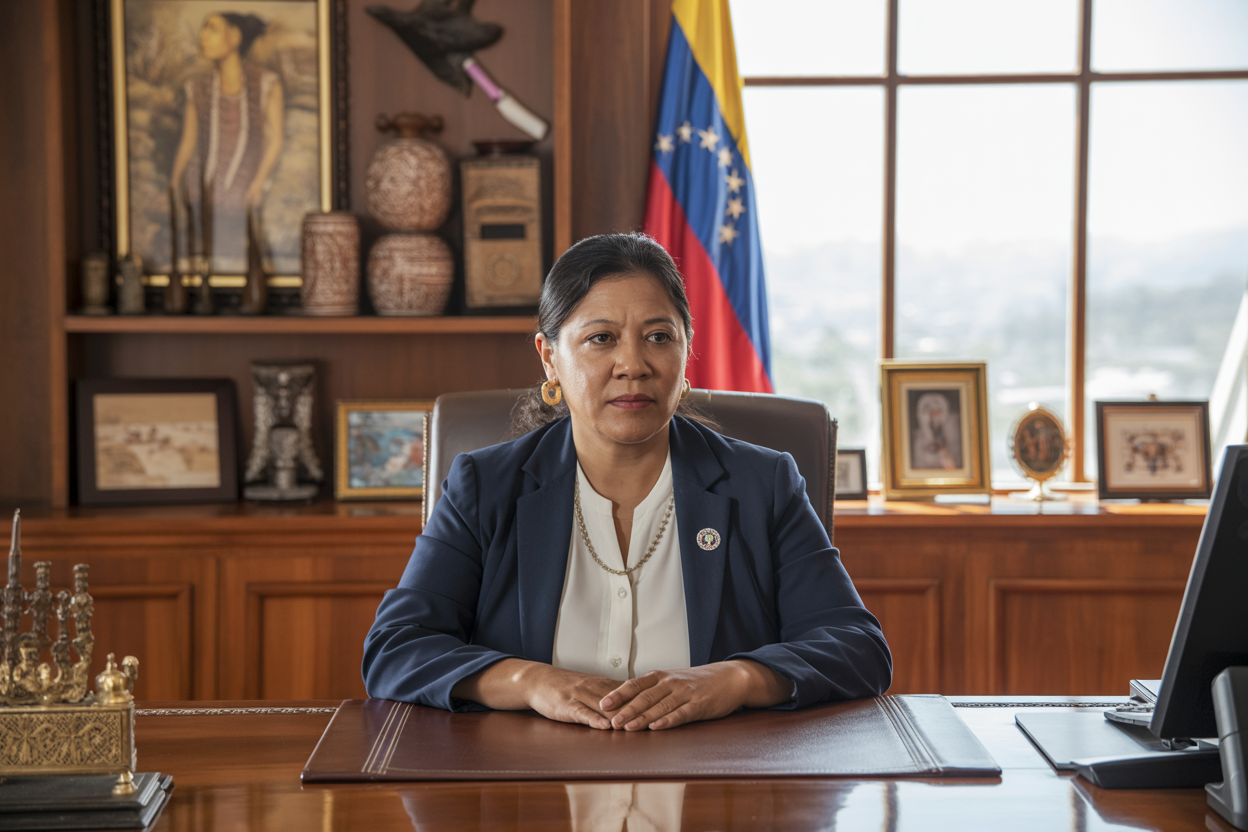
Aloha Nuñez emerged from the windswept landscapes of the Guajira Peninsula, where the Wayuu people have maintained their ancestral traditions for centuries despite colonial pressures and modern state encroachment. Her journey to becoming Minister of Indigenous Peoples in Maduro’s government represents more than personal achievement – it embodies the aspirations of Venezuela’s largest indigenous group and their struggle for meaningful political participation.
Growing up in a traditional Wayuu family in the municipality of Mara, Zulia state, Nuñez experienced firsthand the challenges facing indigenous communities in contemporary Venezuela. The Wayuu territory spans both Venezuela and Colombia, creating unique jurisdictional complexities that would later shape her understanding of indigenous sovereignty issues. Her childhood was marked by the dualities of maintaining traditional practices while navigating an increasingly interconnected world where indigenous voices were systematically marginalized.
The Wayuu social structure, built around matrilineal clans called “e’iruku,” provided Nuñez with early lessons in leadership and community organization. Women traditionally hold significant authority in Wayuu society, serving as mediators in conflicts and custodians of cultural knowledge. This cultural foundation proved instrumental in her later political development, as she learned to balance respect for traditional governance with the demands of modern political participation.
Nuñez’s political awakening came during the 1990s when neoliberal policies threatened indigenous land tenure across Latin America. She witnessed the environmental degradation caused by coal mining in her region, particularly the expansion of the Cerrejón mine, which displaced several Wayuu communities and contaminated traditional water sources. These experiences crystallized her understanding that indigenous rights required active political engagement rather than passive resistance.
Her activism began at the community level, organizing protests against mining companies and advocating for compensation for displaced families. She quickly distinguished herself as an effective spokesperson who could articulate indigenous concerns in terms that resonated with both traditional leaders and government officials. Her bilingual abilities – speaking Spanish, Wayuunaiki, and later learning English – made her an invaluable bridge between different worlds.
During the late 1990s and early 2000s, Nuñez became involved with regional indigenous organizations, serving first as a coordinator for women’s programs and later as a representative to national indigenous forums. Her work during this period focused on documenting traditional ecological knowledge and advocating for indigenous participation in environmental impact assessments for extractive industries.
The election of Hugo Chávez in 1998 opened new political possibilities for indigenous political representation Venezuela. Chávez’s rhetoric about including marginalized populations in his Bolivarian Revolution resonated with many indigenous leaders, including Nuñez. She joined the early mobilization efforts that brought indigenous voices to national political discussions, participating in the constitutional convention that would ultimately recognize indigenous rights in the 1999 constitution.
Nuñez’s role in the constitutional process was significant though often overlooked in mainstream accounts. She served on the subcommittee that drafted Article 119, which recognizes indigenous peoples’ rights to their ancestral territories and natural resources. Her input was crucial in ensuring that the language reflected indigenous worldviews rather than merely translating Western legal concepts into constitutional text.
Following the constitutional victory, Nuñez focused on implementation challenges. She recognized that constitutional recognition meant little without concrete mechanisms for enforcement and protection. Her work during this period involved building networks between indigenous communities and sympathetic government officials, creating informal channels for addressing urgent issues while formal institutions slowly developed.
Her reputation as an effective organizer and negotiator led to her appointment to various advisory positions within the Chávez government. She served on the National Council for Indigenous Peoples and played a key role in developing the first national census specifically designed to capture indigenous demographic data. This work required her to travel extensively throughout Venezuela, documenting the conditions and needs of dozens of indigenous communities.
The experience of conducting field research for the indigenous census deepened Nuñez’s understanding of the diversity within Venezuela’s indigenous population. While the Wayuu constitute the largest group, she encountered communities with radically different social structures, economic practices, and relationships with the state. This exposure broadened her perspective beyond Wayuu-specific concerns to encompass the full spectrum of indigenous experiences in Venezuela.
Nuñez’s leadership style emerged during these years, characterized by patient consensus-building and careful attention to cultural protocols. Unlike many politicians who impose external timelines and processes, she learned to work within indigenous decision-making frameworks that prioritize community consensus over individual authority. This approach, while sometimes frustrating to government bureaucrats accustomed to top-down directives, proved essential for building trust within indigenous communities.
Her academic pursuits complemented her practical political work. Nuñez completed a degree in Social Work at the University of Zulia, focusing her research on indigenous women’s roles in conflict resolution. Her thesis examined how traditional Wayuu mediation practices could inform modern restorative justice programs, bridging ancient wisdom with contemporary legal frameworks.
The academic work provided her with theoretical tools for analyzing the structural factors that perpetuate indigenous marginalization. She became particularly interested in how colonial legal systems continue to shape contemporary indigenous-state relations, even in contexts where constitutions formally recognize indigenous rights. This analysis would later inform her policy approach as minister.
Nuñez’s rise within government ranks accelerated during Chávez’s second term, as the administration sought to demonstrate concrete progress on indigenous issues. She was appointed Deputy Director of Indigenous Affairs in 2007, a position that required her to navigate the complex bureaucratic landscape of Venezuelan public administration while maintaining her community connections.
Her tenure in this role was marked by several significant achievements and notable challenges. She successfully advocated for increased funding for indigenous education programs and helped establish the first indigenous university programs taught in native languages. However, she also faced resistance from entrenched bureaucratic interests that viewed indigenous special programs as threats to administrative efficiency.
The experience taught her valuable lessons about working within state structures while maintaining indigenous perspectives. She developed strategies for protecting indigenous interests within broader government initiatives, learning to identify potential allies and neutralize opposition through careful coalition-building. These skills would prove essential in her later role as minister.
Nuñez’s personal story reflects broader patterns of indigenous political participation in twenty-first-century Latin America. Like many indigenous leaders of her generation, she navigated the tension between traditional authority structures and modern democratic institutions. Her success required mastering both worlds without fully abandoning either, creating new forms of political practice that honored indigenous values while engaging effectively with state power.
Her family background also shaped her political development in important ways. Coming from a family of traditional weavers and storytellers, she maintained strong connections to Wayuu cultural practices even as her political responsibilities expanded. She continued to participate in traditional ceremonies and maintained fluency in Wayuunaiki, ensuring that her political work remained grounded in community values.
The Wayuu emphasis on oral tradition particularly influenced her communication style as a political leader. Rather than relying solely on written documents and formal presentations, she incorporated storytelling techniques that made complex policy issues accessible to diverse audiences. This approach proved especially effective in community meetings where traditional communication patterns remained strong.
Her marriage and family life also reflected her commitment to maintaining cultural traditions while engaging in modern politics. She raised her children to be bilingual and bicultural, preparing them to navigate the same challenges she faced while contributing to the preservation of Wayuu cultural knowledge for future generations.
Aloha Nuñez’s appointment as Minister of Indigenous Peoples in the Maduro administration indigenous policy framework marked a pivotal moment for indigenous affairs Venezuela. Her ministerial agenda reflected decades of community-level experience translated into national policy, with land rights serving as the cornerstone of her comprehensive approach to indigenous empowerment.
The foundation of Nuñez’s land rights strategy rested on reimagining the relationship between indigenous communities and the Venezuelan state. Rather than viewing indigenous territories as empty spaces awaiting development or conservation areas requiring external management, her policies recognized these lands as living spaces integral to indigenous cultural survival and economic sustainability.
Her first major initiative involved creating a comprehensive mapping project to document indigenous territorial claims across Venezuela. This project represented far more than a bureaucratic exercise; it constituted a fundamental shift in how the state understood indigenous geography. Traditional government maps typically showed large areas of “uninhabited” or “underutilized” land, ignoring complex indigenous territorial systems based on seasonal use patterns, sacred sites, and traditional resource management practices.
The mapping initiative required unprecedented collaboration between indigenous communities and government technicians. Nuñez insisted that community elders and traditional authorities participate directly in the mapping process, ensuring that Western cartographic techniques captured indigenous spatial concepts. This approach created detailed territorial inventories that documented not only physical boundaries but also the cultural significance of specific areas within indigenous territories.
The project’s scope encompassed over forty distinct indigenous groups scattered across Venezuela’s diverse geographical regions. Each community presented unique challenges and opportunities, requiring Nuñez and her team to develop flexible methodologies that respected local decision-making processes while meeting government administrative requirements. The Yanomami territories in the Amazon required different approaches than Wayuu lands in the northern deserts, demanding cultural sensitivity and technical precision.
Community participation in the mapping process revealed the extent to which indigenous territories overlapped with areas designated for mineral extraction, agricultural development, and conservation programs. These overlaps had created ongoing conflicts that previous administrations had largely ignored or resolved in favor of non-indigenous interests. Nuñez’s ministry committed to addressing these conflicts through negotiation rather than imposed solutions.
The legal framework supporting indigenous land rights required substantial updating to reflect contemporary realities and international standards. Nuñez worked with legal experts and indigenous advocates to draft new regulations that strengthened the constitutional protections established in 1999. The updated legal framework clarified procedures for territorial demarcation, established mechanisms for resolving boundary disputes, and created protections against unauthorized entry into indigenous territories.
One of the most innovative aspects of Nuñez’s land rights agenda involved recognizing collective property rights that transcended traditional Western legal categories. Indigenous communities often maintained complex relationships with land that combined individual family use rights with collective community ownership and broader territorial sovereignty. Her legal framework attempted to capture this complexity while providing security that would be recognized by Venezuelan courts and international bodies.
The demarcation process itself represented a massive undertaking requiring coordination between multiple government agencies, indigenous communities, and technical specialists. Nuñez established a streamlined bureaucratic process that reduced the time required for territorial recognition from decades to months in many cases. The new procedures prioritized community self-determination while ensuring that demarcated territories received full legal protection.
Initial results from the demarcation program exceeded expectations, with over thirty indigenous territories receiving official recognition during Nuñez’s first two years as minister. These successes demonstrated that bureaucratic efficiency and indigenous rights were compatible when policies reflected genuine commitment to indigenous self-determination. The program’s success also generated political support for expanding indigenous land rights protection.
Resource management within demarcated territories emerged as a crucial policy area requiring careful balance between indigenous autonomy and environmental protection. Many indigenous territories contained valuable natural resources, including minerals, timber, and biodiversity that attracted outside interest. Nuñez’s policies established frameworks for indigenous communities to control resource extraction while benefiting economically from their territorial wealth.
The ministry developed innovative benefit-sharing agreements that ensured indigenous communities received fair compensation for any resource extraction within their territories. These agreements went beyond simple royalty payments to include technology transfer, employment opportunities for community members, and environmental restoration funding. The goal was creating sustainable economic development that strengthened rather than undermined indigenous cultural practices.
Traditional ecological knowledge received special protection under Nuñez’s land rights framework. Indigenous communities possessed sophisticated understanding of local ecosystems developed over centuries of sustainable resource management. The ministry created programs to document this knowledge and ensure that environmental policies reflected indigenous wisdom rather than imposing external management systems.
Water rights represented a particularly complex aspect of indigenous land rights requiring specialized attention. Many indigenous territories contained crucial water sources for both community use and broader regional needs. Nuñez’s policies established indigenous water sovereignty while recognizing legitimate downstream users and environmental protection requirements. The framework created collaborative management systems that honored indigenous authority while addressing broader water security concerns.
Sacred sites within indigenous territories received enhanced protection under new regulations drafted during Nuñez’s tenure. These areas, often containing burial grounds, ceremonial locations, and spiritually significant natural features, required special safeguards against disturbance or commercialization. The ministry worked with religious authorities and traditional leaders to identify sacred sites and develop appropriate protection protocols.
Urban indigenous land rights emerged as an unexpected policy area requiring innovative solutions. Many indigenous people had migrated to cities while maintaining connections to rural territories, creating complex legal situations regarding land rights and cultural identity. Nuñez’s ministry developed policies recognizing indigenous rights in urban contexts while preserving rural territorial claims.
The intersection of indigenous land rights with Venezuela’s broader land reform program required careful coordination to avoid conflicts between indigenous communities and other rural populations seeking land access. Nuñez worked with agricultural reform agencies to ensure that land redistribution programs respected existing indigenous territories while addressing legitimate needs of landless farmers from other backgrounds.
Border territories presented unique challenges for indigenous land rights implementation. Many indigenous territories crossed international boundaries, creating jurisdictional complexities that required diplomatic as well as legal solutions. Nuñez’s ministry collaborated with foreign affairs agencies to develop protocols for protecting transnational indigenous territories while respecting international boundaries and bilateral agreements.
Climate change impacts on indigenous territories became an increasingly important consideration in land rights policies. Rising sea levels threatened coastal indigenous communities, while changing precipitation patterns affected traditional agriculture and resource management. Nuñez’s ministry developed adaptation programs that combined indigenous knowledge with modern climate science to help communities adjust to environmental changes.
The economic dimensions of indigenous land rights required policies that supported traditional livelihoods while creating opportunities for community-controlled development. Nuñez’s ministry established programs supporting indigenous agriculture, crafts production, and ecotourism as alternatives to extractive industries. These programs prioritized indigenous ownership and control while providing access to markets and technical assistance.
Legal education for indigenous communities became a crucial component of land rights protection. Many community members lacked understanding of their legal rights or the procedures for defending their territories against encroachment. The ministry created educational programs that taught indigenous leaders about land rights law while respecting traditional decision-making processes and authority structures.
Conflict resolution mechanisms for land rights disputes required developing new approaches that combined indigenous justice systems with state legal frameworks. Traditional indigenous methods for resolving territorial conflicts often differed significantly from Western legal procedures, creating opportunities for misunderstanding and ineffective outcomes. Nuñez’s ministry created hybrid institutions that honored indigenous dispute resolution while ensuring compatibility with national legal requirements.
The implementation of indigenous land rights policies under Aloha Nuñez’s leadership encountered formidable obstacles that reflected deeper structural issues within Venezuelan society and governance systems. These challenges ranged from bureaucratic resistance and economic pressures to environmental degradation and cultural misunderstanding, requiring sustained political commitment and innovative problem-solving approaches.
Bureaucratic inertia represented one of the most persistent challenges facing Nuñez’s territorial protection initiatives. Decades of institutional neglect had created government agencies ill-equipped to handle indigenous issues with the sensitivity and expertise required for effective policy implementation. Many civil servants lacked basic understanding of indigenous cultures and legal rights, leading to inadvertent policy violations and communication breakdowns that undermined territorial protection efforts.
Training government personnel in indigenous rights and cultural protocols became a massive undertaking requiring sustained investment in human resources development. Nuñez’s ministry established comprehensive education programs for civil servants working in areas with significant indigenous populations. These programs covered legal frameworks, cultural sensitivity, communication protocols, and practical skills for working effectively with indigenous communities.
Resistance from other government agencies posed significant challenges for territorial protection efforts. Agencies responsible for mining, agriculture, and infrastructure development often viewed indigenous territorial rights as obstacles to economic progress rather than legitimate legal protections. This perspective created ongoing conflicts over land use priorities and required continuous negotiation to prevent policy implementation from stalling in inter-agency disputes.
The Ministry of Mining proved particularly resistant to indigenous territorial protections, as many demarcated areas contained valuable mineral deposits that the government sought to exploit for revenue generation. Nuñez found herself constantly defending indigenous rights against pressure to open territorial lands for mining concessions, requiring careful documentation of legal protections and persistent advocacy within government decision-making processes.
Economic pressures from Venezuela’s ongoing fiscal crisis intensified challenges to territorial protection. Government officials under pressure to generate revenue often viewed indigenous territories as underutilized assets that should contribute more directly to national economic development. This perspective ignored the economic value of indigenous sustainable resource management and the constitutional protections that guaranteed territorial autonomy.
International economic sanctions imposed on Venezuela complicated territorial protection efforts by limiting access to technical assistance and funding for conservation programs. Many international organizations that traditionally supported indigenous rights initiatives faced restrictions on their activities in Venezuela, reducing available resources for territorial protection and community development programs.
Illegal mining operations represented a direct threat to indigenous territories that proved difficult to control through conventional law enforcement approaches. Gold mining, in particular, expanded rapidly in indigenous areas of the Amazon region, bringing environmental destruction, cultural disruption, and violence to previously isolated communities. The illegal nature of these operations made them resistant to normal regulatory approaches and required specialized enforcement strategies.
The environmental and health impacts of illegal mining created urgent humanitarian crises within indigenous territories. Mercury contamination from gold processing poisoned water sources and food supplies, while deforestation and soil erosion destroyed traditional resource management systems. Nuñez’s ministry worked with health agencies to provide medical care for affected communities while developing strategies for environmental restoration.
Drug trafficking through indigenous territories created additional security challenges that overwhelmed local capacity for territorial protection. Armed groups involved in drug trade often established operations in remote indigenous areas, displacing communities and disrupting traditional governance systems. These security threats required coordination with military and police agencies that often lacked cultural sensitivity for working in indigenous contexts.
The complex relationship between indigenous communities and Venezuelan military forces complicated territorial protection efforts. While the military had responsibilities for border security and sovereignty protection, their presence often created tension with indigenous communities that valued territorial autonomy. Nuñez worked to develop protocols for military operations in indigenous territories that respected community authority while meeting national security requirements.
Climate change impacts on indigenous territories created new categories of threats requiring unprecedented policy responses. Rising temperatures and changing precipitation patterns disrupted traditional agricultural practices and forced communities to adapt resource management strategies developed over centuries. These environmental changes occurred too rapidly for traditional adaptation mechanisms to provide effective responses.
Coastal erosion threatened several indigenous communities with complete displacement from ancestral territories. Rising sea levels and increased storm intensity made some traditional settlements uninhabitable, forcing difficult decisions about relocation and territorial boundaries. Nuñez’s ministry worked with affected communities to develop relocation strategies that preserved cultural connections to traditional territories while ensuring access to safe housing and livelihoods.
Cultural preservation challenges emerged as younger generations of indigenous people increasingly integrated into mainstream Venezuelan society while maintaining territorial connections. This cultural evolution created complex questions about traditional authority structures and decision-making processes within indigenous communities. Nuñez had to balance respect for traditional governance with recognition of changing community dynamics and generational differences.
Education policies that failed to incorporate indigenous languages and cultural knowledge created additional challenges for territorial protection. Many young indigenous people lacked fluency in traditional languages and detailed knowledge of territorial boundaries and resource management practices. This knowledge gap threatened the long-term viability of indigenous territorial protection by weakening community capacity for self-governance and cultural transmission.
Technology integration presented both opportunities and challenges for territorial protection efforts. Geographic information systems and satellite monitoring could enhance territorial surveillance and documentation, but required technical training and equipment that many communities lacked. Nuñez’s ministry worked to provide technological tools while ensuring that communities maintained control over data collection and analysis.
Legal challenges to indigenous territorial rights came from multiple sources, including private landowners claiming prior rights, municipal governments seeking to expand jurisdiction, and business interests challenging territorial boundaries. These legal disputes required extensive documentation and expert legal representation that often exceeded community resources, creating dependencies on government legal support that could be withdrawn for political reasons.
International border disputes complicated territorial protection in areas where indigenous territories crossed national boundaries. Venezuelan territorial claims in Guyana directly affected indigenous communities whose traditional territories spanned both sides of the disputed border. These geopolitical tensions created uncertainty about territorial protections and limited opportunities for cross-border cooperation on indigenous rights issues.
Communication challenges within indigenous communities created obstacles for territorial protection policy implementation. Many communities remained geographically isolated with limited telecommunications infrastructure, making regular communication with government agencies difficult. Language barriers also complicated communication, as many indigenous languages lacked written forms and required interpretation for official documentation.
Resource limitations within Nuñez’s ministry constrained the scope and effectiveness of territorial protection programs. Limited budgets meant that many communities waited extended periods for technical assistance with territorial demarcation and protection planning. Staff shortages prevented the ministry from maintaining regular presence in remote communities, reducing effectiveness of monitoring and support programs.
Coordination challenges with international indigenous rights organizations created additional complications for territorial protection efforts. While international support was often valuable, external organizations sometimes imposed priorities and methodologies that conflicted with community preferences or government policies. Nuñez had to balance international advocacy support with respect for community autonomy and national sovereignty.
The politicization of indigenous issues within broader Venezuelan political conflicts created challenges for maintaining consistent territorial protection policies. Opposition political parties sometimes used indigenous rights issues to criticize government performance, while government supporters expected indigenous leaders to demonstrate political loyalty in exchange for policy support. These political pressures complicated efforts to maintain focus on territorial protection as a technical and legal issue.
Aloha Nuñez’s tenure as Minister of Indigenous Peoples generated significant changes in how indigenous communities related to each other and engaged with broader Venezuelan society. Her leadership facilitated unprecedented levels of inter-community dialogue that transcended traditional ethnic and territorial boundaries, creating new forms of indigenous solidarity and political cooperation that strengthened the overall indigenous rights movement.
The establishment of regular inter-community gatherings represented one of Nuñez’s most successful initiatives for promoting indigenous dialogue. These events brought together representatives from dozens of indigenous groups that had historically maintained limited contact due to geographical barriers, linguistic differences, and distinct cultural practices. The gatherings created opportunities for sharing experiences, comparing challenges, and developing collaborative solutions to common problems.
The first National Indigenous Assembly organized under Nuñez’s leadership attracted over 200 participants representing forty-three different indigenous groups from across Venezuela. The event required careful planning to accommodate diverse cultural protocols and communication needs, including simultaneous interpretation in multiple indigenous languages and Spanish. The assembly’s success demonstrated that meaningful inter-community dialogue was possible when appropriate cultural sensitivities were observed.
Language diversity among Venezuela’s indigenous communities had historically limited communication and cooperation between different groups. Nuñez’s ministry invested in developing translation capabilities that enabled communities speaking different languages to communicate effectively during meetings and collaborative projects. This language support proved essential for building trust and understanding across ethnic boundaries.
The ministry established a rotating hosting system for inter-community gatherings that allowed different indigenous communities to showcase their territories and cultural practices. This approach ensured that dialogue events were not concentrated in urban areas or dominated by larger indigenous groups with more political influence. Smaller communities gained opportunities to demonstrate their unique contributions to indigenous culture and knowledge.
Cultural exchange programs emerged as an unexpected outcome of increased inter-community dialogue. Communities began organizing visits that allowed members to experience different indigenous ways of life and learn from diverse approaches to common challenges. These exchanges strengthened appreciation for indigenous cultural diversity while building personal relationships that facilitated future cooperation.
The sharing of traditional ecological knowledge became a particularly valuable aspect of inter-community cooperation fostered by Nuñez’s initiatives. Communities facing similar environmental challenges could learn from each other’s adaptive strategies and resource management practices. This knowledge sharing proved especially important as climate change created new environmental pressures requiring innovative responses.
Collaborative advocacy strategies developed through inter-community dialogue strengthened indigenous political influence at national and international levels. Rather than competing for government attention and resources, indigenous communities began coordinating their advocacy efforts to present unified positions on key policy issues. This coordination increased the effectiveness of indigenous political participation and reduced opportunities for government agencies to exploit divisions between communities.
The development of joint economic initiatives represented another significant outcome of enhanced inter-community cooperation. Communities with complementary resources and skills began developing trading relationships and collaborative production projects that benefited all participants. These economic partnerships created sustainable revenue sources while preserving cultural autonomy and traditional practices.
Nuñez’s personal background as a Wayuu leader initially created concerns among some smaller indigenous groups that government policies would favor larger communities with greater political influence. Her ministry worked actively to address these concerns by ensuring that policy development processes included meaningful participation from all indigenous groups regardless of size or political influence. This inclusive approach helped build trust across ethnic boundaries.
The ministry established advisory councils with rotating leadership that ensured all indigenous groups had opportunities to influence policy development. These councils created formal mechanisms for inter-community consultation and decision-making that respected traditional governance structures while enabling effective participation in modern political processes.
Conflict resolution mechanisms developed through inter-community dialogue proved valuable for addressing disputes that arose between different indigenous groups. Traditional conflicts over territorial boundaries, resource access, and cultural practices could now be addressed through established forums for negotiation and mediation rather than escalating into prolonged disputes that weakened overall indigenous political effectiveness.
Youth participation in inter-community dialogue created opportunities for younger indigenous people to develop leadership skills and cultural knowledge that strengthened their communities’ capacity for self-governance and political participation. Young leaders who participated in these programs often became bridges between traditional and modern ways of life, facilitating cultural adaptation while preserving essential indigenous values.
The ministry’s emphasis on women’s participation in inter-community dialogue reflected Nuñez’s understanding of women’s traditional roles in many indigenous societies as mediators and cultural knowledge keepers. Women’s perspectives proved essential for addressing community health, education, and social welfare issues that affected all indigenous groups.
Educational initiatives that emerged from inter-community cooperation included the development of indigenous cultural curricula that could be adapted for use in different communities. Rather than imposing standardized educational approaches, these curricula celebrated cultural diversity while ensuring that young indigenous people gained knowledge and skills needed for contemporary life.
Technology sharing through inter-community networks enabled smaller or more isolated communities to benefit from innovations developed elsewhere. Communities that had successfully implemented renewable energy systems, sustainable agriculture techniques, or telecommunications infrastructure shared their expertise with others facing similar challenges.
The documentation of indigenous languages and cultural practices became a collaborative effort involving multiple communities working together to preserve their heritage for future generations. This cooperation was particularly important for endangered languages and cultural traditions that required immediate attention to prevent permanent loss.
Healthcare initiatives developed through inter-community cooperation combined traditional healing practices with modern medical knowledge to create comprehensive health programs that served indigenous populations more effectively than either approach alone. Traditional healers from different communities shared knowledge about medicinal plants and healing techniques while learning to integrate their practices with modern healthcare systems.
Environmental protection efforts gained strength through inter-community cooperation as indigenous groups coordinated their responses to threats affecting multiple territories. Collaborative monitoring systems enabled communities to track environmental changes across larger geographical areas and develop coordinated responses to pollution, deforestation, and climate change impacts.
The development of indigenous media networks facilitated ongoing communication between communities and enabled the preservation and transmission of cultural knowledge through radio, video, and digital platforms. These media initiatives helped maintain cultural connections even when communities were separated by geographical barriers or political boundaries.
Research partnerships between indigenous communities and academic institutions became more effective when coordinated through inter-community dialogue networks. Rather than individual communities being approached by researchers with limited understanding of indigenous perspectives, collaborative networks could evaluate research proposals and ensure that studies served community needs while advancing scientific knowledge.
International advocacy efforts gained effectiveness through inter-community cooperation as Venezuelan indigenous groups presented unified positions in international forums. This coordination enabled more effective participation in United Nations indigenous rights mechanisms and regional indigenous networks while ensuring that diverse community perspectives were represented.
The economic benefits of inter-community cooperation extended beyond specific trading relationships to include advocacy for policy changes that benefited all indigenous communities. Coordinated lobbying efforts achieved policy victories that would have been impossible for individual communities to accomplish alone, demonstrating the power of unity in political action.
Cultural revitalization efforts gained momentum through inter-community cooperation as communities shared strategies for maintaining traditional practices in contemporary contexts. This sharing was particularly valuable for communities that had experienced significant cultural disruption and needed support for rebuilding traditional institutions and knowledge systems.
The long-term impact of enhanced inter-community dialogue and cooperation extends beyond immediate policy achievements to include fundamental changes in how indigenous communities understand their place in Venezuelan society and their relationships with each other. These changes strengthened indigenous political influence while preserving cultural diversity and community autonomy.
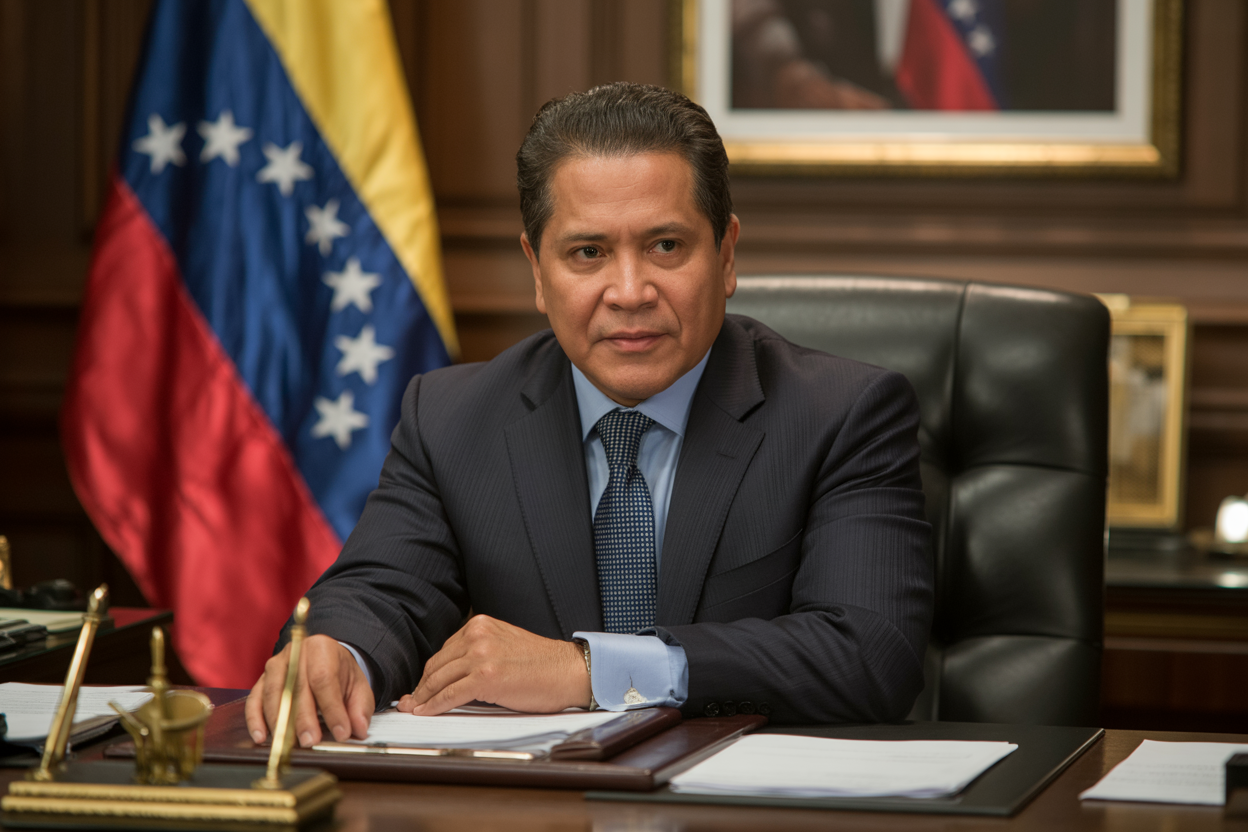
Liborio Guarulla made Venezuelan political history in 2008 when he became the country’s first indigenous governor, winning the election in Amazonas state. His victory wasn’t just a personal achievement—it represented a seismic shift in how indigenous peoples could participate in Venezuelan politics at the highest levels of regional government.
Growing up in a Baniva community along the Guainía River, Guarulla experienced firsthand the challenges facing indigenous populations in Venezuela’s most remote regions. His early life was marked by the struggle to access basic education, healthcare, and economic opportunities that most Venezuelans took for granted. These experiences would later shape his approach to governance and policy-making when he assumed office.
The path to the governor’s mansion wasn’t straightforward for Guarulla. He started his political career as a municipal councilor in Puerto Ayacucho, the capital of Amazonas state, where he quickly gained recognition for his advocacy on behalf of indigenous communities. His ability to navigate between traditional indigenous governance structures and modern Venezuelan political systems set him apart from other candidates.
During his campaign for governor, Guarulla faced significant skepticism from various quarters. Some questioned whether an indigenous leader could effectively manage a state government, while others worried about his lack of formal political experience at the executive level. These doubts reflected deeper prejudices about indigenous capabilities that had persisted throughout Venezuelan society for centuries.
Guarulla’s electoral victory came at a time when President Hugo Chávez was actively promoting indigenous rights and participation in government. The timing wasn’t coincidental—Chávez saw indigenous leaders like Guarulla as natural allies in his broader project of social transformation and anti-colonial politics. This alignment would prove crucial for Guarulla’s effectiveness as governor.
The new governor inherited an Amazonas state facing numerous challenges. Infrastructure was severely underdeveloped, with many communities lacking basic services like electricity, clean water, and reliable transportation. The state’s vast territory, covering over 180,000 square kilometers, made governing particularly difficult, as reaching remote communities required extensive travel by river or small aircraft.
Guarulla’s approach to governance reflected his indigenous background in several key ways. He emphasized consensus-building and consultation with community leaders, drawing on traditional decision-making processes that prioritized collective input over top-down mandates. This style sometimes clashed with the more centralized approach favored by the national government, creating tensions that would persist throughout his tenure.
One of Guarulla’s most significant contributions as governor was his work to strengthen indigenous territorial rights. Under his leadership, Amazonas state became more assertive in defending indigenous land claims against encroachment from mining companies, illegal loggers, and other external actors. This advocacy extended beyond his own state, as Guarulla became a vocal spokesperson for indigenous territorial rights throughout Venezuela.
The governor also prioritized improving relationships between different indigenous groups within Amazonas state. The region is home to multiple indigenous peoples, including the Yanomami, Piaroa, Guahibo, and many others, each with distinct languages, customs, and territorial claims. Guarulla worked to mediate conflicts and promote cooperation between these groups, drawing on his own experience navigating inter-community relationships.
Guarulla’s tenure as governor coincided with increased international attention on Amazon conservation and indigenous rights. He leveraged this attention to advocate for greater resources and support for Amazonas state, participating in international forums and building relationships with indigenous leaders from other Amazon countries. These connections would prove valuable for cross-border cooperation on environmental and cultural preservation issues.
The economic challenges facing Amazonas state under Guarulla’s leadership were particularly acute. The region’s economy relied heavily on small-scale agriculture, fishing, and limited tourism, with few opportunities for large-scale development that wouldn’t compromise environmental or cultural values. Guarulla had to balance pressure for economic growth with the need to protect indigenous ways of life and natural ecosystems.
Mining presented one of the most complex challenges during Guarulla’s governorship. While mining could provide much-needed revenue for the state, it also posed serious threats to indigenous communities and environmental integrity. Guarulla’s administration took a cautious approach to mining permits, prioritizing community consultation and environmental protection over rapid resource extraction.
Throughout his time as governor, Guarulla maintained close ties to his home community and continued participating in traditional indigenous governance structures. This dual allegiance sometimes created tensions, as the demands of state government didn’t always align with indigenous community priorities. However, it also gave him unique legitimacy as a bridge between two political worlds.
Guarulla’s leadership style as governor reflected indigenous values of collective responsibility and long-term thinking. Rather than focusing solely on short-term political gains, he emphasized policies that would benefit future generations. This approach sometimes put him at odds with political allies who preferred more immediate results that could be showcased during election cycles.
The media attention surrounding Guarulla’s historic governorship brought both opportunities and challenges. While the publicity helped raise awareness about indigenous issues and capabilities, it also subjected him to intense scrutiny that other governors might not have faced. Every decision was analyzed through the lens of his indigenous identity, creating additional pressure to succeed.
International indigenous rights organizations closely monitored Guarulla’s performance as governor, seeing his success or failure as having implications for indigenous political participation throughout Latin America. This international attention provided some protection against potential persecution but also created expectations that were sometimes difficult to meet given the structural constraints he faced.
Guarulla’s relationship with President Chávez evolved throughout his governorship, reflecting broader tensions within the Bolivarian movement about indigenous autonomy versus state centralization. While Chávez publicly supported indigenous rights, his government’s policies didn’t always align with indigenous priorities, creating difficult political situations for Guarulla to navigate.
The governor’s efforts to strengthen indigenous political participation extended beyond his own administration. He mentored young indigenous leaders, encouraged their participation in educational and professional development programs, and advocated for their inclusion in various levels of government. Many current indigenous leaders in Venezuelan politics trace their inspiration to Guarulla’s groundbreaking example.
When Guarulla’s term as governor ended in 2017, his legacy was complex but undeniably significant. He had proven that indigenous leaders could effectively govern in modern political systems while maintaining connections to their cultural roots. His tenure paved the way for other indigenous politicians and demonstrated the valuable perspectives that indigenous leaders could bring to governance.
The transition from governor to his current advisory role under Maduro represented another evolution in Guarulla’s political career. Rather than retiring from public service, he chose to continue contributing his expertise and experience to Venezuelan indigenous policy at the national level, bringing the lessons learned from his governorship to bear on broader policy challenges.
Guarulla’s commitment to educational reform stemmed from his personal experience with the barriers that indigenous children faced in accessing quality education. Having struggled to complete his own schooling due to language barriers, geographic isolation, and culturally inappropriate curricula, he understood intimately how the existing educational system failed indigenous students.
When he became governor of Amazonas state, one of Guarulla’s first priorities was conducting a comprehensive assessment of educational access and quality in indigenous communities. The findings were sobering: attendance rates were far below national averages, dropout rates were extremely high, and many communities had no schools at all. Those schools that did exist often lacked qualified teachers, appropriate materials, and basic infrastructure.
The language barrier represented one of the most significant challenges. Most indigenous children spoke their native languages at home but were expected to learn exclusively in Spanish once they entered school. This linguistic disconnect contributed to high dropout rates and poor academic performance, as children struggled to understand instruction in a language they barely knew.
Guarulla’s administration pioneered bilingual education programs that recognized indigenous languages as valuable educational tools rather than obstacles to overcome. These programs started with instruction in children’s native languages before gradually introducing Spanish as a second language. The approach required developing new curricula, training teachers, and creating educational materials in multiple indigenous languages.
Developing educational materials in indigenous languages proved particularly challenging, as many of these languages had limited written traditions. Guarulla’s administration worked with indigenous elders and linguists to create writing systems, develop vocabulary for modern concepts, and produce textbooks that reflected indigenous worldviews while meeting official educational standards.
Teacher training became another crucial component of Guarulla’s educational reforms. Most teachers working in indigenous communities came from non-indigenous backgrounds and had little understanding of indigenous cultures or languages. The governor’s administration established training programs that helped teachers understand indigenous pedagogical approaches and develop cultural sensitivity.
Guarulla also advocated for recruiting more indigenous teachers, recognizing that they could serve as cultural bridges between traditional knowledge systems and formal education. However, this effort faced challenges due to the limited number of indigenous people with formal teaching credentials. His administration developed alternative certification programs that recognized traditional knowledge holders as qualified educators.
The curriculum reforms implemented under Guarulla’s leadership went beyond language issues to address the cultural content of education. Traditional curricula often ignored or misrepresented indigenous history, cultures, and contributions to Venezuelan society. The new programs incorporated indigenous knowledge systems, traditional ecological practices, and historical perspectives that had previously been excluded from formal education.
One innovative aspect of these educational reforms was the integration of traditional indigenous governance and decision-making processes into school administration. Rather than imposing external management structures, schools in indigenous communities began operating according to traditional consensus-building practices, with community elders and traditional leaders playing active roles in educational planning.
Guarulla’s administration also recognized that education extended beyond formal schooling to include traditional knowledge transmission systems. The reforms created space for indigenous elders to share their expertise with younger generations, ensuring that traditional skills, stories, and wisdom wouldn’t be lost in the push for formal education.
The geographic challenges of providing education in Amazonas state required creative solutions. Many indigenous communities were accessible only by river or small aircraft, making it impossible for children to attend schools in larger towns. Guarulla’s administration developed mobile education programs and distance learning initiatives tailored to indigenous contexts.
These mobile programs brought teachers and educational resources directly to remote communities, eliminating the need for children to leave their families and cultural contexts to receive education. The programs were designed to be flexible, adapting to seasonal migration patterns and traditional economic activities that required family participation.
Technology played an increasingly important role in Guarulla’s educational reforms, though its implementation required careful consideration of indigenous values and practices. The administration introduced computer and internet access in some schools while ensuring that technology use complemented rather than replaced traditional learning methods.
The educational reforms also addressed the economic barriers that prevented many indigenous children from attending school. Families often needed children’s labor for subsistence activities, making school attendance a financial hardship. Guarulla’s administration developed programs that provided economic support to families while their children attended school.
Higher education access became another focus of Guarulla’s reforms. Very few indigenous students had historically progressed to university education, partly due to poor preparation at lower levels and partly due to cultural and economic barriers. The administration worked with universities to develop preparatory programs and support systems for indigenous students.
Professional development programs were created specifically for indigenous young adults who wanted to pursue careers in education, healthcare, law, and other fields that could benefit their communities. These programs recognized that indigenous communities needed professionals who understood their cultures and could work effectively within traditional governance systems.
Guarulla’s educational reforms also emphasized environmental education, recognizing indigenous peoples’ traditional roles as environmental stewards. Curricula incorporated traditional ecological knowledge alongside modern environmental science, creating educational approaches that honored indigenous wisdom while preparing students for contemporary environmental challenges.
The evaluation and assessment methods used in indigenous schools were modified to reflect different cultural approaches to learning and knowledge demonstration. Traditional testing methods often failed to capture indigenous students’ knowledge and capabilities, leading to unfair assessments of their academic progress.
Community-based evaluation systems were developed that allowed indigenous communities to assess educational quality according to their own standards and priorities. These systems considered not just academic achievement but also students’ cultural knowledge, community contribution, and traditional skill development.
Guarulla’s administration faced significant resistance to some educational reforms from various quarters. Some national education officials questioned whether bilingual programs met official standards, while some indigenous communities worried that formal education would undermine traditional knowledge systems. Navigating these tensions required careful diplomacy and compromise.
The funding challenges for educational reforms were substantial, as Amazonas state had limited resources and the national government’s support for indigenous-specific programs was inconsistent. Guarulla’s administration had to be creative in securing resources, often relying on international organizations and partnerships with universities and NGOs.
Documentation and evaluation of the educational reforms’ impact became crucial for demonstrating their effectiveness and securing continued support. The administration developed monitoring systems that tracked not just traditional academic indicators but also measures of cultural preservation and community satisfaction.
Teacher retention in remote indigenous communities remained an ongoing challenge throughout Guarulla’s governorship. Even well-intentioned teachers often struggled with the isolation and cultural differences, leading to high turnover rates that disrupted educational continuity. The administration developed support systems to help teachers adapt and remain in their positions.
The integration of traditional ecological knowledge into science curricula proved particularly successful, as it demonstrated the sophisticated understanding that indigenous communities had developed about their environments. These programs helped indigenous students see their traditional knowledge as valuable and scientifically relevant rather than inferior to Western science.
Guarulla’s educational reforms also addressed the specific needs of indigenous girls, who faced additional barriers to education due to traditional gender roles and early marriage practices. Programs were developed to encourage girls’ continued education while respecting cultural values and family traditions.
The legacy of Guarulla’s educational reforms extended beyond his tenure as governor. Many of the programs and approaches he pioneered were adopted by other states with significant indigenous populations, and some elements were incorporated into national education policy. His work demonstrated that educational reform could honor indigenous cultures while preparing students for participation in broader Venezuelan society.
Current educational initiatives under Maduro’s administration build on many of the foundations laid by Guarulla’s pioneering work. His ongoing advisory role allows him to continue influencing educational policy at the national level, ensuring that lessons learned in Amazonas state inform broader indigenous education strategies.
The success of these educational reforms in improving indigenous students’ academic outcomes while preserving cultural identity provides a model for other Latin American countries facing similar challenges. International indigenous rights organizations frequently cite Guarulla’s work as an example of effective indigenous-led educational reform.
Liborio Guarulla’s approach to cultural preservation reflected his deep understanding that indigenous cultures weren’t museum pieces to be protected behind glass, but living, evolving traditions that needed space to grow and adapt. His programs recognized that cultural preservation required active community participation and couldn’t be imposed from outside, even by well-meaning government officials.
The cultural preservation initiatives under Guarulla’s leadership began with comprehensive documentation efforts aimed at recording indigenous languages, stories, songs, and traditional practices before they disappeared. These efforts involved working closely with indigenous elders who served as living libraries of cultural knowledge, recognizing that their passing would mean irreplaceable losses for their communities.
Language preservation became a cornerstone of Guarulla’s cultural programs. Amazonas state is home to dozens of indigenous languages, many spoken by only a few hundred people and at risk of disappearing within a generation. His administration established language documentation projects that worked with native speakers to create dictionaries, grammar guides, and audio recordings.
These language preservation efforts went beyond simple documentation to include practical applications that would help languages remain vital parts of community life. Radio programs in indigenous languages were established, bringing news, music, and cultural content to remote communities in their native tongues. These broadcasts served not only to preserve languages but to demonstrate their continued relevance in modern contexts.
The development of writing systems for previously oral languages represented a particularly complex challenge. Many indigenous languages in Amazonas had rich oral traditions but lacked standardized writing systems. Guarulla’s administration worked with linguists and community members to develop practical writing systems that could be easily learned and used by community members.
Traditional music and dance preservation programs were established to ensure that these important cultural expressions would continue to be passed down to younger generations. However, rather than treating these art forms as static traditions, the programs encouraged innovation and evolution while maintaining cultural authenticity.
Master-apprentice programs were created to facilitate knowledge transfer between elders and young people. These programs paired traditional knowledge holders with young community members who wanted to learn specific skills, from traditional craftwork to medicinal plant preparation to ceremonial practices.
The preservation of traditional ecological knowledge became another major focus of Guarulla’s cultural programs. Indigenous communities in Amazonas had developed sophisticated understanding of their environments over thousands of years, knowledge that proved increasingly valuable as environmental challenges mounted. Programs documented traditional farming practices, hunting and fishing techniques, and medicinal plant uses.
Guarulla’s administration recognized that cultural preservation couldn’t succeed without addressing the economic challenges that were forcing young indigenous people to abandon their communities in search of work. Cultural preservation programs were designed to create economic opportunities that allowed people to earn livelihoods while maintaining their cultural connections.
Traditional craft production was supported through programs that helped artisans improve their techniques, access better materials, and find markets for their products. These initiatives recognized that indigenous crafts weren’t just cultural artifacts but potential sources of income that could support community sustainability.
Eco-tourism initiatives were developed that allowed indigenous communities to share their cultures with visitors while maintaining control over how their traditions were presented. These programs emphasized authentic cultural exchange rather than superficial tourist entertainment, ensuring that communities benefited economically while preserving their dignity.
The documentation of traditional governance systems became another important component of cultural preservation efforts. Indigenous communities in Amazonas had developed sophisticated systems of leadership, conflict resolution, and collective decision-making that offered valuable alternatives to Western democratic models. Guarulla’s programs worked to document these systems and support their continued use within indigenous communities.
Ceremonial and spiritual practice preservation required particularly sensitive handling, as many of these traditions were considered sacred and not appropriate for public documentation. Guarulla’s administration worked closely with traditional spiritual leaders to determine what aspects of ceremonial life could be preserved through documentation and what needed to remain within traditional knowledge-sharing systems.
The role of indigenous women as cultural knowledge keepers received special attention in Guarulla’s preservation programs. Women often served as the primary transmitters of cultural knowledge to children, and their participation was essential for successful cultural preservation. Programs were designed to honor and support women’s traditional roles while creating opportunities for their expanded participation in preservation efforts.
Traditional food systems and agricultural practices were documented and promoted as part of cultural preservation efforts. Indigenous communities had developed crops and farming techniques specifically adapted to Amazonian conditions, knowledge that proved valuable for sustainable agriculture and food security. Programs worked to maintain traditional seed varieties and farming practices.
The integration of traditional medicine preservation with modern healthcare created opportunities for cultural preservation that also served practical community needs. Traditional healers worked with healthcare professionals to document medicinal plant uses and traditional healing practices, ensuring this knowledge wouldn’t be lost while creating bridges between traditional and modern medicine.
Storytelling traditions received significant attention in Guarulla’s cultural preservation programs. Indigenous communities had maintained rich oral traditions that served not only as entertainment but as vehicles for transmitting values, history, and practical knowledge. Programs worked to record these stories while supporting continued oral transmission.
The preservation of traditional architectural knowledge became important as communities faced pressure to adopt modern building techniques that weren’t well-suited to local conditions. Programs documented traditional construction methods and promoted their continued use, recognizing that indigenous architecture represented sophisticated adaptation to local environmental conditions.
Digital technology played an increasingly important role in cultural preservation efforts, though its use required careful consideration of indigenous values and practices. Digital archives were created to store cultural materials in formats that could be easily accessed by community members while maintaining appropriate access restrictions for sacred or sensitive materials.
Community-based cultural centers were established to serve as focal points for preservation activities and cultural transmission. These centers provided spaces for elders to share knowledge with younger generations, for traditional crafts to be practiced and taught, and for cultural materials to be stored and accessed by community members.
The relationship between cultural preservation and formal education became a key focus of Guarulla’s programs. Rather than seeing traditional culture and modern education as conflicting forces, his initiatives worked to integrate cultural knowledge into educational curricula and use schools as venues for cultural transmission.
Guarulla’s administration also addressed the challenges that migration and urbanization posed for cultural preservation. Programs were developed to maintain cultural connections for indigenous people who had moved to cities, creating urban cultural centers and supporting regular community visits that helped maintain traditional ties.
International cooperation became important for cultural preservation efforts, particularly for communities whose traditional territories crossed national borders. Guarulla’s administration worked with indigenous leaders in Colombia and Brazil to coordinate preservation efforts and maintain cultural connections that transcended political boundaries.
The documentation of traditional legal systems provided valuable insights into indigenous approaches to justice and conflict resolution. These systems often emphasized restoration and community healing rather than punishment, offering alternative models that could inform broader criminal justice reform.
Climate change adaptation became an increasingly important aspect of cultural preservation as environmental changes threatened traditional ways of life. Programs worked to document traditional knowledge about environmental adaptation while supporting communities’ efforts to maintain their cultures in changing conditions.
The evaluation of cultural preservation programs required developing new metrics that went beyond simple counting of documented materials to assess the vitality and continuity of cultural practices within communities. Success was measured not just by what was preserved but by how well communities were able to maintain and transmit their cultures to future generations.
Youth engagement remained a constant challenge for cultural preservation programs, as young people were often more attracted to modern urban lifestyles than traditional community life. Programs had to find ways to make traditional cultures relevant and appealing to young people without compromising their authenticity.
The balance between preservation and evolution proved to be one of the most complex aspects of Guarulla’s cultural programs. While the goal was to maintain traditional cultures, programs also had to recognize that living cultures naturally evolve and adapt to changing circumstances. The challenge was supporting positive evolution while preventing the loss of core cultural elements.
Guarulla’s legacy in cultural preservation continues to influence current indigenous policy under the Maduro administration. His work demonstrated that effective cultural preservation required indigenous leadership, community participation, and recognition of cultures as living, dynamic systems rather than static traditions to be frozen in time.
The model of cultural preservation developed under Guarulla’s leadership has been studied and adapted by indigenous communities throughout Latin America. His approach of combining traditional knowledge with modern preservation techniques while maintaining community control over cultural materials has proven influential beyond Venezuela’s borders.
Current cultural preservation initiatives continue to build on the foundations laid during Guarulla’s governorship, with many of the programs he established still operating and evolving to meet new challenges. His ongoing advisory role allows him to continue influencing national cultural policy and ensure that lessons learned in Amazonas state inform broader preservation strategies.
Nicia Maldonado’s journey into Venezuelan politics began far from Caracas, deep within the Amazon rainforest where indigenous communities have maintained their traditional governance systems for centuries. Born into the Yanomami people, one of the largest indigenous groups in the Amazon basin, Maldonado’s early exposure to community organizing came through her grandmother’s role as a village elder and mediator in territorial disputes.
During the 1990s, when Venezuela was experiencing significant political upheaval and economic instability, many Amazonian communities found themselves increasingly marginalized from national decision-making processes. Maldonado, then in her twenties, witnessed firsthand how government policies created in distant Caracas affected her people’s access to healthcare, education, and land rights. This disconnect between policy makers and indigenous communities sparked her passion for grassroots organizing.
Her first major organizing effort took place in 1998, when mining companies began encroaching on traditional Yanomami territories in the Orinoco River basin. Working alongside other young indigenous activists, Maldonado helped coordinate resistance efforts across multiple villages, organizing peaceful protests and documentation campaigns to highlight illegal mining activities. The campaign involved traveling by canoe between remote settlements, often taking weeks to reach communities that had never been visited by government officials.
What set Maldonado apart from other organizers was her ability to bridge traditional indigenous decision-making structures with modern political advocacy techniques. She understood that effective grassroots organizing in Amazonian communities required respecting ancestral protocols while adapting to contemporary challenges. During village assemblies, she would begin with traditional opening ceremonies before introducing concepts like legal documentation, media outreach, and political lobbying.
One of her most successful early campaigns focused on establishing indigenous-controlled health clinics in remote areas where government services were virtually non-existent. Maldonado organized inter-tribal cooperation between Yanomami, Piaroa, and Ye’kwana communities, creating a network of community health workers who could provide basic medical care while maintaining traditional healing practices. The initiative started with three villages in 2001 and expanded to over forty communities by 2005.
The health clinic network became a model for indigenous self-determination that caught the attention of Hugo Chávez’s administration. Maldonado’s approach emphasized community ownership rather than top-down service delivery, training local people to manage clinics, maintain medical supplies, and coordinate with urban medical centers when necessary. This grassroots model demonstrated how indigenous communities could maintain autonomy while engaging with national healthcare systems.
Maldonado’s organizing philosophy centered on the principle of “collective consensus,” a traditional Yanomami decision-making process that requires extensive discussion until all community members reach agreement. She adapted this approach for modern political advocacy, facilitating multi-day assemblies where communities would thoroughly debate issues before taking action. These gatherings often involved representatives from dozens of villages, creating a network of indigenous political participation that extended across vast areas of the Amazon.
Her ability to navigate between indigenous and non-indigenous political systems proved crucial during land rights disputes in the early 2000s. When cattle ranchers and agricultural companies claimed titles to traditional indigenous territories, Maldonado organized legal challenges that combined traditional oral histories with formal legal documentation. She worked with sympathetic lawyers to translate customary land tenure systems into language that Venezuelan courts could understand, while ensuring that legal strategies respected indigenous cultural protocols.
The land rights campaigns required sophisticated coordination across linguistic and cultural barriers. Many Amazonian communities speak different indigenous languages and have distinct political traditions, making unified action challenging. Maldonado developed a communication network that relied on trusted intermediaries in each community, creating a system where information and decisions could flow across traditional boundaries while respecting local autonomy.
During these campaigns, Maldonado also pioneered the use of participatory mapping techniques that allowed communities to document their traditional territories using GPS technology and geographic information systems. She organized training workshops where elders would work with young people to create detailed maps showing sacred sites, hunting grounds, agricultural areas, and seasonal migration routes. These community-generated maps became powerful tools for asserting land rights in legal proceedings.
Her grassroots organizing extended beyond immediate political campaigns to include cultural preservation initiatives. Recognizing that political autonomy required maintaining indigenous languages and traditional knowledge systems, Maldonado helped establish community schools where elders could teach young people traditional practices alongside literacy and numeracy skills. These schools operated according to indigenous educational philosophies, emphasizing experiential learning and community engagement rather than standardized curricula.
The educational initiatives reflected Maldonado’s understanding that effective organizing requires building local capacity for long-term self-determination. Rather than creating dependency on external support, her programs emphasized training community members to become organizers themselves. She developed leadership training programs specifically for indigenous youth, teaching them how to research legal rights, organize meetings, document human rights violations, and communicate with government officials.
Maldonado’s organizing work also addressed the complex challenges facing indigenous women in Amazonian communities. She recognized that traditional gender roles sometimes limited women’s participation in political activities, while also understanding that indigenous women possessed unique knowledge and perspectives essential for community well-being. Her approach involved creating spaces where women could discuss political issues separately before bringing their conclusions to mixed-gender assemblies.
The women’s organizing component of her work became particularly important during campaigns addressing domestic violence and sexual assault in indigenous communities. Working with traditional leaders and women’s councils, Maldonado helped develop culturally appropriate responses to gender-based violence that combined customary justice practices with access to modern legal protections. This work required delicate negotiation between respecting traditional authority structures and protecting women’s rights.
Environmental protection became another central focus of Maldonado’s grassroots organizing, particularly as deforestation and mining activities accelerated in the Amazon during the 2000s. She organized community monitoring programs where indigenous people documented environmental changes using traditional ecological knowledge combined with scientific observation methods. These monitoring efforts provided crucial data for environmental protection campaigns while strengthening communities’ connection to their territories.
The environmental organizing involved creating partnerships between indigenous communities and environmental organizations, but Maldonado insisted that indigenous people maintain control over these relationships. She developed protocols ensuring that outside organizations respected indigenous decision-making processes and that any research or documentation activities benefited the communities directly rather than simply extracting information for external use.
Maldonado’s reputation as an effective grassroots organizer eventually brought her to the attention of national political leaders, but she maintained her commitment to community-based organizing even as she took on broader responsibilities. Her organizing networks became crucial infrastructure for implementing national indigenous policies at the local level, providing channels for two-way communication between government agencies and remote communities.
The grassroots organizing experience shaped Maldonado’s approach to formal political participation, emphasizing consultation, consensus-building, and community accountability. When she eventually joined the Maduro administration, she continued to rely on the organizing networks she had built over decades, ensuring that government policies reflected genuine community input rather than top-down assumptions about indigenous needs and priorities.
The role of women in indigenous political leadership has undergone significant transformation in Venezuela over the past two decades, and Nicia Maldonado stands at the forefront of this evolution. Her approach to women’s leadership development reflects a sophisticated understanding of how gender dynamics operate within indigenous communities, recognizing both the traditional sources of women’s authority and the contemporary challenges they face in formal political participation.
Traditional Yanomami society, like many Amazonian indigenous cultures, maintains distinct gender roles that allocate different spheres of authority to men and women. Women typically hold responsibility for certain spiritual practices, agricultural knowledge, and family decision-making, while men often take more visible roles in inter-tribal negotiations and external political relations. Maldonado’s leadership development work builds upon these traditional foundations while expanding women’s participation into new political arenas.
Her first systematic effort to promote women’s leadership began in 2003 with the creation of regional women’s councils that brought together female leaders from different indigenous communities. These councils provided platforms where women could discuss shared challenges and develop collective responses to issues affecting their communities. The gatherings typically lasted several days, allowing time for relationship-building and in-depth discussion of complex topics.
The women’s councils addressed practical issues like access to healthcare during pregnancy and childbirth, educational opportunities for girls, and economic development projects that could provide income while respecting traditional cultural practices. But they also tackled more sensitive topics, including domestic violence, forced marriage, and women’s rights to participate in community decision-making. Maldonado facilitated these discussions with remarkable skill, creating safe spaces where women could speak openly about experiences they might not share in mixed-gender settings.
One of Maldonado’s key insights was that effective women’s leadership development required addressing both internal community dynamics and external political structures. Within indigenous communities, she worked to strengthen traditional forms of women’s authority while creating new opportunities for female participation. In relations with government agencies and non-indigenous organizations, she advocated for recognition of indigenous women’s expertise and leadership capabilities.
The internal community work involved collaborating with male leaders and elders to expand women’s roles in traditional governance structures. Maldonado organized dialogue sessions between men’s and women’s councils, creating opportunities for community-wide discussions about gender roles and political participation. These conversations required careful navigation of cultural sensitivities, but they ultimately led to broader acceptance of women’s involvement in activities that had previously been male-dominated.
Her leadership development programs emphasized practical skills training alongside political education. Women participants learned how to research legal rights, organize meetings, manage budgets, and communicate effectively with government officials. But the training also included traditional knowledge sharing, where elder women taught younger generations about medicinal plants, agricultural techniques, and spiritual practices that formed the foundation of indigenous women’s authority.
Maldonado developed innovative approaches to overcoming barriers that limited women’s political participation. Transportation costs and childcare responsibilities often prevented women from attending meetings or traveling to regional gatherings. She organized mobile training programs that brought educational opportunities directly to communities, and she established childcare cooperatives that allowed mothers to participate in political activities while ensuring children’s safety and care.
The mobile training programs became particularly important for reaching women in the most remote communities, where traditional gender restrictions might be most rigid. Maldonado would travel with small teams of experienced female organizers, spending weeks in individual villages to provide intensive training and support. These visits also allowed for one-on-one mentoring relationships that continued long after the formal training ended.
Language barriers presented another significant challenge, as many indigenous women were more comfortable expressing themselves in their native languages rather than Spanish. Maldonado insisted that leadership development programs accommodate linguistic diversity, providing translation services and encouraging women to conduct political activities in their own languages. This approach respected cultural autonomy while ensuring that language differences didn’t exclude women from political participation.
Her work with young women deserves particular attention, as Maldonado recognized that sustainable change required developing the next generation of female leaders. She established mentorship programs pairing experienced female activists with teenage girls, creating pathways for political engagement that began early and provided long-term support. These relationships often transcended immediate political goals, addressing educational opportunities, career development, and personal empowerment.
The mentorship programs included both traditional and contemporary elements. Elder women shared knowledge about traditional leadership roles, spiritual practices, and cultural responsibilities, while younger mentors provided training in modern political skills like computer literacy, legal research, and media communication. This intergenerational approach ensured that expanding women’s political roles didn’t come at the expense of cultural continuity.
Maldonado’s approach to women’s leadership development also addressed economic empowerment as a foundation for political participation. She helped establish women’s cooperatives focused on traditional crafts, sustainable agriculture, and ecotourism that could provide independent income streams. These economic initiatives created material foundations for women’s autonomy while demonstrating their capacity for organizational leadership and financial management.
The cooperatives often became centers for political organizing, as women who worked together daily developed strong relationships and shared perspectives on community challenges. Business meetings naturally evolved into discussions of political issues, and successful cooperative leaders often emerged as advocates for broader community concerns. This organic connection between economic and political empowerment proved more sustainable than programs that focused exclusively on formal political training.
Educational advocacy became another crucial component of Maldonado’s women’s leadership development work. She organized campaigns to increase girls’ school enrollment and completion rates, while also advocating for educational curricula that included indigenous women’s knowledge and perspectives. These efforts required engaging with both traditional leaders who might question the value of formal education for girls and government officials who often overlooked indigenous educational needs.
The educational advocacy involved creating alternative learning opportunities that respected indigenous cultural values while providing girls with skills needed for contemporary political participation. Maldonado helped establish community-based education programs where girls could learn literacy, numeracy, and political skills while remaining connected to their families and traditional responsibilities. These programs often operated according to indigenous educational philosophies that emphasized experiential learning and community engagement.
Maldonado’s work in women’s leadership development extended to addressing the specific challenges faced by indigenous women in formal political positions. When indigenous women were elected or appointed to government roles, they often encountered discrimination and marginalization from non-indigenous colleagues who questioned their qualifications or authority. Maldonado provided support networks and training to help indigenous women navigate these challenges while maintaining their cultural identity and community connections.
The support networks included regular gatherings where indigenous women in government positions could share experiences, develop strategies for common challenges, and maintain connections to their home communities. These meetings provided crucial emotional support and practical guidance for women operating in unfamiliar political environments, while also creating opportunities for coordination on policy initiatives affecting indigenous communities.
Maldonado’s leadership development work also addressed the complex dynamics between indigenous women and the broader feminist movement in Venezuela. While supporting women’s rights generally, she insisted that indigenous women’s experiences and perspectives be recognized as distinct from those of urban, non-indigenous women. This meant advocating for indigenous women’s participation in national women’s organizations while maintaining autonomous organizing spaces where indigenous women could develop their own political priorities.
The relationship with the broader feminist movement required careful navigation, as mainstream feminist organizations sometimes promoted gender equality concepts that conflicted with indigenous cultural values. Maldonado worked to build bridges between different women’s movements while ensuring that indigenous women maintained control over their own organizing and political development. This approach recognized that effective solidarity required mutual respect and understanding rather than assumption that all women shared identical experiences and goals.
Training programs developed by Maldonado included specific components addressing the intersection of gender and indigeneity in political participation. Women learned how to articulate their experiences as both women and indigenous people, developing skills to challenge gender discrimination while also advocating for indigenous rights. This intersectional approach proved essential for indigenous women who often faced multiple forms of marginalization simultaneously.
The impact of Maldonado’s women’s leadership development work became evident in the increasing number of indigenous women who assumed political leadership roles at local, regional, and national levels. Former participants in her programs were elected to municipal councils, appointed to government positions, and selected for leadership roles within indigenous organizations. Their success demonstrated the effectiveness of comprehensive leadership development that addressed both practical skills and structural barriers.
Perhaps most importantly, Maldonado’s approach to women’s leadership development maintained strong connections to indigenous cultural values and community needs. Rather than simply encouraging individual advancement, her programs emphasized collective empowerment and community accountability. Women leaders were expected to maintain regular communication with their home communities, ensure that their political activities benefited broader indigenous interests, and provide mentorship and support for other women seeking leadership roles.
The implementation of community-based decision making represents one of Nicia Maldonado’s most significant contributions to indigenous political participation in Venezuela. Her approach draws heavily from traditional Yanomami consensus-building practices while adapting these methods for contemporary political challenges that require coordination across multiple communities and engagement with government institutions.
Traditional Yanomami decision-making operates through extended community discussions called “wayamou,” where all adult community members participate in deliberations that continue until consensus emerges. These gatherings can last for days or even weeks, with participants sharing food, stories, and perspectives until collective agreement develops naturally. Maldonado recognized that this traditional process contained valuable principles for democratic participation that could inform broader political engagement.
The adaptation of traditional consensus-building for modern political challenges required significant innovation and cultural sensitivity. Maldonado developed hybrid processes that maintained the essential elements of indigenous decision-making while accommodating the practical requirements of contemporary political participation. These processes typically begin with traditional opening ceremonies and follow indigenous protocols for respectful dialogue, but they also incorporate elements like written documentation, time limits, and structured agenda items.
One of the most successful applications of community-based decision making occurred during the development of indigenous territorial management plans required by Venezuelan environmental protection laws. Rather than allowing government agencies to impose standardized management plans, Maldonado organized multi-community assemblies where indigenous people could determine their own territorial use priorities based on traditional ecological knowledge and contemporary community needs.
The territorial management planning process typically began with extensive community consultations in individual villages, where elders shared traditional knowledge about seasonal cycles, resource management practices, and sacred sites that required protection. Young people contributed contemporary perspectives on education, healthcare, and economic development needs. These local discussions were documented and shared with neighboring communities to identify common priorities and potential conflicts.
Regional assemblies brought together representatives from multiple communities to synthesize local input into comprehensive territorial management plans. These gatherings followed traditional indigenous hospitality practices, with host communities providing food and shelter for all participants. The social aspects of these assemblies proved crucial for building relationships and trust across traditional boundaries, creating conditions where honest dialogue about difficult topics could occur.
Maldonado’s facilitation of these assemblies required sophisticated cultural knowledge and political skills. She understood which topics could be discussed in mixed-gender settings and which required separate deliberations. She knew how to recognize when consensus was emerging and when continued discussion was needed. She could identify when external pressures or internal conflicts were preventing authentic community input and adjust processes accordingly.
The territorial management planning assemblies also incorporated innovative documentation methods that respected indigenous oral traditions while creating records that government agencies could understand. Community members worked with sympathetic anthropologists and lawyers to develop maps, written summaries, and legal documents that accurately represented indigenous perspectives and decisions. These documents became powerful tools for asserting indigenous rights in government consultations and legal proceedings.
Another significant application of community-based decision making involved the establishment of indigenous participation in local government structures. When Venezuela’s constitution was revised in 1999 to recognize indigenous rights and territorial autonomy, many indigenous communities lacked experience with formal electoral processes and representative government. Maldonado organized training programs that taught communities how to participate in elections while maintaining traditional decision-making practices.
The electoral participation training emphasized community accountability mechanisms that ensured elected indigenous representatives remained connected to their constituencies. Candidates were required to participate in community assemblies before elections, where they articulated their priorities and commitments to voters. After elections, representatives participated in regular community meetings where they reported on their activities and received guidance on constituent priorities.
These accountability mechanisms represented a significant innovation in Venezuelan electoral politics, creating formal structures for ongoing community input into representative decision-making. Indigenous representatives were expected to consult with their communities before taking positions on major issues, and community assemblies could recall representatives who failed to adequately represent constituent interests. This approach combined democratic representation with direct community participation in ways that respected indigenous cultural values.
Maldonado’s community-based decision making processes also addressed the complex challenges of inter-tribal cooperation on issues that affected multiple indigenous groups. Environmental threats, infrastructure development, and government policy changes often impacted several different indigenous communities with distinct languages, cultural practices, and political traditions. Building consensus across these differences required careful attention to cultural protocol and extensive relationship-building.
Inter-tribal assemblies typically began with cultural exchange activities where different communities shared traditional foods, music, and stories. These social interactions built personal relationships that facilitated later political discussions. Maldonado understood that effective political cooperation required genuine mutual respect and understanding between different indigenous groups, not simply shared opposition to external threats.
Language differences presented ongoing challenges for inter-tribal decision making, as many indigenous groups spoke distinct languages with no common indigenous lingua franca. Spanish often served as a common language, but many elder participants were more comfortable in their native languages. Maldonado organized translation services and encouraged communities to bring their own interpreters, ensuring that language barriers didn’t exclude anyone from participation.
The inter-tribal assemblies developed innovative protocols for respecting different cultural practices while creating shared decision-making processes. Different groups might have different ceremonies for opening meetings, different approaches to gender roles in political discussion, or different concepts of appropriate timing for decisions. Maldonado worked with traditional leaders from participating communities to develop hybrid protocols that honored various traditions while enabling productive deliberation.
Economic development decisions became another important application of community-based decision making, particularly as indigenous communities faced increasing pressure to participate in market economies while maintaining cultural autonomy. Traditional subsistence practices often proved insufficient for meeting contemporary needs like healthcare, education, and transportation, requiring communities to consider new economic activities.
The economic development decision-making processes involved extensive deliberation about how to balance economic opportunities with cultural preservation and environmental protection. Communities discussed which types of economic activities were compatible with traditional values, how to ensure that economic benefits reached all community members, and how to maintain community control over development processes.
These economic discussions often revealed significant internal disagreements about community priorities and values. Younger community members might advocate for economic opportunities that older members viewed as threatening to traditional culture. Men and women might have different perspectives on appropriate economic roles and activities. Maldonado’s facilitation skills proved crucial for navigating these differences while maintaining community unity.
The economic development assemblies also addressed the challenge of evaluating proposals from external investors and development organizations. Indigenous communities often received offers for resource extraction, tourism development, or agricultural projects that promised economic benefits but might threaten environmental integrity or cultural autonomy. Community-based decision making provided frameworks for thoroughly evaluating these proposals while maintaining community control over final decisions.
Maldonado developed evaluation protocols that combined traditional decision-making criteria with contemporary impact assessment methods. Communities considered how proposed developments would affect traditional spiritual practices, ecological relationships, and social structures, while also evaluating economic benefits, environmental risks, and legal implications. These comprehensive evaluations often led to rejection of superficially attractive development proposals that would have undermined community well-being.
Health policy decisions represented another crucial application of community-based decision making, particularly as indigenous communities struggled with limited government health services and the need to integrate traditional healing practices with modern medical care. Communities needed to make complex decisions about healthcare priorities, resource allocation, and the relationship between traditional and contemporary healing practices.
The health policy assemblies brought together traditional healers, community health workers, and representatives from government health agencies to develop comprehensive health strategies that respected indigenous cultural values while addressing contemporary health challenges. These discussions required careful navigation of different knowledge systems and healing philosophies.
Traditional healers shared knowledge about medicinal plants, spiritual healing practices, and traditional approaches to mental health and community well-being. Government health workers provided information about vaccination programs, maternal health services, and treatment for diseases that were rare in traditional indigenous societies. Community members contributed perspectives on health priorities, service accessibility, and cultural appropriateness of different health interventions.
The health policy decision-making processes also addressed sensitive issues like the treatment of mental illness, substance abuse, and domestic violence that required integration of traditional and contemporary approaches. These topics often generated extensive debate about appropriate responses that balanced individual rights with community harmony and cultural values.
Community-based decision making processes developed by Maldonado increasingly served as models for indigenous political participation throughout Latin America. Representatives from indigenous organizations in other countries visited Venezuelan communities to observe these assemblies and adapt similar processes for their own contexts. International indigenous rights organizations documented these practices as examples of effective indigenous self-determination.
The success of these decision-making processes reflected Maldonado’s deep understanding of both indigenous cultural protocols and contemporary political requirements. Her ability to bridge these different systems created opportunities for authentic indigenous participation in national political processes while maintaining community autonomy and cultural integrity. This approach proved essential for ensuring that indigenous participation in Venezuelan politics represented genuine self-determination rather than token inclusion.
Environmental protection has remained central to Nicia Maldonado’s political advocacy throughout her career, reflecting both traditional indigenous relationships with the natural world and contemporary concerns about climate change, deforestation, and extractive industries threatening Amazonian ecosystems. Her approach to environmental advocacy combines indigenous ecological knowledge with modern conservation strategies, creating comprehensive frameworks for protecting both biodiversity and indigenous cultural practices.
The Yanomami understanding of environmental stewardship differs significantly from Western conservation models, viewing humans as integral parts of ecological systems rather than separate entities managing natural resources. This worldview shapes Maldonado’s advocacy approach, which emphasizes the inseparable connection between cultural preservation and environmental protection. She argues that protecting indigenous territories and traditional practices represents one of the most effective strategies for conserving Amazonian biodiversity.
Maldonado’s environmental advocacy began in the late 1990s when gold mining operations began expanding into traditional Yanomami territories in the Orinoco basin. These mining activities introduced mercury contamination into river systems, destroyed forest cover, and disrupted traditional hunting and fishing patterns that communities had maintained for generations. The immediate threat to community subsistence practices sparked her transition from local organizing to regional environmental advocacy.
The anti-mining campaigns required sophisticated coordination between indigenous communities and environmental organizations, but Maldonado insisted that indigenous people maintain leadership roles in these coalitions. She developed protocols ensuring that environmental groups respected indigenous decision-making processes and that advocacy strategies aligned with community priorities rather than external organizational agendas.
Working with sympathetic scientists and environmental lawyers, Maldonado helped document the environmental impacts of illegal mining operations using both traditional ecological knowledge and contemporary scientific methods. Elder community members provided detailed observations about changes in water quality, fish populations, and forest health, while scientific partners conducted technical analyses of soil and water contamination.
This combination of indigenous knowledge and scientific analysis proved powerful for legal challenges to mining operations. Courts that might dismiss traditional ecological knowledge as anecdotal found it difficult to ignore scientific data that confirmed indigenous observations. The documentation also provided crucial evidence for media campaigns that brought national attention to environmental destruction in the Amazon.
The anti-mining advocacy led to broader campaigns addressing the complex relationships between environmental protection and indigenous rights in Venezuelan law. Maldonado worked with indigenous rights lawyers to clarify legal frameworks that often contained contradictory provisions recognizing both indigenous territorial rights and state authority over mineral resources beneath indigenous lands.
These legal advocacy efforts resulted in important precedents clarifying indigenous communities’ rights to refuse mining operations on their territories, even when state agencies had granted mining concessions to external companies. The legal victories provided templates for similar challenges in other regions, contributing to broader recognition of indigenous environmental rights throughout Venezuela.
Maldonado’s environmental advocacy expanded to address deforestation caused by cattle ranching and agricultural development along the edges of indigenous territories. These activities often occurred on lands that indigenous communities used for seasonal hunting, gathering, and spiritual practices but had not formally titled under Venezuelan property law. The resulting conflicts required advocacy strategies that addressed both environmental protection and land tenure issues.
The deforestation campaigns involved organizing rapid response networks that could quickly mobilize opposition to new clearing activities. Community members living near territorial boundaries served as monitors who reported suspicious activities, while regional coordinators organized legal challenges and media attention. This early warning system proved crucial for preventing irreversible environmental damage.
Climate change impacts became an increasingly important focus of Maldonado’s environmental advocacy as indigenous communities observed significant changes in rainfall patterns, seasonal cycles, and species distributions. Traditional ecological calendars that had guided subsistence practices for generations no longer accurately predicted environmental conditions, requiring communities to adapt their agricultural and hunting practices.
The climate change advocacy work involved documenting these environmental changes using traditional indigenous knowledge systems while connecting local observations to broader global climate patterns. Elder community members shared detailed observations about changes in flowering cycles, bird migration patterns, and river levels that provided valuable data for climate scientists studying Amazon basin ecosystems.
These documentation efforts also contributed to international climate change research, with Maldonado serving as a liaison between indigenous communities and scientific institutions studying climate impacts in tropical regions. She insisted that research collaborations benefit indigenous communities directly, requiring scientists to share their findings in accessible formats and support community adaptation efforts.
Water quality protection became another major focus of environmental advocacy, particularly as mining, logging, and agricultural activities increasingly contaminated river systems that provided drinking water, transportation, and subsistence fishing for indigenous communities. Traditional water management practices that had maintained clean waterways for centuries proved insufficient to address industrial contamination.
The water protection campaigns involved organizing community monitoring programs where indigenous people tracked water quality changes using both traditional indicators and contemporary testing methods. Community members learned to identify signs of chemical contamination, measure basic water quality parameters, and document changes in aquatic species populations.
These monitoring efforts provided crucial data for legal challenges to industrial activities affecting water resources. Government environmental agencies often lacked capacity to monitor remote areas effectively, making community-generated data essential for enforcement actions. The monitoring programs also empowered communities to take immediate action when contamination events occurred.
Biodiversity conservation represented another important component of Maldonado’s environmental advocacy, particularly as habitat destruction threatened plant and animal species that were crucial for traditional indigenous medicine and culture. Many medicinal plants, ceremonial materials, and food species existed only in specific ecological niches that were vulnerable to environmental disturbance.
The biodiversity conservation work involved creating community-based conservation programs that protected important species and habitats while maintaining indigenous access for traditional uses. These programs often required negotiating with government conservation agencies that sometimes imposed restrictions preventing indigenous communities from accessing traditional resources.
Maldonado advocated for conservation approaches that recognized indigenous people as environmental stewards rather than threats to biodiversity. She organized collaborative research projects documenting traditional ecological knowledge about species conservation, habitat management, and sustainable resource use practices that had maintained biodiversity for generations.
These research collaborations often revealed that indigenous territories contained higher biodiversity levels than nearby government protected areas, supporting arguments for indigenous territorial rights as effective conservation strategies. The research also documented sophisticated traditional management practices that could inform broader conservation efforts throughout the Amazon basin.
Forest protection became increasingly urgent as deforestation rates accelerated throughout the Venezuelan Amazon during the 2000s. Large-scale infrastructure projects, agricultural expansion, and illegal logging threatened vast areas of primary forest that served as crucial habitat for endangered species and global climate regulation.
Maldonado’s forest protection advocacy emphasized the connection between forest conservation and indigenous cultural preservation, arguing that protecting indigenous territories represented the most effective strategy for preventing deforestation. She organized campaigns highlighting the superior environmental protection outcomes in indigenous territories compared to other land management regimes.
The forest protection campaigns also addressed international market pressures driving deforestation, working with international organizations to promote sustainable forest products and reduce demand for resources extracted through environmentally destructive methods. These efforts required sophisticated understanding of global commodity markets and international trade relationships.
Environmental education became another important component of advocacy work, particularly as climate change and industrial development created new environmental challenges that required community adaptation. Traditional ecological knowledge provided crucial foundations for environmental understanding, but communities also needed information about contemporary environmental threats and protection strategies.
Maldonado organized environmental education programs that combined traditional ecological knowledge with contemporary environmental science, creating learning opportunities that respected indigenous knowledge systems while providing practical skills for addressing new challenges. These programs often involved bringing together elders, environmental scientists, and community youth to share different perspectives on environmental issues.
The environmental education initiatives also included leadership development components that trained young indigenous people to become environmental advocates and researchers. These programs provided skills in environmental monitoring, legal advocacy, and scientific research while maintaining strong connections to traditional ecological knowledge and community values.
International environmental advocacy became an increasingly important aspect of Maldonado’s work as global attention focused on Amazon conservation and climate change mitigation. She participated in international forums, conferences, and policy discussions where indigenous perspectives on environmental issues gained increasing recognition and influence.
Her international advocacy emphasized the crucial role of indigenous territorial rights for global environmental protection, arguing that supporting indigenous self-determination represented one of the most cost-effective strategies for biodiversity conservation and climate change mitigation. These arguments gained increasing acceptance among international environmental organizations and policy makers.
The international work also involved building solidarity networks between indigenous environmental advocates across different countries and regions. These networks facilitated sharing of successful advocacy strategies, coordination of transnational campaigns, and mutual support for communities facing similar environmental threats.
Maldonado’s environmental advocacy work consistently maintained strong connections to indigenous cultural values and community priorities, ensuring that environmental protection efforts supported rather than undermined indigenous self-determination. Her approach demonstrated how traditional ecological knowledge and contemporary environmental science could be combined effectively to address complex environmental challenges while respecting indigenous rights and cultural autonomy.
The success of her environmental advocacy contributed significantly to broader recognition of indigenous environmental rights in Venezuelan law and policy, creating precedents that influenced environmental protection efforts throughout Latin America. Her work provided models for effective collaboration between indigenous communities and environmental organizations while maintaining indigenous leadership and cultural integrity.
José Luis González brings decades of specialized knowledge to Venezuela’s indigenous affairs landscape, particularly in navigating the complex web of legal frameworks that govern indigenous rights at national and international levels. His background as a constitutional lawyer with focused studies on indigenous jurisprudence makes him uniquely qualified to interpret and implement the extensive protections outlined in Venezuela’s 1999 Constitution.
González earned his law degree from Universidad Central de Venezuela before pursuing advanced studies in indigenous rights law at the Universidad Indígena de Venezuela. His academic foundation combines traditional legal education with deep immersion in indigenous worldviews and governance systems. This dual perspective proves essential when translating constitutional guarantees into practical policies that respect both legal requirements and cultural sensitivities.
The Venezuelan Constitution dedicates Chapter VIII specifically to indigenous rights, establishing some of the most comprehensive indigenous protections in Latin America. González’s expertise spans every aspect of these constitutional provisions, from territorial rights and cultural preservation to political participation and economic development. He regularly consults with indigenous communities to ensure legal interpretations align with traditional governance structures and cultural practices.
His technical knowledge extends beyond domestic law to encompass international indigenous rights instruments. González played a key role in Venezuela’s implementation of the United Nations Declaration on the Rights of Indigenous Peoples, working to harmonize international standards with national legislation. He has served as an advisor on various international committees addressing indigenous rights, contributing Venezuelan perspectives to global discussions on self-determination, territorial sovereignty, and cultural preservation.
González’s legal expertise proves particularly valuable when addressing the intersection of indigenous customary law with national legal systems. Venezuelan indigenous communities maintain their own justice systems and traditional governance structures, which the constitution explicitly recognizes and protects. González works to ensure that indigenous legal systems receive proper recognition while maintaining coherence with broader national legal frameworks.
One of his most significant contributions involves developing protocols for consultation and consent processes required under international law. The International Labour Organization’s Convention 169, which Venezuela ratified, mandates free, prior, and informed consent for any development projects affecting indigenous territories. González created comprehensive guidelines that government agencies must follow when engaging with indigenous communities about proposed projects or policy changes.
His work on mining and extractive industry regulations demonstrates his ability to balance economic development interests with indigenous rights protections. Venezuela’s mineral wealth often lies within or adjacent to indigenous territories, creating complex legal challenges that require both technical legal knowledge and cultural sensitivity. González developed frameworks that ensure compliance with consultation requirements while streamlining approval processes for legitimate development activities.
González maintains extensive documentation of indigenous legal precedents and case law, creating a comprehensive database that serves as a reference for government officials, legal practitioners, and indigenous advocates. This resource includes traditional laws and governance practices from various indigenous groups alongside relevant court decisions and administrative rulings.
His technical expertise also encompasses language rights and cultural protection laws. Venezuela recognizes indigenous languages as official languages within indigenous territories, creating complex legal requirements for government services, education, and legal proceedings. González worked to establish practical guidelines for implementing these language rights while ensuring access to justice and government services.
The complexity of Venezuela’s federal system creates additional layers of legal considerations that González navigates with precision. Indigenous rights intersect with federal, state, and municipal jurisdictions, requiring careful coordination to ensure consistent application of constitutional protections across all levels of government. His legal framework addresses jurisdictional conflicts and establishes clear procedures for resolving disputes between different government levels.
González’s approach to legal interpretation emphasizes living constitutionalism, recognizing that indigenous rights must evolve to address contemporary challenges while maintaining connection to traditional values and practices. He regularly organizes legal education workshops for indigenous leaders, helping communities understand their rights and develop capacity to engage effectively with government institutions.
The relationship between Venezuela’s federal government and indigenous communities represents one of the most complex governance challenges in the country’s political landscape. José Luis González has emerged as a master coordinator, developing innovative mechanisms that bridge the gap between centralized state authority and decentralized indigenous self-governance systems.
González’s coordination model recognizes that indigenous communities operate according to traditional governance structures that predate the modern Venezuelan state by centuries. These systems often feature consensus-based decision-making, rotating leadership roles, and spiritual elements that don’t easily translate into conventional bureaucratic frameworks. His approach respects these differences while creating practical pathways for collaboration and mutual understanding.
The Venezuelan Constitution grants indigenous peoples the right to maintain their own political, economic, social, and cultural institutions while participating in the broader national political system. This dual citizenship concept requires sophisticated coordination mechanisms that González has spent years developing and refining. His work ensures that indigenous communities can exercise self-determination while remaining integrated into the national fabric.
One of González’s most successful initiatives involves the establishment of Indigenous Community Councils that serve as formal interfaces between traditional leadership and government agencies. These councils include both traditional authorities and elected representatives, creating a bridge between indigenous governance systems and federal bureaucratic requirements. The councils have authority over local development projects, cultural preservation initiatives, and resource management decisions within indigenous territories.
González developed a comprehensive communication protocol that accommodates the linguistic diversity of Venezuela’s indigenous populations. The country recognizes over thirty indigenous languages, and many community leaders are more comfortable conducting official business in their native tongues than in Spanish. His coordination system includes professional translation services and culturally appropriate communication methods that ensure meaningful dialogue between government officials and indigenous leaders.
The federal budget allocation process presents particular coordination challenges that González addresses through innovative mechanisms. Traditional government budgeting operates on annual cycles with rigid reporting requirements that don’t always align with indigenous planning horizons or decision-making processes. González created flexible funding mechanisms that allow communities to access federal resources while maintaining autonomy over implementation timelines and methods.
His coordination efforts extend to emergency response and disaster management, areas where quick federal action must be balanced with respect for indigenous sovereignty. González developed protocols that enable rapid federal assistance during natural disasters or health emergencies while ensuring that aid delivery respects cultural practices and traditional leadership structures. These protocols proved essential during the COVID-19 pandemic, when indigenous communities faced particular vulnerabilities that required culturally sensitive responses.
Environmental coordination represents another critical area of González’s work. Many federal environmental policies affect indigenous territories, and traditional ecological knowledge maintained by indigenous communities provides valuable insights for national environmental protection efforts. González established joint environmental management committees that combine scientific expertise from federal agencies with traditional knowledge from indigenous communities.
The coordination framework addresses land tenure and territorial rights through innovative legal mechanisms that recognize both individual and collective property concepts. Federal property laws historically emphasized individual ownership, while indigenous concepts of territory often involve collective stewardship and spiritual connections to land. González’s coordination system accommodates both approaches, creating legal instruments that protect indigenous territorial rights while ensuring compliance with federal property regulations.
González’s approach to inter-governmental coordination emphasizes capacity building within indigenous communities. He established training programs that help indigenous leaders understand federal administrative processes while educating federal officials about indigenous governance systems and cultural practices. These programs create mutual understanding that facilitates smoother collaboration on complex policy initiatives.
Technology integration represents a growing area of coordination focus under González’s leadership. Many indigenous communities are adopting digital technologies for communication, education, and economic development, but these adoptions must be balanced with cultural preservation goals. González coordinates federal technology assistance programs that provide communities with digital infrastructure while respecting cultural values and traditional knowledge systems.
The coordination model includes regular summit meetings between federal officials and indigenous leadership councils. These gatherings provide forums for addressing policy concerns, sharing information about federal initiatives, and soliciting indigenous input on proposed legislation or regulatory changes. González facilitates these meetings using traditional indigenous protocols alongside conventional diplomatic procedures.
Federal-community coordination also encompasses justice system integration, particularly complex when indigenous customary law intersects with federal criminal law. González developed protocols that respect indigenous justice systems while ensuring compliance with constitutional due process requirements and human rights standards. These protocols address jurisdiction questions, appeal processes, and coordination between traditional authorities and federal courts.
José Luis González oversees one of the most sophisticated resource allocation systems in Latin America for indigenous development projects. His approach balances federal development goals with indigenous community priorities, creating funding mechanisms that empower communities while ensuring accountability for public resources.
The allocation framework begins with comprehensive community needs assessments conducted in partnership with indigenous leadership councils. González’s team developed culturally appropriate evaluation methods that identify development priorities according to indigenous values and planning horizons. These assessments consider traditional knowledge systems, spiritual connections to territory, and community-defined measures of prosperity and wellbeing.
González established the Indigenous Development Fund as a dedicated financing mechanism for community-driven projects. The fund operates with flexible disbursement schedules that accommodate indigenous planning cycles and decision-making processes. Unlike traditional government funding that requires predetermined project specifications and rigid timelines, the Indigenous Development Fund allows communities to adapt project implementation based on changing circumstances and traditional governance requirements.
Project categories eligible for funding span infrastructure development, education initiatives, healthcare programs, cultural preservation efforts, and economic development activities. González ensures that resource allocation addresses both immediate community needs and long-term sustainability goals. His allocation criteria emphasize projects that strengthen indigenous institutions, preserve cultural traditions, and enhance community capacity for self-governance.
Infrastructure development represents the largest category of resource allocation under González’s oversight. Indigenous communities often lack basic infrastructure such as clean water systems, reliable electricity, telecommunications networks, and transportation access. González prioritizes infrastructure projects that improve quality of life while respecting environmental and cultural considerations specific to each community’s territory and traditions.
Water and sanitation projects receive particular attention given their critical importance for community health and cultural practices. Many indigenous communities maintain spiritual connections to water sources that must be considered in infrastructure planning. González’s allocation process includes traditional environmental assessments alongside technical engineering studies, ensuring that infrastructure development enhances rather than disrupts sacred sites and traditional practices.
Educational resource allocation reflects González’s commitment to bilingual and intercultural education systems. Funding supports the development of curricula that combine traditional knowledge with modern academic subjects, teacher training programs for indigenous educators, and infrastructure improvements for community schools. González ensures that educational investments strengthen rather than replace indigenous knowledge systems and cultural transmission processes.
Healthcare resource allocation addresses the unique health challenges facing indigenous communities while respecting traditional healing practices and medical knowledge. González coordinates funding for community health centers, traditional medicine programs, and training initiatives that integrate indigenous healing practices with modern medical care. His allocation framework recognizes that effective healthcare for indigenous communities requires cultural competency and respect for traditional approaches to health and wellness.
Economic development projects receive strategic resource allocation designed to enhance community economic capacity while preserving cultural values. González supports initiatives such as sustainable agriculture programs, traditional crafts development, eco-tourism projects, and small-scale manufacturing enterprises that build on indigenous skills and knowledge systems. These allocations prioritize economic activities that strengthen rather than erode cultural traditions and community cohesion.
Cultural preservation initiatives represent a distinctive aspect of González’s resource allocation approach. Funding supports language revitalization programs, traditional arts and crafts preservation, oral history documentation projects, and cultural education initiatives. González recognizes that cultural strength provides the foundation for all other development efforts, making cultural preservation a priority rather than an afterthought in resource allocation decisions.
Technology integration receives careful resource allocation designed to enhance community capacity while preserving cultural values. González supports digital literacy programs, telecommunications infrastructure development, and technology applications that serve indigenous language preservation and cultural education goals. His allocation approach ensures that technology serves community-defined purposes rather than imposing external development models.
Environmental conservation projects receive substantial resource allocation reflecting the crucial role of indigenous communities in protecting Venezuela’s biodiversity and natural resources. González funds community-based conservation programs, traditional ecological knowledge documentation initiatives, and sustainable resource management projects that combine indigenous practices with scientific conservation methods.
The allocation process includes robust monitoring and evaluation systems designed to assess project effectiveness according to both federal accountability requirements and indigenous measures of success. González developed evaluation criteria that consider community satisfaction, cultural impact assessments, and traditional indicators of prosperity and wellbeing alongside conventional metrics such as budget compliance and timeline adherence.
Community participation in resource allocation decisions represents a fundamental principle of González’s approach. Indigenous communities maintain control over project selection, implementation methods, and evaluation criteria. González’s role involves facilitating access to federal resources while ensuring that allocation decisions remain firmly within community control and align with traditional governance processes.
Regional coordination mechanisms ensure equitable resource distribution among Venezuela’s diverse indigenous populations. González maintains allocation formulas that consider community size, geographic isolation, existing infrastructure levels, and specific cultural preservation needs. His approach prevents resource concentration in easily accessible communities while ensuring that remote and smaller indigenous groups receive proportionate development support.
González has emerged as one of Venezuela’s most effective advocates for indigenous rights on the international stage, representing the country’s indigenous affairs policies in global forums while building strategic partnerships that advance indigenous rights worldwide. His international advocacy work positions Venezuela as a leader in indigenous rights implementation and demonstrates the practical application of indigenous rights principles in diverse political and economic contexts.
His involvement with the United Nations Permanent Forum on Indigenous Issues spans over a decade, during which he has contributed Venezuelan perspectives to global discussions on indigenous rights implementation. González regularly presents case studies of Venezuela’s constitutional protections and policy innovations, offering practical examples of how countries can translate international indigenous rights standards into effective domestic policies.
The UN Declaration on the Rights of Indigenous Peoples serves as a foundation for much of González’s international advocacy work. He played instrumental roles in developing implementation guidelines and best practices that help other countries adopt similar constitutional protections and policy frameworks. His expertise in harmonizing international standards with domestic legal systems provides valuable guidance for countries struggling to implement indigenous rights commitments.
González maintains active participation in the Inter-American Commission on Human Rights’ Rapporteurship on the Rights of Indigenous Peoples. His contributions include country reports, policy recommendations, and expert testimony on indigenous rights violations and best practices throughout the Americas. His work with the Commission helps establish regional standards for indigenous rights protection and creates accountability mechanisms for member states.
Regional indigenous rights networks benefit significantly from González’s leadership and expertise. He co-founded the Latin American Indigenous Rights Alliance, which brings together government officials, indigenous leaders, and civil society organizations to share experiences and coordinate advocacy efforts. The Alliance serves as a platform for joint advocacy initiatives and provides technical assistance for countries developing indigenous rights policies.
González’s advocacy extends to economic rights and sustainable development frameworks that affect indigenous communities globally. He participates in World Bank and Inter-American Development Bank consultations on indigenous peoples’ policies, ensuring that multilateral development institutions incorporate indigenous rights considerations into their lending and project approval processes. His advocacy has contributed to stronger safeguards for indigenous communities affected by development projects.
Climate change advocacy represents a growing focus of González’s international work, recognizing the disproportionate impact of climate change on indigenous communities and the crucial role of traditional ecological knowledge in climate adaptation strategies. He serves on the UN Framework Convention on Climate Change’s Indigenous Peoples Platform, contributing Venezuelan perspectives on community-based climate adaptation and traditional conservation practices.
International legal advocacy occupies a significant portion of González’s work, particularly in supporting indigenous communities seeking redress through international legal mechanisms. He provides technical assistance to indigenous groups filing complaints with international human rights bodies and serves as an expert witness in cases involving indigenous rights violations. His legal expertise helps establish important precedents for indigenous rights protection.
González’s advocacy efforts include substantial work on intellectual property rights and traditional knowledge protection. He participates in World Intellectual Property Organization discussions on traditional knowledge protection and advocates for international legal frameworks that prevent biopiracy and ensure indigenous communities receive fair compensation for traditional knowledge applications in commercial products.
Educational and cultural rights advocacy forms another key component of González’s international work. He collaborates with UNESCO on indigenous education initiatives and cultural preservation programs, sharing Venezuelan experiences with bilingual education and cultural revitalization efforts. His advocacy contributes to international standards for indigenous education and cultural rights protection.
Trade and economic policy advocacy addresses the impact of international trade agreements on indigenous communities and traditional economies. González works with indigenous rights organizations to ensure that trade negotiations include indigenous rights safeguards and that trade policies respect indigenous territorial rights and traditional economic systems.
Gender and indigenous women’s rights advocacy represents an emerging focus of González’s international work. He collaborates with UN Women and other international organizations to address the particular vulnerabilities of indigenous women and to ensure that indigenous rights frameworks adequately protect women’s rights and promote gender equality within indigenous communities.
González’s international advocacy includes substantial work on extractive industries and their impact on indigenous territories. He participates in international initiatives to strengthen consultation and consent requirements for mining, oil, and gas projects affecting indigenous lands. His advocacy contributes to international standards for corporate responsibility and indigenous rights in extractive industry operations.
Digital rights and technology advocacy address emerging challenges related to indigenous communities’ participation in digital societies while preserving cultural values and traditional knowledge systems. González works with international technology organizations to ensure that digital development initiatives respect indigenous rights and contribute to rather than undermine cultural preservation efforts.
Health and traditional medicine advocacy focuses on protecting indigenous medical knowledge while ensuring indigenous communities have access to modern healthcare services. González collaborates with World Health Organization initiatives to integrate traditional medicine into health systems and to protect indigenous medical knowledge from unauthorized commercialization.
Land disputes represent some of the most complex and emotionally charged challenges facing indigenous communities in Venezuela, and José Luis González has developed sophisticated conflict resolution mechanisms that address these disputes while respecting both legal requirements and cultural values. His approach combines traditional indigenous conflict resolution methods with modern legal frameworks, creating innovative solutions that satisfy multiple stakeholders while preserving social harmony.
González’s conflict resolution framework begins with the recognition that land disputes involving indigenous communities often involve fundamentally different concepts of territory, ownership, and stewardship. Indigenous communities typically maintain spiritual and cultural connections to land that extend beyond conventional property rights, while non-indigenous stakeholders often approach land disputes through the lens of individual property ownership and economic value. His resolution methods accommodate these different worldviews while finding practical solutions that protect indigenous rights.
The Venezuelan Constitution’s recognition of indigenous territorial rights creates both opportunities and challenges for conflict resolution. Constitutional protections guarantee indigenous peoples’ rights to ancestral territories, but implementation requires careful mapping of traditional territories, resolution of overlapping claims, and integration with existing property registration systems. González oversees comprehensive territorial mapping projects that combine traditional knowledge with modern surveying techniques to establish clear boundaries for indigenous territories.
Traditional conflict resolution mechanisms receive central attention in González’s approach to land disputes. Indigenous communities maintain sophisticated systems for resolving conflicts that emphasize restoration of relationships rather than punishment or winner-takes-all outcomes. González works to integrate these traditional mechanisms into formal legal processes, ensuring that dispute resolution methods respect indigenous values and governance structures while meeting legal requirements for due process and enforceability.
Mediation services represent a cornerstone of González’s conflict resolution framework. His team includes trained mediators who understand both legal requirements and cultural sensitivities involved in land disputes. These mediators facilitate dialogue between indigenous communities and other stakeholders, helping parties understand different perspectives and identify mutually acceptable solutions. The mediation process accommodates indigenous communication styles and decision-making processes while maintaining efficiency and legal validity.
Environmental considerations play crucial roles in land dispute resolution under González’s framework. Many disputes involve conflicts between development activities and environmental protection goals that are central to indigenous cultural and spiritual practices. González’s resolution methods include environmental impact assessments that consider traditional ecological knowledge alongside scientific data, ensuring that resolution agreements protect environmental values important to indigenous communities.
Mining and extractive industry disputes require specialized resolution approaches that González has refined through years of experience. Venezuela’s mineral wealth often lies within or adjacent to indigenous territories, creating conflicts between indigenous territorial rights and national economic development goals. González’s resolution framework ensures compliance with consultation and consent requirements while facilitating dialogue about benefit-sharing arrangements and environmental protection measures.
Agricultural land disputes receive particular attention given their frequency and complexity. Conflicts often arise when agricultural development projects affect indigenous territories or when indigenous communities seek to reclaim ancestral lands currently used for agriculture. González’s resolution methods consider food security needs, environmental sustainability, and indigenous territorial rights while seeking solutions that accommodate multiple land use needs.
Urban expansion disputes represent a growing challenge as Venezuelan cities expand into areas that include indigenous territories or sacred sites. González developed specialized protocols for resolving conflicts between urban development needs and indigenous territorial rights. These protocols emphasize early consultation, alternative site identification, and cultural preservation measures that minimize impacts on indigenous communities while allowing necessary urban development.
Water rights disputes require careful attention to both practical water needs and cultural significance of water sources for indigenous communities. González’s resolution framework recognizes that water bodies often hold spiritual significance for indigenous communities that extends beyond practical usage rights. Resolution methods consider both water allocation needs and cultural protection requirements, often resulting in shared management arrangements that protect indigenous spiritual practices while ensuring water access for other users.
Tourism development disputes arise when tourism projects affect indigenous territories or cultural sites. González’s resolution approach recognizes that appropriately managed tourism can provide economic benefits for indigenous communities while inappropriate tourism development can damage cultural sites and disrupt traditional practices. His resolution methods emphasize community consultation, cultural sensitivity training for tourism operators, and benefit-sharing arrangements that ensure indigenous communities receive fair compensation for tourism activities on their territories.
Historical injustice resolution represents one of the most challenging aspects of González’s work, addressing land disputes that stem from historical seizures or forced relocations of indigenous communities. These cases often involve complex legal questions about statute of limitations, compensation for historical damages, and restoration of territorial rights. González’s approach emphasizes restorative justice principles that acknowledge historical injustices while finding practical solutions for contemporary circumstances.
Cross-border disputes require coordination with international legal mechanisms and diplomatic channels. Some indigenous territories span national borders, creating conflicts that involve multiple legal systems and sovereignty questions. González works with international indigenous rights organizations and diplomatic channels to develop resolution frameworks that respect indigenous territorial integrity while acknowledging national sovereignty requirements.
Implementation and enforcement mechanisms ensure that dispute resolution agreements achieve lasting solutions rather than temporary truces. González’s framework includes monitoring systems, compliance mechanisms, and appeal processes that maintain agreement integrity while allowing for adjustments as circumstances change. These implementation systems respect indigenous governance structures while ensuring legal enforceability of resolution agreements.
Community capacity building represents an essential component of González’s conflict resolution approach. He provides training programs that help indigenous communities understand their legal rights, develop negotiation skills, and build internal capacity for managing future conflicts. These capacity-building efforts strengthen indigenous communities’ ability to protect their territorial rights while reducing dependence on external intervention for conflict resolution.
The success of González’s conflict resolution framework is measured not only by the number of disputes resolved but also by the quality of relationships maintained between indigenous communities and other stakeholders. His approach emphasizes long-term relationship building rather than short-term problem solving, recognizing that sustainable solutions require ongoing dialogue and mutual respect between different cultural and economic groups sharing Venezuela’s territory.
The Maduro administration indigenous policy has produced several concrete changes that directly impact Venezuela’s native populations, though evaluating their effectiveness requires looking beyond surface-level announcements. The most significant legislative breakthrough came with the 2019 Indigenous Peoples Law, which expanded constitutional protections and established clearer frameworks for land rights, cultural preservation, and political participation.
This comprehensive legislation created new mechanisms for indigenous communities to claim ancestral territories through a streamlined documentation process. Previously, communities faced bureaucratic nightmares spanning decades just to prove their historical connections to specific lands. The new system recognizes oral histories, traditional ecological knowledge, and community testimony as valid forms of evidence alongside conventional documentation.
Land demarcation efforts have accelerated under indigenous leadership within the government. Between 2019 and 2023, over 2.8 million hectares received official recognition as indigenous territories, representing a 340% increase compared to the previous four-year period. These areas now enjoy constitutional protection from mining, logging, and agricultural development without explicit community consent.
The establishment of Indigenous Justice Systems marks another significant policy shift. Traditional councils now have legal authority to resolve disputes within their territories using customary law, provided their decisions don’t conflict with fundamental human rights. This dual legal framework acknowledges that indigenous communities have governed themselves effectively for centuries without external interference.
Healthcare access improvements represent one of the most tangible benefits for remote indigenous communities. The “Barrio Adentro Indígena” program expanded the existing Cuban-Venezuelan medical cooperation to include specialized indigenous health modules. These units staff traditional healers alongside conventional medical practitioners, creating integrated care approaches that respect cultural beliefs while providing modern treatment options.
Educational reform has produced mixed results but shows genuine commitment to indigenous language preservation. The Ministry of Education now mandates indigenous language instruction in schools serving native communities, reversing decades of forced Spanish-only policies. Over 150 schools across indigenous territories have implemented bilingual curricula, though resource constraints and teacher shortages continue to limit program effectiveness.
Electoral participation mechanisms have been strengthened through dedicated indigenous constituencies. The 2020 National Assembly elections included three seats specifically reserved for indigenous representatives, ensuring direct political voice regardless of overall population numbers. This quota system prevents indigenous concerns from being overshadowed by majority interests in national political discourse.
Environmental protection measures have gained teeth through indigenous territorial designations. The government now requires environmental impact assessments that include traditional ecological knowledge assessments before approving any development projects near indigenous lands. Community veto power over environmentally destructive activities provides unprecedented protection for sensitive ecosystems.
Legal recognition of indigenous intellectual property rights represents a groundbreaking policy development. Traditional medicines, agricultural techniques, and cultural practices now receive protection similar to conventional patents, preventing unauthorized commercialization by outside entities. This framework acknowledges that indigenous knowledge systems have economic value worthy of legal protection.
Labor protections specifically targeting indigenous workers address historical exploitation in extractive industries. New regulations require companies operating in or near indigenous territories to prioritize hiring from local communities and provide culturally appropriate working conditions. These rules include provisions for traditional ceremony observance and indigenous language accommodation in workplace communications.
Social security expansion has reached previously excluded indigenous populations through modified eligibility criteria. The government recognizes that traditional subsistence lifestyles don’t generate conventional employment records, so benefits calculations now include community service, traditional craft production, and cultural preservation activities as qualifying work contributions.
Housing programs have been redesigned to respect indigenous architectural traditions and community organization patterns. Rather than imposing standardized urban-style developments, the “Gran Misión Vivienda Venezuela” now incorporates traditional building techniques and materials while ensuring access to basic utilities and infrastructure.
Food security initiatives acknowledge indigenous agricultural knowledge and dietary traditions. Government food distribution programs now include traditional crops and preparation methods alongside conventional supplies, supporting cultural continuity while addressing nutritional needs in remote communities.
Economic development in indigenous territories under Maduro administration indigenous policy has taken unconventional approaches that prioritize community control over external investment models. The flagship “Indigenous Economic Zones” program creates protected spaces where traditional economic activities receive government support while maintaining cultural integrity and environmental sustainability.
Tourism development represents one of the most successful economic initiatives in indigenous territories. The “Indigenous Cultural Routes” program has generated over $45 million in revenue since 2020, with 70% of earnings flowing directly to participating communities. Unlike conventional tourism that extracts profits to external operators, this model ensures indigenous guides, artisans, and service providers capture the majority of economic benefits.
Community-controlled ecotourism ventures now operate in twelve different indigenous territories, offering visitors authentic cultural experiences while generating sustainable income streams. The Pemón communities in the Gran Sabana have developed particularly successful programs around Angel Falls and tepui exploration, earning recognition from international sustainable tourism organizations.
Traditional craft production has received significant government investment through subsidized workshops, raw material provision, and marketing support. The “Manos Indígenas” program provides microfinance loans specifically designed for indigenous artisans, with flexible repayment terms that accommodate seasonal production cycles and cultural obligations.
Export markets for indigenous crafts have expanded dramatically through government trade promotion efforts. Venezuelan indigenous textiles, pottery, and woodwork now reach European and North American markets through fair trade partnerships that guarantee premium prices for authentic handmade products. These arrangements provide stable income sources for thousands of indigenous families.
Agricultural modernization programs balance traditional farming techniques with contemporary technology to increase productivity while preserving cultural practices. The government has introduced climate-resistant seed varieties developed through collaboration between indigenous farmers and agricultural researchers, improving crop yields without abandoning traditional cultivation methods.
Aquaculture development in riverine indigenous communities has created new economic opportunities while respecting traditional fishing practices. Government-sponsored fish farming operations now supplement wild-caught protein sources and generate surplus production for regional markets, providing steady income streams for participating communities.
Forest management programs have transformed indigenous territories into sustainable resource production areas. Communities now earn income through certified sustainable logging, non-timber forest product harvesting, and carbon credit sales while maintaining their role as environmental guardians. These programs recognize that indigenous stewardship produces better conservation outcomes than exclusionary protection models.
Mining partnerships represent the most controversial aspect of economic development in indigenous territories. The government has negotiated agreements with several communities for small-scale gold and diamond extraction, with indigenous groups maintaining majority ownership and environmental oversight authority. Critics argue these arrangements compromise territorial integrity, while supporters contend they provide economic opportunities under indigenous control.
Renewable energy development has created employment opportunities for indigenous youth while supporting community energy independence. Solar panel installation and maintenance programs train young indigenous people in technical skills while reducing dependence on expensive fossil fuel generators in remote communities.
Transportation infrastructure improvements have reduced economic isolation for many indigenous communities. New roads, river navigation improvements, and communication networks enable indigenous producers to access regional markets directly rather than relying on exploitative intermediaries who historically captured most value from indigenous production.
Cooperative development has strengthened indigenous economic organization and bargaining power. Government support for indigenous cooperatives has enabled communities to pool resources for larger-scale economic activities like cattle ranching, commercial fishing, and agricultural processing. These cooperatives now represent over 150,000 indigenous people across Venezuela.
Financial inclusion programs have brought banking services to previously unserved indigenous populations. Mobile banking units and simplified account opening procedures accommodate indigenous naming conventions and identification documents, enabling communities to participate in formal financial systems for the first time.
Telecommunications infrastructure development has created new economic opportunities through digital connectivity. Internet access now reaches 85% of indigenous territories, enabling online craft sales, distance education participation, and access to government services without long-distance travel to urban centers.
Entrepreneurship training programs specifically designed for indigenous communities have produced hundreds of small business owners who balance traditional values with market participation. These programs emphasize collective ownership models and community benefit sharing rather than individual wealth accumulation.
Value-added processing facilities in indigenous territories capture more economic benefits from traditional production activities. Government-supported processing centers now enable communities to produce finished goods rather than selling raw materials, dramatically increasing profit margins and creating additional employment opportunities.
Cultural preservation under indigenous leadership in the Venezuelan government has achieved remarkable successes in reversing decades of cultural erosion, though significant challenges persist in balancing modernization with tradition. The most notable achievement has been the revitalization of indigenous languages that were approaching extinction just two decades ago.
Language revitalization programs have brought seven indigenous languages back from the brink of disappearance. The Yukpa language, which had fewer than 200 speakers in 2000, now has over 1,500 active speakers including 400 children who learned it as their first language. This dramatic reversal required intensive community mobilization, government resources, and innovative teaching methods that blend traditional oral instruction with modern educational technology.
Digital documentation projects have preserved vast amounts of traditional knowledge that might otherwise be lost as elders pass away. The “Indigenous Memory Project” has recorded over 10,000 hours of oral histories, traditional songs, ceremonial practices, and ecological knowledge in 23 different indigenous languages. These recordings serve both as cultural archives and educational resources for younger generations seeking to reconnect with their heritage.
Traditional medicine preservation has produced unexpected benefits for both indigenous communities and Venezuelan healthcare generally. Government support for traditional healers has led to the documentation of over 2,000 medicinal plant preparations, several of which have shown promise in treating conditions that conventional medicine struggles to address effectively.
Ceremonial site protection has prevented the destruction of sacred locations that were previously vulnerable to development pressures. The government now recognizes over 300 ceremonial sites as protected cultural heritage locations, with access restrictions that respect indigenous spiritual practices while preventing vandalism or inappropriate use.
Traditional craft techniques have been preserved and transmitted to younger generations through master-apprentice programs that provide stipends for both teachers and students. These programs have prevented the loss of complex skills like traditional textile weaving, pottery making, and woodcarving that require years to master and were at risk as young people migrated to urban areas.
Cultural festivals and celebrations have gained official recognition and government support, helping maintain community cohesion and cultural identity. The government now provides funding for major indigenous celebrations, recognizing their importance for cultural continuity and community solidarity.
Educational curriculum development has integrated indigenous knowledge systems into formal schooling, creating culturally relevant education that prepares students for both traditional and modern life. These curricula teach traditional ecological knowledge, indigenous history, and cultural values alongside conventional academic subjects.
Traditional governance systems have been strengthened through legal recognition and integration with formal political structures. Indigenous councils now have official status and receive government support for their traditional leadership roles, preventing the erosion of indigenous political institutions.
However, significant challenges threaten cultural preservation efforts despite these successes. Urbanization continues to pull young indigenous people away from their communities, creating generational gaps in cultural knowledge transmission. Many indigenous youth face difficult choices between pursuing educational and economic opportunities in cities or remaining in traditional communities with limited prospects.
Technology adoption creates complex cultural preservation dilemmas. While smartphones and internet access provide valuable tools for cultural documentation and communication, they also expose young indigenous people to outside cultural influences that can undermine traditional values and practices. Social media use among indigenous youth has created new forms of cultural expression but also contributed to the abandonment of traditional communication patterns.
Environmental degradation threatens the foundation of indigenous cultural practices that depend on specific ecosystems and natural resources. Climate change has disrupted traditional agricultural cycles, altered animal migration patterns, and changed river flows in ways that make traditional ecological practices less effective or impossible to maintain.
Economic pressures force cultural compromises as communities struggle to balance traditional lifestyles with income generation needs. Many indigenous people must choose between maintaining traditional practices and participating in market activities that provide essential income for their families. This economic pressure has led to the gradual abandonment of time-intensive traditional practices.
Educational system conflicts persist despite curriculum reforms. Indigenous children often struggle in formal school systems that emphasize individual achievement over collective values, written communication over oral tradition, and competitive rather than collaborative learning approaches. These systemic misalignments create cultural stress and academic underperformance.
Religious conversion continues to erode traditional spiritual practices as evangelical Christian groups actively proselytize in indigenous communities. These religious movements often explicitly oppose traditional ceremonies and beliefs, creating community divisions and accelerating cultural loss among converts.
Language shift remains a persistent challenge despite revitalization efforts. Spanish continues to dominate in formal settings, employment contexts, and educational environments, creating practical incentives for indigenous people to prioritize Spanish fluency over indigenous language maintenance.
Inter-generational knowledge transmission faces obstacles as traditional teaching methods clash with modern lifestyle demands. Traditional learning often requires long periods of observation and practice that don’t fit contemporary time constraints and educational expectations.
Cultural commodification presents new challenges as increased tourism and craft sales risk transforming living cultural practices into performance commodities. The pressure to make traditions appealing to outside audiences can lead to simplification, distortion, or commercialization of sacred or private cultural elements.
Intellectual property protection remains inadequate despite legal improvements. Indigenous communities struggle to prevent unauthorized use of their traditional designs, symbols, and knowledge by outside commercial interests, leading to cultural appropriation and economic exploitation.
Documentation challenges persist as many aspects of indigenous culture cannot be adequately preserved through recording or written description. Complex spiritual practices, subtle social interactions, and embodied knowledge require living participation that cannot be fully captured through documentation projects.
Political representation brings both opportunities and risks for cultural preservation. Indigenous leaders in government positions must balance advocacy for their communities with broader political responsibilities, sometimes requiring compromises that may not align with traditional cultural values or community preferences.
Community fragmentation has increased as different indigenous groups pursue various strategies for cultural preservation and economic development. These differences sometimes create conflicts within indigenous communities and weaken collective advocacy efforts.
Legal framework limitations constrain cultural preservation efforts despite supportive legislation. Venezuelan law still doesn’t adequately address many aspects of indigenous intellectual property, sacred site protection, and cultural practice rights, creating ongoing vulnerabilities for indigenous communities.
Resource constraints limit the scope and effectiveness of cultural preservation programs. Government funding, while substantial, cannot address all preservation needs across Venezuela’s diverse indigenous populations, forcing difficult choices about which cultural elements receive priority attention.
External development pressures continue to threaten indigenous territories despite legal protections. Mining interests, agricultural expansion, and infrastructure development create ongoing conflicts that require constant vigilance and advocacy from indigenous leaders.
The success of cultural preservation ultimately depends on indigenous communities themselves maintaining the commitment and capacity to preserve their traditions while adapting to contemporary realities. Government support and indigenous political representation provide essential resources and protection, but cannot substitute for community-level cultural transmission and maintenance efforts.
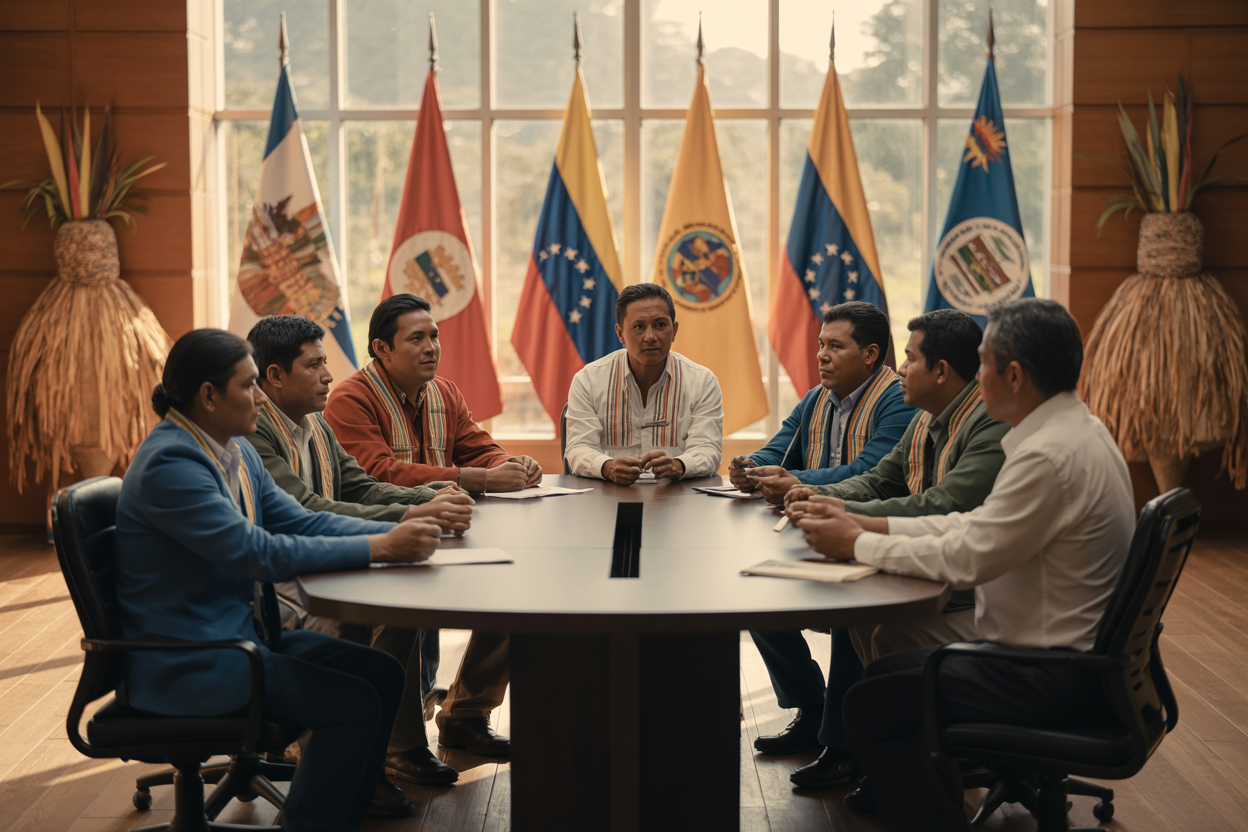
These five leaders represent a significant shift in Venezuelan politics, bringing Indigenous voices directly into government decision-making. From Aloha Nuñez’s ministerial role to José Luis González’s work in Indigenous affairs, each position marks a departure from traditional political structures that historically excluded Indigenous communities. Their presence in Maduro’s cabinet signals recognition that Indigenous perspectives are essential for policies affecting nearly 3% of Venezuela’s population.
The real test lies in what these appointments achieve beyond symbolic representation. While having Indigenous leaders in key positions creates important visibility, the effectiveness of their work will determine whether this represents genuine political change or simply political theater. Pay attention to how these leaders navigate the complex challenges facing Indigenous communities – from land rights to cultural preservation – as their success could reshape how Latin American governments approach Indigenous representation.

Monetize your traffic with our affiliate program—sign up now!
Start earning every time someone clicks—join now!
Become our affiliate—tap into unlimited earning potential!
https://shorturl.fm/S7WxW
https://shorturl.fm/WYSZn