





The world loses an indigenous language every two weeks. If you care about cultural diversity, work in linguistics, or belong to a community facing indigenous language extinction, you’re watching something irreplaceable slip away. When these languages disappear, we lose unique ways of understanding the world, traditional knowledge systems, and connections between generations.
Your efforts to save endangered languages can make a real difference, but you need the right approach. This guide shows you practical methods for indigenous languages preservation that actually work. You’ll discover how to build solid documentation systems that capture not just words but the heart of how people communicate. We’ll walk through proven community language preservation methods that get families and elders actively involved in passing down their linguistic heritage.
You’ll also explore how language revitalization technology can speed up your preservation work, from digital language archiving tools to apps that make learning fun for kids. Finally, you’ll learn strategies for creating indigenous education programs that keep languages alive in schools and communities for the long haul.

You’re witnessing one of the most devastating cultural catastrophes in human history, and most people don’t even realize it’s happening. Every fourteen days, somewhere in the world, the last fluent speaker of an indigenous language passes away, taking with them thousands of years of accumulated knowledge, wisdom, and cultural understanding that can never be recovered. This isn’t an abstract statistic – it’s a relentless march toward cultural homogenization that’s accelerating faster than climate change or species extinction.
The numbers paint a stark picture that should shake you to your core. Of the approximately 6,700 to 7,000 languages currently spoken worldwide, linguists predict that 50% to 90% will disappear within the next century. That means you could witness the death of up to 6,300 languages in your lifetime. To put this in perspective, you’re living through a period where languages are dying at a rate 10 times faster than they did in the previous century.
Right now, as you read these words, over 40% of the world’s languages are already classified as endangered. These aren’t just minor dialects or variants – these are complete linguistic systems with their own grammar, vocabulary, and ways of understanding the world that have evolved over millennia. When you consider that indigenous languages make up the vast majority of these endangered tongues, you begin to understand the scale of cultural knowledge we’re losing.
The situation becomes even more alarming when you realize that language death doesn’t happen gradually. Unlike biological extinction, which can sometimes be reversed through conservation efforts, linguistic extinction is absolute and irreversible. Once the last speaker dies, that entire way of thinking, that unique perspective on reality, disappears forever. You can’t resurrect a dead language in the same way you might reintroduce an extinct species through genetic engineering – the cultural context, the lived experience, the emotional connections are gone.
What makes this crisis particularly urgent is how it’s accelerating. In many regions, you’ll find that languages which had hundreds of speakers just a generation ago now have only a handful of elderly native speakers remaining. The transmission chain from grandparents to grandchildren has been broken, often deliberately through policies that forced indigenous children into boarding schools where they were punished for speaking their native tongues.
You need to understand that this isn’t just happening in remote corners of the world. Language death is occurring on every continent except Antarctica. In Australia, you’re looking at a situation where over 250 indigenous languages existed at the time of European contact, but today fewer than 20 are being learned by children. That’s a 92% loss rate in just over two centuries.
The Pacific region presents an equally devastating picture. Papua New Guinea, which hosts about 12% of the world’s languages in less than 1% of the world’s land area, is experiencing rapid language loss as younger generations migrate to urban areas and adopt Tok Pisin or English as their primary languages. You can see similar patterns across the Pacific islands, where traditional languages are being overwhelmed by colonial languages and globalized communication systems.
In the Americas, the situation is catastrophic. Of the estimated 1,000 indigenous languages that existed before European colonization, fewer than 300 survive today, and most of those are critically endangered. You’re looking at languages like Arapaho, which has fewer than 250 native speakers, all over age 50. Or consider the situation with California’s indigenous languages – the state once had the greatest linguistic diversity in North America, with over 100 distinct languages, but today nearly all are on the brink of extinction.
The speed of this loss is what should truly alarm you. While it took thousands of years for these languages to develop their unique characteristics, they’re disappearing in just one or two generations. You’re witnessing what linguists call “sudden death” – where a language goes from being actively spoken to completely extinct within a single human lifespan.
Technology and globalization are accelerating this process in ways previous generations never experienced. When you consider how smartphones, internet connectivity, and global media reach even the most remote communities, you understand how dominant languages like English, Spanish, Mandarin, and Arabic are overwhelming local linguistic ecosystems. Children who once learned their ancestral languages as their mother tongue are now growing up bilingual or monolingual in global languages from birth.
The economic pressures you see in indigenous communities also drive language extinction. When families need to migrate for work opportunities, when education systems only function in dominant languages, when government services aren’t available in indigenous tongues, parents often make the heartbreaking decision to focus on languages they believe will give their children better economic prospects.
Climate change adds another layer of urgency to this crisis. As rising sea levels threaten Pacific island communities, as droughts force pastoral communities to abandon traditional territories, as changing weather patterns disrupt seasonal activities that languages evolved to describe, you’re seeing environmental and linguistic extinction happen simultaneously. The Kiribati language faces extinction not just from cultural pressures but because the entire nation may become uninhabitable within decades.
What makes this situation even more tragic is that most of this language loss is preventable. Unlike many global crises, indigenous language extinction isn’t caused by natural disasters or inevitable historical forces – it’s the result of policies, attitudes, and practices that can be changed. When you look at successful language revitalization efforts in places like Wales, Hawaii, or among the Maori of New Zealand, you see proof that languages can be brought back from the brink of extinction.
You need to recognize that every day you delay action, more languages slip past the point of no return. Linguists identify several critical thresholds in language vitality. When a language drops below 300 active speakers, it enters the danger zone. Below 100 speakers, it becomes critically endangered. And when fewer than 10 people speak a language fluently, you’re essentially watching its final moments.
The intergenerational transmission break is particularly crucial for you to understand. Languages remain vital when children learn them naturally from their parents and use them in daily life. Once children stop acquiring a language as their mother tongue, that language moves rapidly toward extinction. You can see this pattern repeating across the globe – grandparents speak the indigenous language fluently, parents understand it but prefer the dominant language, and grandchildren speak only the national or colonial language.
This acceleration means that your actions today have outsized importance. A language that has 50 fluent speakers right now might have zero fluent speakers in just 10 years if no preservation efforts begin immediately. But that same language could potentially be revitalized if you act quickly to document it, record its speakers, and create learning materials while native speakers are still alive.
The geographical distribution of language loss reveals patterns that should inform your preservation efforts. Languages are disappearing fastest in areas where indigenous communities face the greatest social, economic, and political pressures. Urban migration, resource extraction, tourism development, and government assimilation policies all accelerate the process of indigenous language extinction.
You’re also seeing how political instability and conflict contribute to language death. When communities are displaced by war, when traditional territories are seized, when cultural practices are suppressed, languages lose the social contexts they need to survive. The destruction of cultural institutions, the separation of families, and the disruption of traditional education systems all contribute to accelerated language loss.
The digital divide adds another dimension to this crisis. While technology offers unprecedented opportunities for indigenous languages preservation, communities that lack access to digital tools are being left behind even faster than before. When education, communication, and economic opportunities increasingly require digital literacy in dominant languages, indigenous communities face pressure to abandon their traditional tongues even more quickly.
Understanding this crisis means recognizing that you’re living through what may be remembered as the greatest loss of human cultural diversity in recorded history. The scale and speed of indigenous language extinction today dwarfs previous periods of cultural change. You’re witnessing the end of ways of thinking about the world that developed over thousands of years and that, once lost, can never be recovered.
Your efforts to preserve indigenous languages will be most effective when you focus on the communities facing the greatest immediate threats. Not all endangered language situations are equally urgent, and understanding which communities need help most desperately will help you allocate your time, resources, and attention where they can make the biggest difference.
The most critically endangered indigenous communities are those where you’ll find fewer than ten fluent speakers remaining, all of whom are elderly. These languages are in what linguists call “immediate extinction crisis” – they could disappear completely within the next five to ten years. When you identify these communities, you’re looking at your highest priorities for emergency documentation and preservation efforts.
In North America, you need to pay urgent attention to several language families teetering on the edge of extinction. The Algonquian languages face particularly dire circumstances, with languages like Miami having only a handful of semi-speakers working to revitalize their ancestral tongue. The last native speaker of Miami died in the 1960s, but community members are now using historical documentation to bring the language back to life – a process you can support and learn from.
California presents one of the most heartbreaking examples of language loss you’ll encounter. The state once hosted the greatest linguistic diversity in North America, with over 100 distinct languages from dozens of different language families. Today, you’ll find that nearly all California indigenous languages are critically endangered. Yurok, once spoken by thousands, now has fewer than six fluent speakers. Karuk has approximately a dozen fluent speakers, all elderly. When you visit these communities, you’re meeting the last generation that learned these languages as children.
The situation among Pacific Northwest tribes requires your immediate attention as well. Chinook languages, which once served as trade languages across the region, are down to a handful of speakers. Haida, spoken on islands between Alaska and British Columbia, has fewer than 20 native speakers remaining. These languages contain irreplaceable knowledge about sustainable resource management, complex social systems, and sophisticated relationships with marine ecosystems.
Moving south, you’ll find that Mexico’s indigenous language diversity, while still substantial, faces severe threats. Zapotec languages, spoken in Oaxaca, include varieties with as few as a dozen speakers. Some Mixe languages are down to single-digit numbers of fluent speakers. When you work in these communities, you’re often meeting the last people who can fully express complex cultural concepts in their ancestral tongues.
In Central and South America, the Amazon basin presents both incredible linguistic diversity and urgent extinction crises. You’ll discover that the Amazon hosts about 40% of the world’s remaining indigenous languages, but deforestation, mining, and forced cultural assimilation are destroying these linguistic ecosystems as rapidly as the rainforest itself. Languages like Kawésqar in Chile have fewer than eight speakers remaining. Taushiro in Peru may have only one fluent speaker left alive.
When you examine the situation in Brazil, you’ll find over 150 indigenous languages still spoken, but most are severely endangered. The Awá people speak a language with fewer than 300 speakers total, and constant pressure from loggers and ranchers threatens their territory and cultural continuity. The Pirahã language, famous among linguists for its unusual grammatical features, has only about 400 speakers, and younger generations are increasingly learning Portuguese instead.
Australia presents one of the most devastating examples of language loss you can study. When European colonization began, over 250 indigenous languages thrived across the continent. Today, you’ll find that fewer than 20 are being learned by children. Languages like Yawuru in Western Australia have fewer than three fluent speakers. Dhuwal, spoken in Arnhem Land, has perhaps 100 speakers, but most children in the community now grow up speaking English as their primary language.
The Torres Strait Islander languages face particularly urgent threats. When you visit these communities, you’ll meet speakers of languages like Kala Lagaw Ya, which has fewer than 100 fluent speakers across multiple islands. The geographic isolation that once protected these languages now makes revitalization efforts more challenging, as communities struggle with limited resources and ongoing pressure to assimilate into mainstream Australian culture.
Papua New Guinea, despite hosting the world’s greatest linguistic diversity, faces accelerating language loss that should alarm you. While the country still maintains over 800 languages, many are critically endangered. Languages spoken by fewer than 100 people are becoming increasingly common, and urbanization is breaking the intergenerational transmission chains that keep languages alive. When you visit rural PNG communities, you often find that grandparents speak the traditional language, parents understand it but use Tok Pisin for daily communication, and children speak only Tok Pisin or English.
Africa’s linguistic landscape presents complex challenges that require your careful attention. While African languages generally have more speakers than many indigenous languages elsewhere, specific communities face severe threats. The Khoisan languages of southern Africa, famous for their click consonants, include several with fewer than 100 speakers. N|uu, spoken in South Africa, has perhaps a dozen fluent speakers remaining. These languages contain irreplaceable knowledge about desert survival, traditional medicine, and astronomical observations developed over thousands of years.
In East Africa, you’ll find hunter-gatherer communities whose languages are disappearing as their traditional lifestyles become impossible to maintain. The Hadza language of Tanzania, spoken by one of the world’s last remaining hunter-gatherer societies, has fewer than 1,000 speakers, and younger generations are increasingly adopting Swahili as their primary language.
Northern Canada and Greenland present Arctic language extinction crises that demand your immediate attention. Inuktitut varieties, while more robust than many indigenous languages, face pressure from English and Danish. Some dialects have fewer than 100 speakers. When you work with these communities, you’re documenting not just languages but entire systems of knowledge about Arctic survival, ice formation, and sustainable hunting practices that climate change is making increasingly vital to preserve.
The Sami languages of northern Europe illustrate how political boundaries can fragment language communities and accelerate extinction. While some Sami varieties have several thousand speakers, others are down to a few dozen fluent speakers scattered across multiple countries. Cross-border revitalization efforts face bureaucratic challenges that can delay urgent preservation work.
Siberia hosts numerous indigenous languages that you’ll find are critically endangered due to decades of Russian cultural assimilation policies. Languages like Even, Evenk, and Chukchi have scattered speakers across vast territories, making community-based revitalization efforts extremely challenging. When you work in these regions, you’re often dealing with speakers who were discouraged or punished for using their native languages during their childhoods.
Island communities worldwide face particular vulnerability to language extinction because their small populations and geographic isolation make them susceptible to both cultural pressure and environmental threats. In the Pacific, languages like Tofa (spoken by fewer than 30 people) and various languages of small atolls face extinction from both cultural assimilation and rising sea levels. When you support these communities, you’re racing against both social and environmental clocks.
The Andean region presents complex language endangerment situations that require your nuanced understanding. While Quechua has millions of speakers across several countries, specific varieties are critically endangered. Some Quechua dialects have fewer than 1,000 speakers, and languages like Chipaya in Bolivia have fewer than 100 fluent speakers remaining. These communities often face discrimination that pressures families to abandon their indigenous languages in favor of Spanish.
When you’re identifying the most at-risk communities, you need to look beyond just speaker numbers. Communities facing active political persecution, environmental displacement, or economic pressure to assimilate face accelerated language loss even when they still have relatively large numbers of speakers. Indigenous communities in areas of conflict, resource extraction, or rapid development often experience sudden language shift that can move a language from stable to extinct within a single generation.
The age profile of speakers provides crucial information about urgency. Communities where all fluent speakers are over 60 years old face immediate crisis, regardless of total speaker numbers. When you find languages where no children have learned the language as their mother tongue in the past 20 years, you’re looking at languages that need emergency intervention.
Geographic fragmentation also increases risk significantly. Indigenous communities whose speakers are scattered across multiple locations, especially when political boundaries separate them, face additional challenges in maintaining linguistic vitality. When you work with these dispersed communities, you need to consider how to connect speakers across distances and facilitate language learning despite geographic separation.
When you witness the death of an indigenous language, you’re not just losing words and grammar – you’re watching the disappearance of entire ways of understanding and interacting with the world that took thousands of years to develop. Each indigenous language contains unique knowledge systems that represent humanity’s diverse solutions to universal challenges of survival, social organization, environmental adaptation, and meaning-making.
The depth of knowledge encoded in indigenous languages often surprises people who haven’t studied linguistics or anthropology. You need to understand that languages aren’t just different ways of saying the same things – they’re different ways of thinking about reality itself. When an indigenous language disappears, you lose unique cognitive frameworks, specialized vocabularies for understanding complex natural phenomena, and sophisticated systems for organizing social relationships.
Consider the astronomical knowledge embedded in many indigenous languages. When you study languages like those spoken by traditional Polynesian navigators, you discover vocabulary and conceptual systems for celestial navigation that enabled people to cross thousands of miles of open ocean using only the stars, wave patterns, and bird flight paths. These languages contain hundreds of terms for different types of waves, wind patterns, and star positions that don’t exist in European languages. The loss of these languages means losing navigational knowledge that represents some of humanity’s most sophisticated pre-instrumental wayfinding techniques.
Environmental knowledge represents another vast category of information disappearing with indigenous languages. The Sami languages of northern Europe contain intricate vocabularies for describing snow and ice conditions that are crucial for safe travel in Arctic environments. These aren’t just different words for snow – they represent distinct categories of frozen precipitation, each with implications for hunting, herding, and survival strategies. When you lose these languages, you lose thousands of years of accumulated wisdom about reading and predicting Arctic weather patterns.
Amazon languages encode similar depths of environmental knowledge. When you work with speakers of indigenous Amazonian languages, you encounter vocabularies containing hundreds of terms for different types of forest soils, plant growth stages, and animal behaviors. These languages contain detailed classification systems for medicinal plants that often surpass scientific botanical knowledge. Many modern pharmaceuticals were originally discovered through knowledge preserved in indigenous languages, and the loss of these linguistic systems means losing potential medical discoveries that could benefit all humanity.
The agricultural knowledge contained in indigenous languages represents another irreplaceable loss. Traditional farming communities developed sophisticated understanding of soil types, seasonal patterns, and crop varieties over millennia. Their languages contain this knowledge in the form of specialized vocabularies, seasonal calendars, and complex verb systems that encode precise timing for different agricultural activities. When these languages disappear, you lose farming techniques that enabled sustainable agriculture in challenging environments for thousands of years.
Indigenous languages also preserve historical information that exists nowhere else. Many indigenous communities maintained oral histories spanning hundreds or thousands of years, with specialized narrative techniques for preserving accurate historical information across generations. These oral traditions, embedded in specific linguistic forms, contain details about climate changes, natural disasters, migration patterns, and cultural developments that predate written records by millennia.
When you document these oral traditions, you often discover that they contain remarkably accurate historical information. Archaeological evidence frequently confirms details preserved in indigenous oral histories, even when those stories describe events that occurred centuries ago. The loss of these languages means losing historical records that could provide crucial information about long-term environmental changes, natural disaster cycles, and human adaptation strategies.
The social knowledge encoded in indigenous languages includes sophisticated systems for organizing relationships, resolving conflicts, and maintaining community cohesion. Many indigenous languages have kinship terminologies that encode complex social obligations and relationships that extend far beyond nuclear families. These linguistic systems preserve knowledge about sustainable social organization that enabled communities to thrive for thousands of years.
Some indigenous languages contain grammatical features that encode social relationships directly into sentence structure. When you study these languages, you discover that every sentence automatically conveys information about the social status, age, gender, and relationship between speakers. This linguistic embedding of social information represents sophisticated systems for maintaining social harmony and preventing conflicts.
Legal and political knowledge represents another crucial category of information being lost. Many indigenous communities developed complex legal systems encoded in their languages through specialized vocabulary, formal speech genres, and narrative traditions. These legal systems often included sophisticated methods for evidence evaluation, conflict resolution, and community decision-making that could inform modern legal practices.
The ceremonial and spiritual knowledge contained in indigenous languages includes complex systems of meaning-making and ritual practice that represent humanity’s diverse approaches to understanding existence. Many indigenous languages contain specialized vocabularies and grammatical forms used exclusively in ceremonial contexts, preserving religious and philosophical knowledge that took millennia to develop.
When you participate in indigenous ceremonies conducted in traditional languages, you encounter ways of understanding time, space, and human relationships that differ fundamentally from Western philosophical traditions. These alternative worldviews, encoded in linguistic structures, represent different solutions to universal human questions about meaning, morality, and purpose.
Artistic and creative knowledge also disappears with indigenous languages. Many traditional art forms – from complex oral poetry to intricate textile patterns – depend on linguistic knowledge that can’t be translated into other languages. Song traditions, storytelling techniques, and verbal art forms often use specific linguistic features like tonal patterns, rhythmic structures, or sound symbolism that only exist in particular indigenous languages.
The loss of these artistic traditions means losing unique forms of human creative expression that developed over thousands of years. You can’t preserve traditional songs or oral poetry in translation – the linguistic features that make them beautiful and meaningful disappear when you try to express them in different languages.
Technological knowledge embedded in indigenous languages includes sophisticated understanding of materials, tools, and techniques developed through millennia of experimentation. Traditional craft vocabularies contain detailed knowledge about working with natural materials, from the properties of different types of wood and stone to complex techniques for processing plant and animal materials.
Many traditional technologies preserved in indigenous languages represent sustainable solutions to practical problems that could inform modern environmental practices. Traditional building techniques, food preservation methods, and tool-making processes often embody principles of sustainability and efficiency that took thousands of years to perfect.
Mathematical and logical knowledge in indigenous languages often includes unique ways of understanding quantity, space, and relationships. Some indigenous languages have counting systems or spatial description methods that encode different mathematical concepts than those found in Western traditions. These alternative mathematical systems represent different ways of understanding quantitative relationships that could contribute to mathematical knowledge.
The medicinal knowledge preserved in indigenous languages represents one of the most immediately practical losses from language extinction. Traditional healing systems often depend on complex vocabularies that describe symptoms, treatments, and healing processes in ways that don’t translate directly into other languages. The loss of these linguistic systems means losing detailed knowledge about the medicinal properties of plants, the relationships between different health conditions, and holistic approaches to healing.
When you study traditional medicine as it’s embedded in indigenous languages, you discover that healing knowledge isn’t just a list of which plants treat which conditions – it’s a comprehensive system of understanding health, illness, and the human body that represents thousands of years of careful observation and experimentation.
Ecological knowledge preserved in indigenous languages includes sophisticated understanding of ecosystem relationships, seasonal cycles, and environmental changes. Traditional ecological vocabularies often contain detailed classifications of plants, animals, and environmental conditions that surpass scientific knowledge. Many indigenous communities have observed and catalogued environmental changes over periods far longer than scientific records extend.
The loss of this ecological knowledge means losing crucial information about long-term environmental patterns that could be essential for understanding and responding to climate change. Indigenous languages often preserve knowledge about historical climate variations, species adaptations, and ecosystem responses that could inform current environmental science.
Psychological and social knowledge embedded in indigenous languages includes sophisticated understanding of human behavior, emotional regulation, and community dynamics. Many indigenous cultures developed complex systems for understanding personality, managing emotions, and maintaining mental health that are encoded in their languages through specialized vocabularies and conceptual frameworks.
When you lose these linguistic systems, you lose alternative approaches to understanding human psychology that could contribute to mental health practices. Traditional knowledge about emotional regulation, conflict resolution, and community support often includes insights that complement or extend modern psychological understanding.
The cumulative impact of this knowledge loss is staggering. Each indigenous language that disappears takes with it thousands of years of human experimentation, observation, and wisdom. You’re witnessing the loss of alternative solutions to universal human challenges – different ways of understanding health, organizing society, relating to the environment, and creating meaning.
This knowledge loss isn’t just a tragedy for indigenous communities – it impoverishes all humanity by reducing the diversity of human wisdom available for addressing current and future challenges. When you work to preserve indigenous languages, you’re not just helping specific communities maintain their cultural identity – you’re helping preserve the full range of human knowledge and creativity for future generations.
Understanding the scope of this knowledge loss should motivate urgent action to preserve indigenous languages while their speakers are still alive. Every month of delay means losing more irreplaceable information. Every successful language preservation effort means saving not just words and grammar, but entire systems of knowledge that represent humanity’s diverse wisdom about how to live successfully on Earth.
The interconnected nature of linguistic and cultural knowledge means that successful preservation efforts must go beyond simply recording vocabulary and grammar. You need to document the cultural contexts, practical applications, and lived experiences that give indigenous languages their meaning. This comprehensive approach to language preservation becomes a way of preserving human knowledge systems that could prove crucial for addressing future challenges facing all humanity.
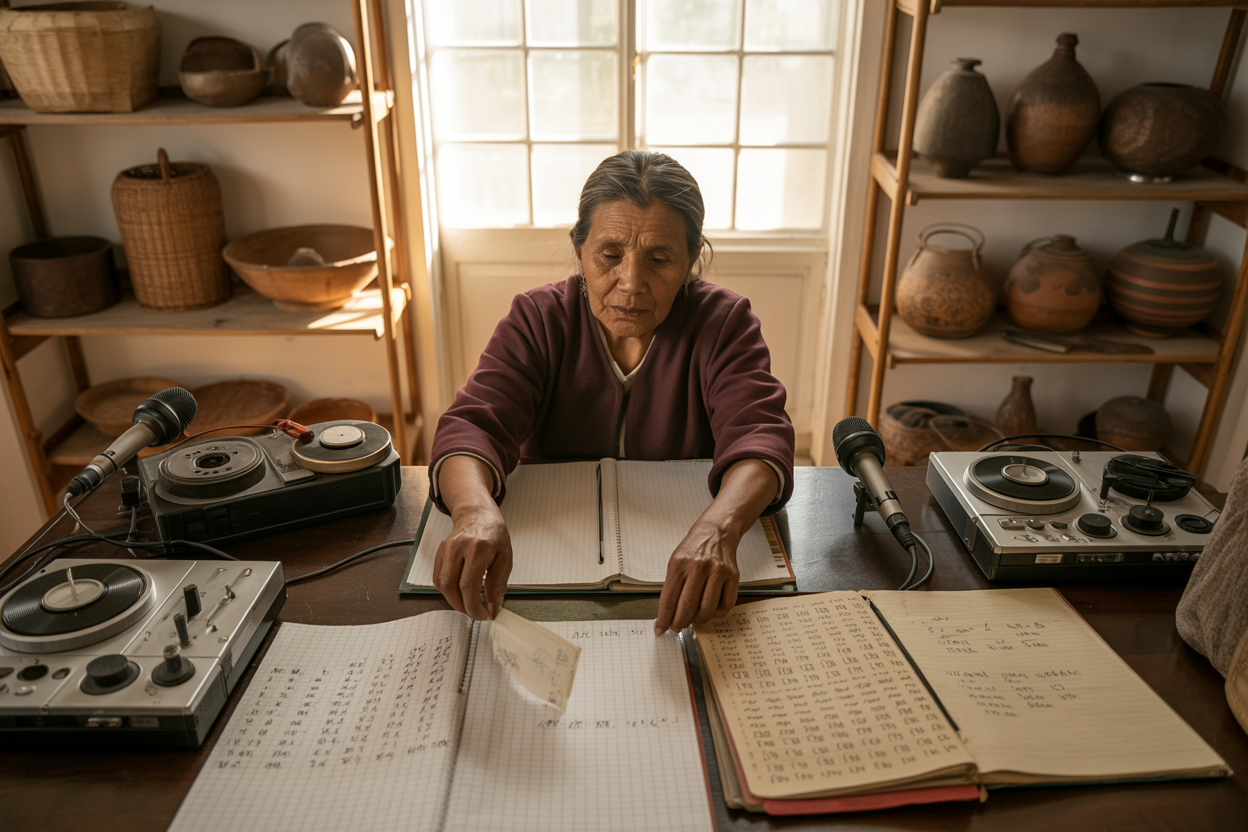
Recording native speakers forms the backbone of any successful indigenous languages preservation effort. When you document speakers in their natural environment, you’re capturing more than just words—you’re preserving the soul of a language that carries centuries of cultural wisdom.
Your first step involves identifying fluent speakers within the community. Start by reaching out to tribal councils, cultural centers, and elder care facilities where many of the most proficient speakers often gather. You’ll find that some speakers are more comfortable than others with recording technology, so approach each person with patience and respect for their comfort level.
The quality of your recordings directly impacts their long-term value for language revitalization programs. Invest in professional-grade audio equipment that captures the full range of human speech, including subtle tonal variations that many indigenous languages rely on. A high-quality condenser microphone paired with a digital recorder capable of 96kHz/24-bit recording will serve you well. Don’t skimp on wind protection and shock mounts—environmental noise can destroy hours of valuable documentation work.
When setting up your recording sessions, choose quiet environments that minimize background interference. Community centers during off-peak hours, private homes, or outdoor locations away from traffic all work well. You’ll want to test your equipment thoroughly before each session and always bring backup recording devices. Technical failures during sessions with elderly speakers can mean lost opportunities that may never return.
Your recording strategy should capture different types of speech patterns and contexts. Start with formal storytelling sessions where elders share traditional narratives, legends, and historical accounts. These recordings preserve not just vocabulary but also the rhythm, intonation, and ceremonial aspects of language use. Follow up with conversational recordings between multiple speakers, which reveal natural speech patterns, interruptions, and the way native speakers actually interact in their language.
Document everyday conversations about daily activities like cooking, farming, or craftwork. These mundane interactions often contain the most practical vocabulary that younger generations need for authentic language use. Record speakers describing their surroundings, explaining cultural practices, and sharing personal memories. This variety ensures your documentation captures the full spectrum of how the language functions in real-world situations.
Video recordings add crucial visual context that audio alone cannot provide. Facial expressions, gestures, and body language form integral parts of communication in many indigenous cultures. Your video documentation should capture speakers in various settings—formal interviews, casual conversations, and cultural activities. Use multiple camera angles when possible to show both the speaker’s face and any accompanying hand gestures or cultural artifacts being discussed.
Pay special attention to recording cultural ceremonies, traditional games, and seasonal activities where language use follows specific patterns. Many indigenous languages contain specialized vocabulary and speech forms used only in ceremonial contexts. Without video documentation of these events, future generations might learn the words but miss the proper cultural context for their use.
Create a systematic cataloging approach for all your recordings. Each session should include metadata about the date, location, participants, topics covered, and cultural context. Develop a standardized naming convention for your files that includes speaker initials, recording date, and content type. This organizational system becomes critical when you accumulate hundreds of hours of recordings across multiple speakers and topics.
Train community members to operate recording equipment so they can capture spontaneous conversations and cultural events when you’re not present. Many of the most authentic language exchanges happen during informal family gatherings or community events where outsiders might not be welcome. Community-operated recording ensures continuous documentation while respecting cultural boundaries.
Consider the emotional and cultural significance of what you’re recording. Some speakers become fatigued during long sessions, while others gain energy from sharing their knowledge. Watch for signs of tiredness and be prepared to schedule multiple shorter sessions rather than exhausting valuable speakers. Remember that you’re often recording people’s final opportunities to share knowledge they’ve carried for decades.
Document different registers and speaking styles within the language. Formal speech used in ceremonies differs significantly from casual conversation, children’s language games, or specialized terminology for traditional activities. Your recordings should represent this full range of language use to provide comprehensive resources for future learners and researchers.
Work closely with speakers to ensure they’re comfortable with how their voices and stories will be used. Some may want restrictions on who can access certain recordings, especially those containing sacred or culturally sensitive information. Establish clear agreements about usage rights and honor any requests for limited distribution of specific materials.
Creating written resources requires balancing linguistic accuracy with community needs and preferences. Your approach to developing dictionaries and grammar guides must center the voices and priorities of native speakers rather than imposing external academic frameworks that might not reflect how the language actually works.
Begin by establishing a writing system that community members can easily learn and use. Many indigenous languages already have established orthographies, but some communities prefer modifications that better represent their pronunciation patterns or cultural preferences. Work with speakers to test different spelling approaches for sounds that don’t exist in English or other dominant languages in the region.
Your dictionary development process should involve speakers at every stage. Start by recording extensive word lists during your audio sessions, but don’t stop at simple translations. Each entry needs cultural context, usage examples, and information about when and how speakers typically use specific terms. A word might have different meanings in ceremonial versus everyday contexts, or its use might be restricted to certain age groups or genders.
Organize regular community workshops where speakers can review dictionary entries and suggest improvements. These sessions often reveal nuances that casual recording might miss. Speakers frequently remember additional meanings, related terms, or cultural stories associated with specific words during group discussions. The collaborative process also builds community investment in the final resource.
Create user-friendly entry formats that serve both language learners and advanced speakers. Each dictionary entry should include the word in the indigenous language, pronunciation guidance, grammatical information, English translation, and at least one example sentence showing proper usage. When possible, include cultural notes that explain concepts that don’t translate directly into English.
Your grammar guide development requires particular sensitivity to how indigenous languages structure meaning differently from European languages. Don’t force indigenous language patterns into English grammatical categories that might not apply. Instead, describe how the language actually works based on speaker usage patterns. This might mean explaining concepts like evidentiality systems, complex verb conjugations, or kinship-based pronouns that English speakers haven’t encountered before.
Involve community educators in testing your grammar explanations with actual learners. Academic linguistic descriptions often confuse people trying to learn their heritage language. Work with speakers to develop explanations and examples that make sense to community members with varying educational backgrounds. Your goal should be practical usability rather than theoretical completeness.
Include extensive example sentences that reflect real community contexts rather than artificial academic constructions. Speakers should provide sentences about local geography, traditional activities, family relationships, and community events. These authentic examples help learners understand not just how to construct grammatically correct sentences, but how to express ideas that matter in their specific cultural context.
Document dialectical variations within your written resources. Many indigenous languages have regional or family-specific differences in pronunciation, vocabulary, or grammar. Rather than choosing one “correct” version, acknowledge these variations and explain when speakers might use different forms. This approach respects the full diversity of the language community.
Create specialized vocabulary sections for traditional activities, ecological knowledge, and cultural practices. Indigenous languages often contain detailed terminology for local plants, animals, weather patterns, and seasonal cycles that reflect generations of environmental observation. These specialized vocabularies represent irreplaceable scientific and cultural knowledge that deserves careful documentation.
Develop pronunciation guides that help both community members and outside learners produce accurate sounds. Use the International Phonetic Alphabet alongside community-preferred spelling systems, and include audio examples when possible. Many indigenous languages contain sounds that English speakers find challenging, so detailed pronunciation guidance becomes essential for successful learning.
Test your written materials with different types of users—fluent speakers checking for accuracy, semi-speakers improving their skills, and complete beginners learning from scratch. Each group will identify different problems and suggest improvements that make your resources more effective. This testing process often reveals gaps in your documentation that need additional recording sessions.
Consider the practical needs of different user groups when organizing your materials. Teachers need lesson plans and exercises, while families might prefer conversation guides focused on daily activities. Community leaders might want formal speech patterns for ceremonies, while children need engaging activities that make learning fun. Your written resources should serve these diverse needs.
Create multiple formats for accessing the same information. Some users prefer alphabetical dictionary arrangements, while others want words organized by topic or grammatical category. Digital resources can accommodate multiple organizational systems, but even print materials can include cross-references and topic indices that help users find what they need quickly.
Include historical and etymological information when speakers can provide it. Many indigenous words carry stories about their origins, changes over time, or connections to other languages in the region. This historical context helps learners understand not just what words mean, but why they developed specific meanings and how they connect to broader cultural knowledge systems.
Digital preservation ensures your documentation efforts survive far beyond the lifespan of any individual recording device or storage system. Your archival strategy must address both immediate accessibility for current community members and long-term preservation for generations who haven’t been born yet.
Choose file formats that balance quality with longevity. For audio recordings, uncompressed WAV files provide the highest quality and have the best chance of remaining accessible across future technology changes. MP3 files work well for everyday access but shouldn’t serve as your primary archive format since compression algorithms lose audio information that might prove important for linguistic analysis.
Video files present more complex preservation challenges since video formats change rapidly and require more storage space. H.264 encoding in MP4 containers currently offers good quality-to-size ratios while maintaining broad compatibility across devices and software. Always maintain original uncompressed files when possible, even if you create compressed versions for general access.
Implement multiple backup strategies that protect against different types of data loss. Local hard drives fail, cloud services change terms, and institutions lose funding. Your preservation strategy needs redundancy across multiple locations and storage types. Consider partnerships with multiple universities, libraries, and cultural institutions to ensure copies exist in geographically diverse locations.
Create detailed metadata for every file in your archive. Include information about speakers, recording dates, locations, topics, cultural context, and any restrictions on access or use. This metadata becomes crucial for users trying to find specific types of content within large archives. Standardize your metadata format using established library science or digital humanities schemas when possible.
Develop user-friendly interfaces that allow community members to search and access materials without technical expertise. Many community members who could benefit most from archived materials may not be comfortable with complex database searches or technical file formats. Create simple browsing interfaces organized by speaker, topic, or content type.
Address digital divides that might prevent community access to archived materials. Not all community members have reliable internet access or modern devices capable of playing high-quality audio and video files. Consider creating offline access options, such as DVD or USB drive collections, and ensure your archive works well on older computers and mobile devices.
Establish clear ownership and access policies that respect community cultural protocols. Some recordings may contain sacred or culturally sensitive information that shouldn’t be widely available. Work with community leaders to develop appropriate access restrictions and user authentication systems. Your digital archive should enforce these cultural boundaries automatically.
Partner with established digital preservation institutions that have experience with indigenous language materials. The Archive of the Indigenous Languages of Latin America (AILLA), the Endangered Languages Archive (ELAR), and similar institutions offer technical infrastructure and preservation expertise that individual communities might not have. These partnerships also provide backup preservation and broader academic access to your materials.
Implement file organization systems that remain logical as your archive grows. Start with clear folder structures organized by speaker, recording date, or content type. Use consistent naming conventions that include essential information like speaker initials, date, and content type. Document your organizational system so future users and archive maintainers understand the structure.
Consider creating multiple access levels for different user types. Community members might need full access to materials, while researchers might have more limited access with specific usage agreements. Teachers might need specially formatted educational materials, while preservation specialists need access to master recordings and full metadata. Your archive system should accommodate these different needs efficiently.
Plan for technology migration and format updates over time. Digital preservation isn’t a one-time activity but an ongoing process that requires periodic updates as technology changes. Budget for regular format migration, software updates, and hardware replacement. Establish partnerships with institutions that can provide long-term technical support.
Create user training materials that help community members navigate and contribute to the archive. Many potential users may feel intimidated by digital systems, so provide clear instructions, tutorial videos, and opportunities for hands-on training. Consider training community members to become archive administrators who can help their neighbors access materials.
Document your preservation processes and technical specifications for future archive maintainers. Include information about recording equipment used, file format decisions, quality control procedures, and any technical challenges encountered. This documentation helps future technical staff understand your materials and continue preservation work effectively.
Develop quality control procedures that catch problems before they affect archive users. Regular checks for file corruption, metadata accuracy, and system functionality prevent small technical issues from growing into major access problems. Establish protocols for testing backups and verifying that archived materials remain accessible over time.
Academic partnerships provide essential technical expertise and institutional stability that individual communities often cannot maintain independently. Your collaboration with universities and research institutions must balance academic research interests with community control over indigenous language materials and cultural knowledge.
Identify institutions with established indigenous language programs and ethical research practices. Look for universities with Native American studies departments, linguistics programs focused on endangered languages, or existing relationships with indigenous communities. Research their publication records, funding sources, and community partnerships to understand their approach to indigenous language work.
Establish clear memoranda of understanding that define roles, responsibilities, and ownership rights before beginning any collaborative work. These agreements should specify who controls access to materials, how research results will be shared, and what happens to archived materials if partnerships end. Community ownership of cultural materials must remain paramount regardless of institutional technical contributions.
Leverage university technical infrastructure while maintaining community control over content. Universities often have high-capacity servers, professional IT support, and established backup systems that individual communities cannot afford. However, your partnership agreements should ensure communities retain full control over who accesses their materials and how they’re used.
Take advantage of student research opportunities that provide workforce while building future indigenous language advocates. Graduate students in linguistics, anthropology, or Native American studies often need research projects and can contribute significant hours to documentation efforts under proper supervision. Ensure these students understand cultural protocols and community priorities, not just academic research goals.
Collaborate with academic departments that can provide specialized technical skills your community might lack. Digital humanities centers often have expertise in metadata standards, database design, and user interface development. Library sciences departments understand archival best practices and long-term preservation strategies. Linguistics departments can provide phonetic analysis and grammatical expertise.
Access university funding opportunities that may be unavailable to community organizations. Many federal and private grants prefer proposals from established academic institutions, but these funds can support community-controlled projects through institutional partnerships. Work with university grant writers to develop proposals that secure funding for community priorities rather than purely academic research agendas.
Participate in academic conferences and publications while ensuring community voices remain central to presentations and publications. These venues provide opportunities to share your preservation work with broader audiences and connect with other indigenous language communities facing similar challenges. However, community members should be primary authors and presenters rather than research subjects.
Utilize university laboratory facilities for specialized technical work like audio enhancement, video digitization, or linguistic analysis software. Many universities have professional recording studios, video editing facilities, and specialized software licenses that would be prohibitively expensive for individual communities to purchase and maintain.
Connect with interdisciplinary research centers that approach indigenous language work holistically. Centers focused on sustainability, environmental studies, or cultural preservation often understand the connections between language, traditional knowledge, and community well-being better than purely linguistic departments. These broader perspectives can enhance your documentation efforts.
Establish ongoing relationships that extend beyond individual projects or grants. Universities change faculty and priorities regularly, so building relationships across multiple departments and administrative levels helps ensure continued support. Regular communication and shared planning sessions help maintain productive partnerships through personnel changes.
Create reciprocal learning opportunities where university students and faculty gain cultural education while contributing technical skills. Many academics lack deep understanding of indigenous cultures and can benefit from community-based learning experiences. This cultural exchange can improve the quality of collaborative work while building lasting relationships between institutions and communities.
Negotiate intellectual property arrangements that protect community interests while allowing appropriate academic use. Universities often have complex intellectual property policies, but these should not override community ownership of cultural materials. Work with university legal departments to create agreements that respect both institutional policies and community cultural protocols.
Access university library collections and interlibrary loan services that can provide historical materials relevant to your language documentation. Many universities hold historical documents, early linguistic studies, or government records that contain valuable information about your language’s history and development. These materials can inform contemporary preservation efforts and provide historical context for current documentation work.
Develop joint training programs that build technical capacity within your community while providing universities with culturally informed research partners. These programs might include workshops on recording techniques, database management, or digital archiving that transfer skills directly to community members rather than creating dependency on external technical support.
Participate in university-based indigenous language conferences and workshops that provide opportunities to learn from other communities’ preservation efforts. These events often feature technical training sessions, funding opportunity discussions, and networking opportunities that can significantly benefit your documentation projects.
Collaborate on developing new technologies and methodologies specifically designed for indigenous language preservation. University computer science and engineering departments often need real-world projects for student work and faculty research. Your community’s needs can drive innovation in language learning apps, pronunciation training software, or archive management systems.
Establish clear protocols for data sharing and research ethics that align with both university requirements and community values. Universities typically require institutional review board approval for research involving human subjects, but these processes should complement rather than override community consent processes and cultural protocols.
Work with university communications departments to publicize your preservation work in ways that benefit both community recruitment efforts and academic recognition for collaborative partners. Positive media coverage can attract additional speakers, volunteers, and funding while raising awareness about indigenous language endangerment issues.
Maintain regular evaluation of partnership effectiveness and adjust agreements as needs change. University priorities shift with funding cycles and personnel changes, while community needs evolve as preservation projects mature. Regular reviews ensure partnerships continue serving community goals rather than becoming academic convenience arrangements.
Connect with alumni networks and professional associations through university partnerships to expand your support base beyond campus boundaries. University graduates working in technology companies, government agencies, or nonprofit organizations often provide valuable resources and expertise for community projects long after completing their degrees.
These comprehensive documentation systems form the foundation for all other language revitalization efforts. Without strong recording, written materials, digital preservation, and institutional support, communities cannot build effective education programs or sustain long-term preservation goals. Your investment in documentation infrastructure pays dividends across generations as these materials serve learners, researchers, and community members for decades to come.
The documentation phase requires patience, cultural sensitivity, and technical expertise, but the results provide invaluable resources that no other preservation strategy can replace. When you combine high-quality recordings with community-developed written materials, accessible digital archives, and stable institutional partnerships, you create a foundation that supports language learning and cultural transmission far beyond what any single individual or organization could achieve independently.
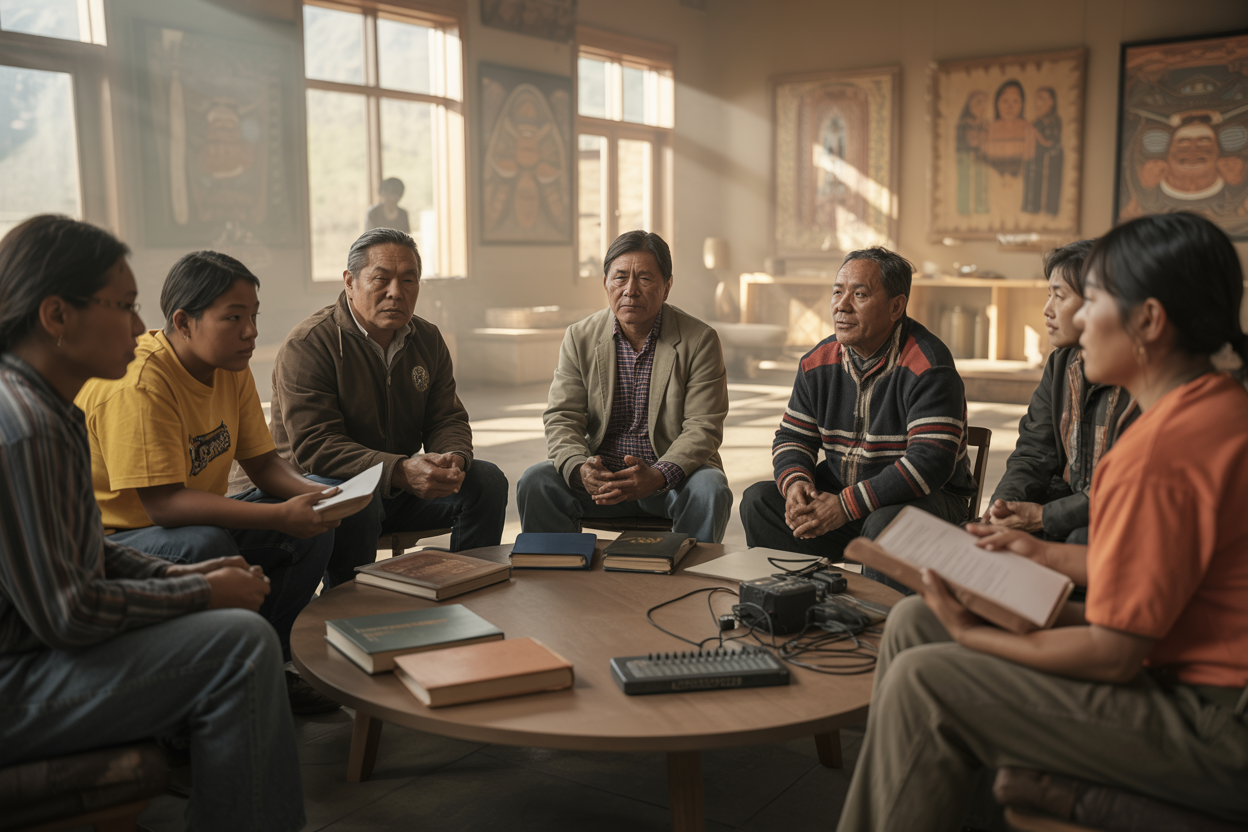
Your elders are the living bridges between the ancient wisdom of your ancestors and the digital age of today. When you think about indigenous languages preservation, you’re looking at individuals who carry decades of lived experience with language patterns, cultural nuances, and storytelling traditions that no textbook can capture. These elder speakers hold keys to language revitalization programs that go far beyond vocabulary lists and grammar rules.
You need to understand that many elder speakers initially feel hesitant about formal teaching roles. They might say, “I’m not a teacher” or “I don’t know how to use computers.” But your role is to help them see that their natural way of speaking and sharing stories is exactly what your community needs. When you approach elders about participating in native language conservation efforts, you’re not asking them to become classroom instructors overnight – you’re inviting them to share their gift in ways that feel authentic and comfortable.
Start by creating informal settings where elders can share naturally. Your grandmother might not want to stand in front of a whiteboard, but she’ll light up when talking about traditional recipes while cooking. Your grandfather might struggle with formal grammar lessons, but he becomes animated when describing hunting techniques or traditional ceremonies. These authentic moments of language use are gold mines for preservation efforts.
You can set up regular storytelling sessions where elders share traditional tales, personal experiences, or cultural knowledge. Record these sessions with their permission, but make sure the environment feels natural and conversational. When elders feel comfortable, their language flows more naturally, and they use expressions, idioms, and linguistic patterns that might disappear in more formal settings.
Consider pairing elders with technology-savvy community members who can help document their knowledge. You don’t want your elders to worry about technical details – that’s where younger volunteers come in. Create teams where elders focus on sharing their linguistic knowledge while others handle recording, transcription, and digital organization. This partnership approach makes everyone feel valued and reduces the burden on any single person.
Your elder speakers often have different learning and teaching styles than what you might expect from formal education. Some elders prefer hands-on demonstrations, others excel at oral instruction, and many combine language teaching with practical activities. When you’re working with an elder who specializes in traditional crafts, you can document language while they’re demonstrating beadwork, pottery, or weaving. This approach captures specialized vocabulary that exists nowhere else.
You’ll find that elders often have strong opinions about how their language should be taught and preserved. Listen to these perspectives carefully because they contain crucial cultural knowledge. Some elders might insist that certain words or phrases should only be shared in specific contexts or seasons. Others might emphasize the importance of proper pronunciation or the spiritual significance of certain expressions. These insights shape authentic language revitalization efforts that respect cultural protocols.
Financial compensation for elder teachers shows respect for their time and expertise. When you’re planning community language preservation methods, budget for elder honoraria or stipends. Many elders live on fixed incomes, and asking them to volunteer their time for language work without compensation can create hardship. Treating elders as valued consultants rather than volunteers demonstrates that you take their contributions seriously.
You can create structured programs where elders work with small groups of learners on a regular schedule. These might be weekly conversation circles, monthly storytelling gatherings, or seasonal activities tied to traditional practices. Having consistent meetings gives elders something to look forward to and helps build relationships with learners over time. When people meet regularly, they develop inside jokes, shared references, and comfortable communication patterns that enhance learning.
Document not just what elders say, but how they say it. Their gestures, facial expressions, tone variations, and cultural context provide layers of meaning that pure audio recording misses. When you’re creating video documentation, capture these non-verbal elements that give language its full richness. An elder might use a particular hand gesture that emphasizes a point, or their expression might change when discussing sacred topics. These details matter for comprehensive preservation.
Many elders have specific knowledge about language varieties, dialects, or historical changes in their language. Your community might have elders who remember how their grandparents spoke differently, or who can explain how certain words have evolved over time. This historical linguistic knowledge helps document not just current language use, but also language change patterns that inform revitalization strategies.
You should create opportunities for elders to work together when possible. Sometimes one elder remembers half of a song or story that another elder can complete. Group sessions with multiple elders often spark memories and discussions that wouldn’t happen in individual interviews. These collaborative moments capture language use in social contexts and demonstrate how speakers naturally interact with each other.
Consider the physical comfort and accessibility needs of elder participants. Some elders might have hearing difficulties, vision problems, or mobility limitations that affect their participation. When you’re planning documentation sessions or teaching activities, think about seating arrangements, audio quality, lighting, and meeting locations. Making sure elders are physically comfortable helps them focus on language sharing rather than managing discomfort.
Elder speakers often have seasonal or cultural rhythms that affect their availability and energy levels. Some might be more active during certain times of year, while others might have family or health obligations that limit their participation. Building flexibility into your programs shows respect for elders’ schedules and life circumstances. When you accommodate their needs, elders feel more valued and are more likely to participate consistently over time.
You’ll discover that many elders have been waiting for opportunities to share their language knowledge. They might express relief or excitement when you approach them about preservation work. Comments like “I’ve been worried about what would happen to our language” or “I’m so glad someone wants to learn this” reveal the emotional weight that many elders carry about language loss. Your invitation to participate can provide both practical preservation benefits and emotional healing for community members who have watched their language decline.
Training programs for elder teachers can boost their confidence and effectiveness. You might organize workshops on basic documentation techniques, simple recording equipment use, or age-appropriate teaching strategies. But keep these training sessions optional and supportive rather than mandatory or critical. The goal is to empower elders with tools that help them share more effectively, not to impose external teaching standards on their natural knowledge-sharing abilities.
Create recognition programs that honor elder contributions to language preservation. Public acknowledgment through community newsletters, social media features, or cultural events shows that you value their work. When other community members see elders being celebrated for their language contributions, it encourages more elders to participate and demonstrates that language work is respected community service.
Document the personal stories and motivations that drive elder participation. When you interview elder teachers about why language preservation matters to them, you capture powerful testimonials that can inspire others. These personal narratives also provide historical context about language loss and community resilience that enriches preservation efforts. An elder might share memories of being punished for speaking their native language in school, or describe the joy of hearing their grandchildren use traditional words.
You need to be prepared for the reality that elder speakers are aging, and some might pass away during your preservation work. This adds urgency to documentation efforts, but it also means you should celebrate and honor elder contributions while they’re still with you. Don’t wait until someone is gone to recognize their importance to language preservation. Express gratitude regularly and make sure elders know how much their participation means to current and future generations.
Young people in your community represent the future of your language, but they also bring unique skills and perspectives that can revolutionize indigenous languages preservation efforts. When you engage youth in language revitalization programs, you’re not just creating learners – you’re developing cultural bridge-builders who can navigate both traditional knowledge and modern technology.
Your younger community members often feel disconnected from traditional language and culture, sometimes through no fault of their own. Historical policies that removed children from their families, boarding school experiences that punished native language use, and decades of assimilation pressure have created gaps between generations. When you invite young people into preservation activities, you’re offering them a pathway back to cultural identity that many have been seeking.
Start by recognizing that young people learn differently than previous generations. They’re used to interactive, multimedia experiences and expect to be active participants rather than passive recipients of information. Your language preservation methods need to accommodate these learning preferences while still maintaining cultural authenticity. This might mean using digital tools, gamification elements, or project-based learning approaches that appeal to contemporary learning styles.
You can create mentorship programs that pair young people with elders for intensive language learning experiences. These relationships benefit both participants – elders get enthusiastic students who appreciate their knowledge, while young people receive personalized attention from master speakers. When you structure these partnerships well, they often develop into meaningful intergenerational relationships that extend far beyond language learning.
Technology skills among younger community members make them invaluable partners in digital language archiving efforts. While elders provide linguistic content, young people can handle audio editing, video production, website development, and social media management. This division of labor allows everyone to contribute their strengths to indigenous culture preservation without overwhelming anyone with unfamiliar tasks.
Your youth participants often become enthusiastic advocates for language learning among their peers. When a teenager successfully learns traditional songs or stories, they naturally want to share this achievement with friends and family. This peer-to-peer promotion can be more effective than adult-led outreach because young people communicate with each other in ways that feel authentic and non-judgmental.
You should create opportunities for young people to use their newly acquired language skills in meaningful contexts. This might involve having them assist with community events, help translate materials, or teach younger children basic vocabulary. When youth see practical applications for their language learning, they stay more motivated and develop confidence in their abilities. Real-world language use also helps them understand how their heritage language connects to contemporary life.
Gaming and competitive elements can motivate youth participation in language learning. You might organize language competitions, create vocabulary challenges, or develop point systems that reward progress. But make sure these competitive elements celebrate effort and improvement rather than just final achievement. Some young people learn faster than others, and you want everyone to feel successful regardless of their learning pace.
Social media platforms provide powerful tools for engaging youth in language preservation activities. Your young community members can create content that showcases language learning, shares cultural knowledge, or connects with other indigenous youth worldwide. Platforms like TikTok, Instagram, or YouTube allow creative expression that combines traditional language with contemporary communication styles. When young people create and share language content online, they’re simultaneously learning and teaching others.
You’ll find that many young people are passionate about social justice and cultural rights issues. When you frame language preservation as resistance against cultural genocide or as empowerment for future generations, you tap into values that many youth hold deeply. This political consciousness can fuel sustained commitment to language learning even when the work becomes challenging.
Project-based learning approaches allow young people to contribute tangible products to preservation efforts while developing their language skills. They might create illustrated children’s books in their heritage language, develop mobile apps that teach vocabulary, produce podcasts featuring elder interviews, or design educational games. These projects give youth ownership over their learning while creating resources that benefit the entire community.
Music and artistic expression often resonate strongly with younger community members. When you incorporate traditional songs, contemporary indigenous music, visual arts, or performance into language learning, you appeal to creative interests while preserving cultural expressions. Young people might write new songs in their heritage language, create artwork with traditional words, or develop dance performances that combine movement with language learning.
Your younger participants often have questions about cultural protocols and appropriate language use that elders might take for granted. They might ask about when certain words should be used, how to show proper respect when speaking about sacred topics, or what constitutes appropriate behavior during traditional activities. These questions provide valuable teaching opportunities that help youth understand not just language mechanics, but cultural context and values.
You can establish leadership roles for advanced youth learners within your preservation programs. As young people develop proficiency, they can mentor newer learners, help organize events, or take responsibility for specific aspects of documentation work. These leadership opportunities build confidence and demonstrate that youth perspectives are valued in community language efforts.
Educational institutions where young people spend most of their time represent important venues for language preservation activities. You might work with schools to incorporate heritage language instruction, develop after-school programs, or create summer intensives. When language learning happens in educational settings, it reaches youth who might not participate in community-only programs and validates indigenous languages as legitimate subjects worthy of academic attention.
Career connections can motivate youth participation by demonstrating professional applications for heritage language skills. Young people might see opportunities in translation work, cultural consulting, tourism, education, or media production that value indigenous language abilities. When you highlight these career possibilities, you help youth understand that heritage language learning can complement rather than compete with other educational and professional goals.
Peer support networks among youth learners create motivation and accountability that keeps participants engaged over time. When young people learn together, they can practice with each other, share resources, and provide encouragement during difficult periods. These peer relationships often extend beyond formal program times and create informal language use opportunities in social settings.
You should address the identity conflicts that some young people experience around heritage language learning. They might feel “not Indian enough” to learn traditional languages, worry about cultural appropriation if they’re of mixed heritage, or struggle with family members who discourage cultural participation. These psychological barriers require sensitive handling and supportive community responses that welcome all young people regardless of their starting point.
Documentation projects led by youth often capture generational perspectives on language and culture that might be missed by adult-led efforts. Young people might interview their own family members, document peer discussions about cultural identity, or explore how heritage languages intersect with contemporary youth experiences. These youth-generated materials provide unique insights into cultural continuity and change.
Your younger community members often serve as cultural translators who help explain traditional concepts to even younger children or to non-indigenous audiences. This translator role develops their own understanding while creating opportunities to practice language skills in teaching contexts. When youth explain cultural concepts to others, they deepen their own knowledge and develop communication skills that serve them throughout life.
Travel and exchange opportunities can expose your youth to other indigenous communities working on language preservation. These experiences help young people understand that they’re part of broader indigenous movements and can learn strategies from other communities’ success stories. International or national conferences, cultural festivals, or sister-community visits provide inspiration and networking opportunities that sustain long-term commitment.
You need to recognize that young people’s participation in language preservation often fluctuates based on their life circumstances. School demands, work schedules, family responsibilities, and social pressures all compete for their time and attention. Building flexibility into youth programs and maintaining welcoming attitudes toward participants who return after absences helps sustain engagement over the long term.
Your community’s cultural protocols around language use aren’t just polite suggestions – they’re fundamental frameworks that determine the success and authenticity of your indigenous languages preservation efforts. When you ignore or misunderstand these protocols, you risk damaging relationships, violating sacred trust, and creating preservation materials that lack cultural legitimacy.
Every indigenous community has specific rules about who can share certain types of language knowledge, when particular words or phrases should be used, and how sacred or ceremonial language should be handled. Your first step in any preservation project must be learning these protocols from respected community leaders, elders, and cultural practitioners. Don’t assume that all language content can be freely recorded, shared, or published without specific permissions and cultural oversight.
You’ll discover that some words or phrases in your heritage language are considered sacred and should only be spoken in ceremonial contexts or by specific individuals with proper authority. Other linguistic content might be gender-specific, age-restricted, or tied to particular seasons or cultural events. These restrictions aren’t obstacles to preservation – they’re essential aspects of cultural integrity that must be maintained even as you work to document and revitalize your language.
When you’re establishing language revitalization programs, create formal protocols that specify how recorded materials will be stored, accessed, and used. Some content might be appropriate for public educational use, while other recordings should remain restricted to community members or specific groups within the community. Having clear agreements about access and use prevents conflicts later and ensures that everyone understands their responsibilities regarding sensitive cultural materials.
Community ownership of language materials means that your tribe, band, or community group retains legal and cultural control over recordings, transcriptions, and educational resources created during preservation work. This ownership isn’t just symbolic – it has practical implications for how materials can be used, shared, or published. When outside researchers, institutions, or organizations want to access your language materials, they should seek permission from proper community authorities and follow protocols that your community establishes.
Your cultural protocols might specify that certain types of language documentation require approval from tribal councils, elder committees, or traditional leadership structures. Don’t bypass these approval processes in the name of efficiency or urgency. Taking time to follow proper procedures demonstrates respect for community governance and helps ensure that preservation work aligns with broader community values and priorities.
You need to establish clear guidelines about who can access different types of recorded materials. Some recordings might be suitable for general community use, while others should only be available to specific family lines, ceremony participants, or advanced language learners. Creating different access levels protects sensitive content while still allowing appropriate educational use of cultural materials.
Digital storage and security become critical concerns when you’re handling culturally sensitive language materials. Your community needs robust data management systems that protect against unauthorized access, accidental loss, or technical failures. This might involve encrypted storage, secure cloud services, multiple backup systems, and clear protocols for who maintains administrative access to digital archives.
When you’re working with outside institutions like universities, museums, or government agencies, insist on agreements that recognize community ownership and control over language materials. These partnerships can provide valuable resources and expertise, but they shouldn’t compromise your community’s rights to determine how cultural content is used. Legal agreements should specify return of materials to the community, restrictions on publication or sharing, and community approval processes for any research use.
Your language preservation methods should include regular community consultation to ensure that documentation work remains aligned with cultural values and community priorities. This might involve quarterly meetings where community members review materials, provide feedback on preservation approaches, or suggest modifications to existing programs. These consultation processes keep preservation work accountable to community needs rather than external agendas.
You’ll encounter situations where family-specific knowledge, songs, or stories require permission from particular lineages or clan groups rather than general community approval. Some linguistic content belongs to specific families or cultural societies and can’t be shared without proper authorization from these groups. Understanding these ownership patterns within your community prevents cultural violations and maintains respectful relationships between different community segments.
Training programs for community members involved in documentation work should include cultural protocol education alongside technical skills. People operating recording equipment, conducting interviews, or managing archives need to understand cultural boundaries and appropriate handling of sensitive materials. This training helps prevent accidental protocol violations and ensures that all preservation work maintains cultural integrity.
Your community might need to develop new protocols specifically for digital age preservation work. Traditional guidelines might not have anticipated issues like online sharing, digital storage, or international accessibility through the internet. Creating contemporary protocols that extend traditional values into modern contexts helps maintain cultural authenticity while embracing useful preservation technologies.
When conflicts arise about appropriate handling of language materials, your community needs clear processes for addressing these disputes. This might involve mediation by respected elders, formal tribal council proceedings, or traditional conflict resolution methods. Having established processes for handling disagreements prevents preservation work from being derailed by conflicts and maintains community unity around language goals.
You should document not just linguistic content, but also the cultural protocols that govern language use. Recording elder explanations of when certain words should be used, who has authority to share specific knowledge, and what cultural preparations are needed for sacred language use provides future generations with guidance for maintaining appropriate cultural practices. This protocol documentation becomes as important as the language materials themselves.
Consent processes for recording and preserving language materials need to be thorough and culturally appropriate. This goes beyond simple permission forms to include detailed explanations of how materials will be used, stored, and accessed. Participants should understand not just immediate uses, but also long-term implications of their contributions to preservation efforts. Written consent should be supplemented by recorded oral consent when appropriate to cultural preferences.
Your community’s intellectual property rights extend to language itself, not just specific recordings or materials. This means that communities should have input into how their languages are represented in academic research, educational materials, or public programs. When outside entities want to create materials about your language, they should seek community partnership rather than simply extracting information for external use.
Some communities choose to create different versions of language materials for different audiences. Public versions might include general vocabulary and cultural stories, while restricted versions contain ceremonial language or sacred knowledge. This tiered approach allows broad educational access while protecting sensitive cultural content. Managing multiple versions requires careful organization but provides flexibility for meeting diverse community needs.
You need to consider how cultural protocols apply to community members at different stages of cultural knowledge and language learning. Beginning learners might have access to basic vocabulary and simple stories, while advanced students could receive instruction in more complex cultural and linguistic concepts. Creating appropriate progression pathways respects cultural protocols while providing clear advancement opportunities for dedicated learners.
Regional or tribal variations in cultural protocols require careful attention when multiple communities participate in joint preservation projects. What’s appropriate in one community might violate protocols in neighboring groups. When you’re working on collaborative projects, establish clear communication processes that ensure all participating communities’ protocols are respected and that conflicts are addressed promptly and respectfully.
Your language preservation efforts should include provisions for returning control of materials to communities if preservation programs end or change leadership. Communities shouldn’t lose access to their own cultural materials because of changes in funding, institutional partnerships, or program administration. Legal agreements and technical systems should ensure that communities maintain permanent access to their language materials regardless of external circumstances.
When community members relocate to different geographic areas, your protocols should address how they can continue accessing language materials and participating in preservation activities. Urban community members, students living elsewhere for education, or families who have moved for employment shouldn’t be cut off from cultural and linguistic resources. Digital access systems can maintain connections while still respecting cultural protocols about appropriate use.
You’ll need to balance transparency about preservation work with privacy protection for individual contributors. Community members should know what materials are being preserved and how they’re being used, but individual contributors might need privacy protection from unwanted attention or cultural judgment. Finding appropriate balances between community transparency and individual privacy requires ongoing dialogue and flexible policies.
Training new community members about cultural protocols ensures that preservation work can continue even as leadership changes or new people become involved. These orientation processes help maintain consistency in how cultural materials are handled and prevent protocol violations that could damage community relationships or compromise cultural integrity. Regular training updates also help address new situations or technologies that might not have been covered in initial protocol development.

Your smartphone holds incredible power to breathe new life into endangered indigenous languages. When you create mobile applications specifically designed for indigenous languages preservation, you’re putting centuries of cultural wisdom directly into the hands of native speakers and learners alike. These digital tools transform the way people interact with their ancestral languages, making learning accessible anytime, anywhere.
Mobile apps work exceptionally well because they match how people naturally learn languages – through repetition, context, and engagement. You can design applications that teach vocabulary through interactive flashcards, where users swipe through words while hearing authentic pronunciations from native speakers. The visual element becomes crucial here, especially when you incorporate traditional artwork, photographs from the community, and cultural symbols that give each word deeper meaning.
Duolingo-style gamification proves particularly effective for indigenous language conservation. You can structure lessons as progressive challenges, where learners earn points for mastering pronunciation, completing daily practice sessions, or successfully using new phrases in conversation prompts. This approach keeps users motivated while building genuine language skills that connect them to their cultural heritage.
Voice recognition technology plays a vital role in these applications. When you integrate speech recognition specifically trained on indigenous language patterns, learners receive immediate feedback on their pronunciation. This becomes especially important for languages with unique phonetic structures that differ significantly from dominant languages. You can record multiple native speakers pronouncing the same words and phrases, giving learners exposure to natural variations in accent and intonation.
Digital storytelling platforms offer another powerful avenue for language revitalization technology. You can create apps where elders record traditional stories in their native languages, complete with interactive elements that help younger generations understand meaning and context. These stories become living archives, preserving not just words but the rhythm, emotion, and cultural knowledge embedded in oral traditions.
Community-driven content creation transforms these platforms from static learning tools into dynamic, evolving resources. You can enable native speakers to contribute new vocabulary, record pronunciations, share cultural explanations, and even create their own lessons. This crowdsourced approach ensures the language representation stays authentic and current while giving community members ownership over their digital preservation efforts.
Offline functionality becomes essential when you’re working with remote indigenous communities where internet access remains limited or unreliable. Your apps need robust offline capabilities that allow users to download lesson content, practice exercises, and reference materials for use without connectivity. This ensures language learning continues regardless of technological infrastructure limitations.
Cross-platform compatibility expands your reach significantly. When you develop applications that work seamlessly across iOS, Android, tablets, and desktop computers, you accommodate different technological preferences and economic realities within indigenous communities. Some users might only have access to older smartphones, while others use tablets or computers in community centers.
Social features within these apps foster community connections that strengthen language revitalization programs. You can build messaging systems where learners practice conversations with native speakers, sharing audio messages back and forth. Group challenges encourage families and friends to learn together, creating support networks that extend beyond the digital realm.
Assessment tools help track progress and identify areas where learners need additional support. You can design diagnostic features that evaluate pronunciation accuracy, vocabulary retention, and comprehension skills. These insights allow you to personalize learning paths for individual users while providing valuable data to language educators and community leaders about program effectiveness.
Integration with existing educational resources maximizes the impact of your mobile applications. When you connect your apps to school curricula, university programs, or community education initiatives, you create a comprehensive ecosystem that supports indigenous languages preservation across multiple learning environments.
Real-time updates keep content fresh and culturally relevant. You can push new vocabulary related to current events, seasonal activities, or cultural celebrations directly to users’ devices. This dynamic approach helps indigenous languages evolve naturally while maintaining their core identity and cultural significance.
Cultural sensitivity guides every aspect of successful app development for indigenous languages. You must work closely with community leaders, elders, and cultural keepers to ensure accurate representation and appropriate use of sacred or ceremonial language elements. Some communities may have restrictions about which aspects of their language can be shared publicly versus kept within specific cultural contexts.
Artificial intelligence opens revolutionary possibilities for indigenous languages documentation and analysis that would be impossible through manual methods alone. When you apply machine learning algorithms to linguistic data, you can identify patterns, structures, and relationships within languages that help accelerate preservation efforts while uncovering insights that support more effective revitalization programs.
Natural language processing specifically adapted for indigenous languages helps you analyze large volumes of audio recordings, written texts, and conversational data. You can train AI models to recognize phonetic patterns, grammatical structures, and vocabulary usage within specific indigenous languages, even when working with limited datasets. This becomes particularly valuable for languages with few remaining fluent speakers, where every recorded conversation or story represents precious linguistic data.
Speech recognition systems trained on indigenous languages transform how you process and organize audio archives. Traditional transcription methods require hundreds of hours of manual work to convert recorded conversations into searchable text. AI-powered transcription tools can process these recordings much faster while identifying specific speakers, emotional contexts, and cultural references embedded in conversations.
Pattern recognition algorithms help you identify linguistic features that distinguish one indigenous language from related dialects or neighboring languages. You can analyze phonetic variations, grammatical rules, and vocabulary differences to create detailed linguistic profiles that support more targeted preservation efforts. This analysis becomes crucial when working with language families where multiple related languages exist within the same geographic region.
Predictive modeling based on historical language data helps you understand how indigenous languages have evolved over time and predict potential future changes. You can analyze recorded speech from different generations of speakers to identify trends in pronunciation, vocabulary adoption, and grammatical shifts. This information guides revitalization strategies by highlighting which language elements remain stable versus those requiring focused preservation efforts.
Machine learning algorithms excel at identifying cognates and borrowed words between indigenous languages and dominant languages in the region. You can trace linguistic influences and borrowing patterns that reveal historical connections between communities, trade relationships, and cultural exchanges. This analysis enriches understanding of how languages develop within specific cultural contexts.
Automated phonetic analysis provides detailed insights into the sound systems of indigenous languages. AI tools can identify distinct phonemes, analyze tone patterns, and map acoustic features that characterize specific languages. This technical analysis proves invaluable for developing accurate writing systems, training pronunciation guides, and creating speech synthesis tools for language learning applications.
Corpus linguistics powered by AI enables comprehensive analysis of how indigenous languages function in different contexts. You can examine how vocabulary, grammar, and expressions change between formal storytelling, casual conversation, ceremonial speech, and everyday communication. This contextual analysis helps preserve the full richness of indigenous languages rather than just basic vocabulary and grammar rules.
Machine translation systems specifically designed for indigenous languages face unique challenges but offer significant potential benefits. You can develop translation tools that help bridge communication gaps between indigenous languages and dominant regional languages, supporting community members who are learning their ancestral languages while maintaining fluency in languages needed for education or employment.
Sentiment analysis adapted for indigenous cultural contexts helps you understand emotional and cultural nuances within recorded speech and traditional texts. AI algorithms can identify expressions of cultural values, spiritual concepts, and community relationships that might not be apparent to outsiders analyzing the language data. This analysis preserves cultural meaning alongside linguistic structures.
Computer vision integrated with linguistic analysis enables you to process cultural artifacts that contain language elements, such as traditional artwork with text, ceremonial objects with inscriptions, or historical documents written in indigenous scripts. You can extract linguistic information from visual sources that complement audio and written language documentation efforts.
Clustering algorithms help organize vast amounts of linguistic data into meaningful categories and relationships. You can automatically group similar words, identify thematic vocabulary clusters, and discover semantic relationships that reveal how indigenous languages organize concepts and ideas. This automated organization makes large language archives more searchable and useful for educators and learners.
Neural networks trained on indigenous language patterns can generate new learning materials by creating example sentences, conversation prompts, and practice exercises that follow authentic grammatical and cultural patterns. This AI-assisted content creation helps expand the resources available for language education while maintaining linguistic accuracy and cultural appropriateness.
Quality assessment algorithms help evaluate the accuracy and completeness of indigenous language documentation projects. You can develop AI tools that identify gaps in vocabulary coverage, inconsistencies in transcription methods, or areas where additional recording sessions would strengthen the overall language archive.
Virtual reality technology transforms indigenous languages preservation by creating immersive environments where learners can practice languages within authentic cultural contexts. When you develop VR experiences for indigenous language conservation, you transport users into traditional settings, ceremonial spaces, and community gatherings where language learning happens naturally through cultural participation rather than formal instruction.
Cultural immersion through VR allows learners to experience indigenous languages within their original contexts rather than isolated classroom settings. You can recreate traditional villages, seasonal hunting expeditions, ceremonial gatherings, and family interactions where specific vocabulary and expressions naturally occur. This contextual learning helps users understand not just what words mean, but when, where, and how to use them appropriately within indigenous cultural frameworks.
Three-dimensional storytelling brings traditional oral narratives to life in ways that engage multiple senses simultaneously. You can create VR environments where elders share traditional stories while users experience the landscapes, seasons, and cultural activities described in the narratives. This multisensory approach helps learners connect language with visual, spatial, and cultural memories that strengthen retention and understanding.
Interactive cultural scenarios allow learners to practice indigenous languages through simulated real-life situations. You can design VR experiences where users participate in traditional food preparation, craft creation, seasonal ceremonies, or community decision-making processes. These scenarios require active language use in culturally appropriate contexts, building practical communication skills alongside cultural knowledge.
Virtual mentorship programs connect learners with native speaker avatars who guide language learning through cultural activities. You can work with community elders to create digital representations that teach traditional knowledge while modeling appropriate language use. These virtual mentors provide consistent access to expert guidance even when physical distance or scheduling constraints limit direct contact with native speakers.
Historical recreation through VR preserves language within its historical cultural context. You can reconstruct traditional dwellings, seasonal camps, trading posts, and ceremonial sites where indigenous languages were spoken in previous generations. These historical environments help learners understand how language connected to traditional lifestyles and cultural practices that may have changed over time.
Pronunciation training becomes more effective when embedded within realistic VR environments. You can create scenarios where learners practice greeting community members, participating in conversations, or making traditional requests within virtual indigenous communities. The immersive context provides natural motivation for accurate pronunciation while reducing the self-consciousness that often accompanies language learning.
Virtual fieldwork allows researchers and learners to experience traditional indigenous territories and seasonal activities that influence language patterns. You can recreate traditional hunting grounds, gathering areas, fishing locations, and agricultural sites where specific vocabulary and cultural knowledge intersect. This environmental context helps preserve the ecological wisdom embedded in indigenous languages.
Collaborative learning environments enable multiple users to practice indigenous languages together within shared VR spaces. You can design virtual community centers where learners from different locations gather to participate in cultural activities, practice conversations, and learn from each other. This social aspect replicates the community-based nature of traditional indigenous language transmission.
Ceremonial and spiritual contexts require careful development with direct community involvement and guidance. You can work with appropriate cultural authorities to create VR experiences that respectfully represent spiritual practices where indigenous languages play important roles. These experiences help learners understand the sacred dimensions of language while respecting cultural protocols and restrictions.
Assessment integration within VR environments allows for natural evaluation of language progress through task completion and interaction quality. You can design activities where successful participation requires appropriate language use, providing assessment data without formal testing situations. This approach evaluates practical language skills rather than abstract knowledge.
Accessibility features ensure VR language learning tools work for users with different abilities and technological access levels. You can develop interfaces that accommodate various motor skills, visual capabilities, and comfort levels with VR technology. Alternative input methods and customizable environments make these tools inclusive for diverse indigenous communities.
Cultural consultation and community ownership remain essential throughout VR development processes. You must work directly with indigenous communities to ensure accurate cultural representation, appropriate language use, and respectful presentation of traditional knowledge. Community members should maintain control over how their languages and cultures appear in virtual environments.
Cross-generational sharing through VR enables knowledge transfer between elders and youth in new ways. You can create virtual spaces where older community members share memories and experiences with younger learners, bridging generational gaps while preserving both language and cultural wisdom in digital formats.
Equipment and infrastructure considerations affect how successfully VR technology can support indigenous languages preservation. You need to plan for hardware costs, internet connectivity requirements, technical support needs, and ongoing maintenance when implementing VR programs in indigenous communities. Partnerships with technology companies and educational institutions can help address resource limitations.
Social media campaigns amplify indigenous languages preservation efforts by reaching global audiences, connecting scattered community members, and building support networks that extend far beyond local communities. When you develop strategic social media initiatives for indigenous language conservation, you harness the viral potential of digital platforms while maintaining cultural authenticity and community control over representation.
Platform-specific strategies maximize the unique features each social media network offers for language preservation. On Instagram, you can share visually compelling content that pairs traditional artwork with indigenous vocabulary, creating beautiful and shareable posts that introduce followers to language concepts through cultural imagery. TikTok’s short-form video format works perfectly for quick pronunciation lessons, traditional song snippets, and cultural facts that spread language awareness through entertainment.
Facebook groups provide spaces for community building and ongoing conversation among indigenous language learners and speakers. You can create closed or public groups where community members share daily vocabulary, practice conversations, ask questions, and celebrate language learning milestones. These groups become virtual gathering places that supplement in-person community activities.
YouTube channels offer platforms for longer-form educational content that preserves traditional stories, detailed language lessons, and cultural explanations. You can develop series that teach indigenous languages through cooking traditional foods, demonstrating traditional crafts, or exploring historical sites while narrating in native languages with subtitles for broader accessibility.
Twitter campaigns using specific hashtags create movements around indigenous language awareness days, cultural celebrations, or language learning challenges. You can develop hashtags that encourage people to share indigenous words, phrases, or cultural knowledge while building online communities around specific languages or broader indigenous language preservation movements.
LinkedIn reaches professional networks and potential funders who might support indigenous languages preservation initiatives. You can share success stories, research findings, and funding needs through professional posts that connect indigenous language preservation with business, education, and social responsibility goals.
Influencer partnerships expand your reach when you collaborate with indigenous content creators, cultural leaders, and language advocates who already have established audiences. These partnerships amplify your message through trusted voices while ensuring cultural authenticity and appropriate representation of indigenous languages and cultures.
User-generated content campaigns encourage community members and supporters to create and share their own indigenous language content. You can develop challenges that ask people to share words they’ve learned, traditional phrases they remember from family members, or cultural knowledge connected to specific vocabulary. This approach builds engagement while distributing content creation across many voices.
Storytelling through social media preserves and shares traditional narratives while teaching language. You can develop serialized stories told across multiple posts or videos, where followers learn language through engaging narratives that reveal cultural values and traditional knowledge. These stories create ongoing engagement while preserving oral traditions.
Live streaming events bring real-time language instruction and cultural sharing to global audiences. You can host live sessions where elders share traditional knowledge, language teachers conduct lessons, or community members demonstrate cultural practices while speaking in indigenous languages. These live interactions create personal connections between audiences and language preservation efforts.
Educational content series break complex language concepts into shareable, digestible posts that build understanding over time. You can develop themed weeks or months that focus on specific vocabulary areas, grammatical concepts, or cultural topics while maintaining consistent posting schedules that keep audiences engaged and learning progressively.
Cross-platform integration ensures your message reaches audiences across different social media ecosystems. You can adapt core content for multiple platforms while maintaining consistent messaging and branding that builds recognition for your indigenous language preservation efforts. This multi-platform approach maximizes reach while accommodating different user preferences.
Crisis response and advocacy through social media helps address threats to indigenous languages and communities. You can use social media platforms to raise awareness about specific challenges facing indigenous languages, advocate for policy changes that support language preservation, or respond to misrepresentation of indigenous cultures in mainstream media.
Measurement and analytics help you understand which content resonates most effectively with your audiences. You can track engagement rates, sharing patterns, and audience growth to identify successful content strategies while adjusting approaches that aren’t reaching intended goals. This data-driven approach improves campaign effectiveness over time.
Cultural protocol integration ensures your social media presence respects indigenous cultural values and community guidelines. You must work with community leaders to establish appropriate sharing policies, content review processes, and representation standards that protect sensitive cultural information while promoting language preservation goals.
Fundraising integration through social media connects awareness-building with resource development for indigenous language preservation programs. You can incorporate donation appeals, crowdfunding campaigns, and grant opportunity sharing into your social media strategy while building the audience support needed for successful fundraising efforts.
Community empowerment through social media training helps indigenous communities develop their own digital advocacy skills. You can provide workshops and resources that teach community members how to create effective content, build online audiences, and use social media tools for their own language preservation initiatives.
Partnership development through social media connects your indigenous language preservation efforts with organizations, institutions, and individuals who share similar goals. You can identify potential collaborators, funding sources, and advocacy partners through strategic social media networking and relationship building.
Content scheduling and consistency maintain regular engagement with your audiences while respecting the time constraints of community members involved in content creation. You can develop sustainable posting schedules and content calendars that balance ambitious awareness goals with realistic resource availability.
Accessibility considerations ensure your social media content reaches audiences with different abilities, internet access levels, and technological skills. You can include alt-text for images, closed captions for videos, and simple language explanations that make indigenous language content accessible to diverse learning needs and technological capabilities.
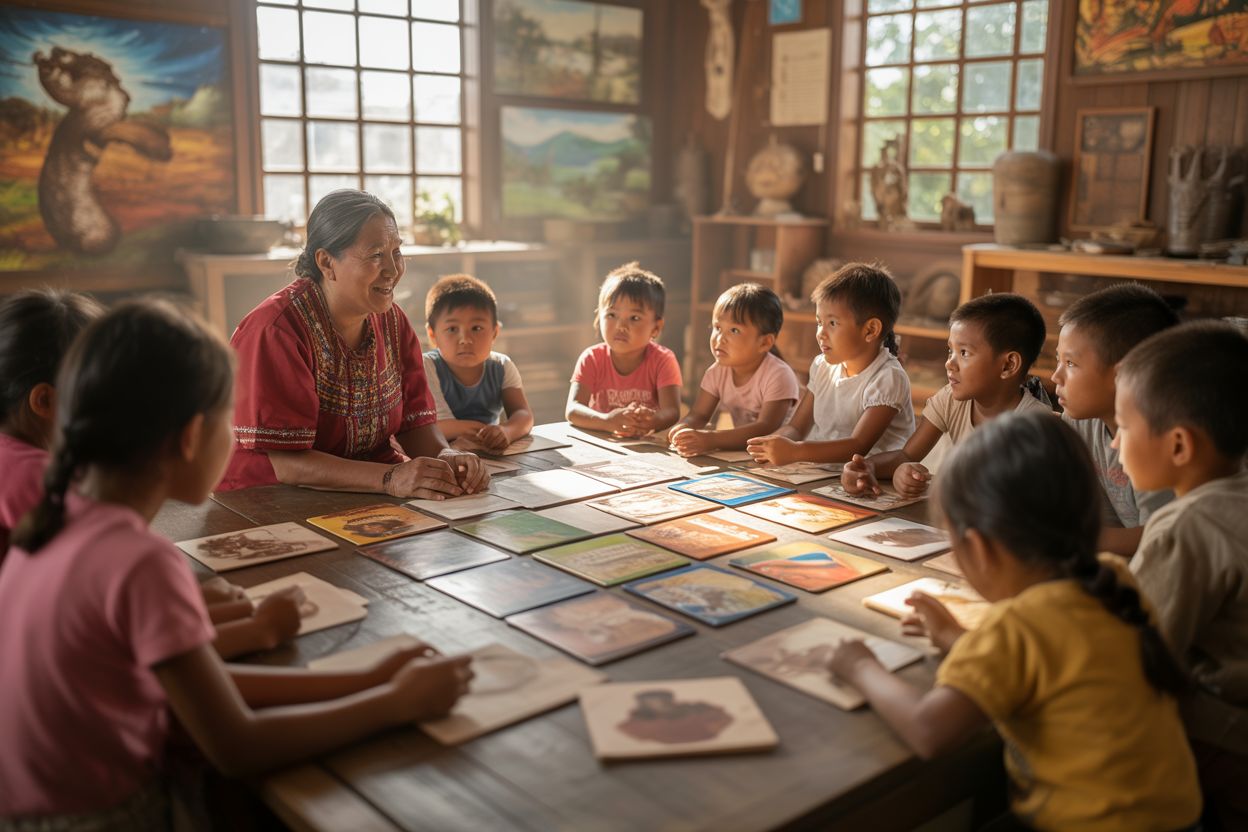
Creating effective immersion programs represents one of your most powerful tools for indigenous language preservation. When you design these programs, you’re essentially creating linguistic islands where your target language becomes the primary means of communication, thinking, and learning. Your success depends on understanding that immersion isn’t simply about translating existing educational content—it requires building an entirely new educational ecosystem centered around the indigenous language.
Your immersion program design should start with age-appropriate entry points. For preschool children aged 3-5, you’ll want to create what linguists call “total immersion nests.” These environments mirror how children naturally acquire their first language through play, storytelling, and daily routines. You’ll need to recruit fluent speakers who can serve as surrogate grandparents, creating the warm, nurturing atmosphere that characterizes traditional language transmission. These early childhood programs work best when they operate for at least six hours daily, giving children sufficient exposure to internalize the language’s rhythm and structure.
Your elementary school immersion programs require more structured approaches while maintaining the natural acquisition feel. You should aim for 80-90% indigenous language instruction in the early grades, gradually introducing the dominant language as children develop literacy skills. This means teaching mathematics, science, social studies, and arts entirely through the indigenous language. You’ll need to develop culturally relevant curriculum materials that connect academic concepts to traditional knowledge systems. For example, teaching mathematical concepts through traditional beadwork patterns or understanding seasonal changes through traditional ecological knowledge.
Middle school and high school immersion programs present unique challenges that require your careful attention. Adolescents often resist language learning due to peer pressure and identity conflicts. Your programs must address these psychological barriers by creating strong peer support networks and connecting language learning to youth identity and future opportunities. You can achieve this by establishing youth leadership councils where students use the indigenous language to plan community events, conduct interviews with elders, or create media content for younger learners.
Your adult immersion programs need different structures altogether. Working adults can rarely commit to full-time immersion, so you’ll need to create intensive weekend retreats, summer institutes, or evening programs that provide concentrated language exposure. These programs work best when they combine language learning with practical skills like traditional crafts, cooking, or land-based activities. Your adult learners often become your most motivated students because they understand the cultural stakes involved.
Physical space design plays a crucial role in your immersion program’s success. You should create environments that visually and auditorily reinforce the indigenous language and culture. This means displaying traditional artwork, using indigenous color schemes, and ensuring that all signage appears in the target language. Your classrooms should feel distinctly different from mainstream educational spaces, helping learners mentally shift into the linguistic world you’re creating.
Your immersion programs must also address the challenge of limited fluent speakers. You can’t simply hire any community member who speaks the language—effective immersion teachers need specific training in pedagogical methods, child development, and curriculum design. You’ll need to develop professional development programs that prepare fluent speakers for educational roles while respecting their status as language keepers.
Technology integration in your immersion programs requires careful balance. While digital tools can enhance learning through interactive games, virtual reality experiences, and online collaboration with other indigenous communities, you must ensure technology doesn’t overshadow human interaction and oral tradition. Your best approach involves using technology to extend and reinforce face-to-face learning rather than replacing it.
Assessment in immersion programs presents special considerations. Traditional standardized tests often fail to capture the holistic nature of indigenous language learning, which typically integrates language, culture, and traditional knowledge. You’ll need to develop alternative assessment methods that evaluate students’ ability to use the language in culturally appropriate contexts, participate in traditional activities, and contribute to community life.
Your immersion programs should establish clear pathways for continued language use beyond formal education. This means creating connections with higher education institutions, developing career paths where indigenous languages provide professional advantages, and establishing mentorship programs that connect young speakers with elder fluent speakers.
Funding your immersion programs requires creative approaches beyond traditional educational grants. You can explore partnerships with cultural organizations, tribal governments, and international indigenous rights groups. Some successful programs have developed social enterprises—such as cultural tourism or traditional craft production—that generate revenue while providing authentic contexts for language use.
Research shows that your immersion programs achieve the best results when they maintain consistent quality over extended periods. Short-term programs rarely produce fluent speakers, while programs that operate for 8-12 years can create functional bilinguals who contribute to language revitalization in their communities. Your long-term planning should include strategies for maintaining program quality as founding teachers retire and community priorities shift.
You should also consider establishing immersion program networks that connect with other indigenous communities facing similar challenges. These networks allow you to share resources, exchange teaching methods, and provide your students with opportunities to interact with other young indigenous language speakers. Such connections help combat the isolation that often affects small language communities.
Parent education forms a critical component of your immersion program success. Many parents worry that focusing on indigenous languages might disadvantage their children academically or professionally. You’ll need to provide clear evidence about the cognitive and cultural benefits of bilingualism while addressing practical concerns about college preparation and career opportunities.
Your immersion programs should incorporate regular community showcase events where students demonstrate their language skills through performances, presentations, and traditional activities. These events serve multiple purposes: they celebrate student achievement, demonstrate program value to skeptical community members, and provide authentic audiences for student language use.
Quality immersion programs also require ongoing program evaluation and adaptation. You should establish metrics for measuring language proficiency, cultural knowledge acquisition, and student engagement while remaining flexible enough to adjust your approach based on what you learn. Your evaluation should include input from elders, parents, students, and community leaders to ensure the program serves its intended purpose.
Developing a cadre of qualified indigenous language teachers represents one of your most strategic investments in long-term language preservation. Your community likely contains fluent speakers who possess deep cultural knowledge but lack formal teaching credentials. Transforming these language keepers into effective educators requires comprehensive training programs that respect their expertise while building pedagogical skills.
Your teacher training program should begin with identifying potential candidates within your community. Look beyond obvious choices like retired teachers or college graduates. Some of your most effective language teachers might be traditional storytellers, cultural practitioners, or elders who have natural teaching abilities. Your selection process should evaluate candidates’ language fluency, cultural knowledge, communication skills, and commitment to language revitalization rather than focusing solely on formal educational backgrounds.
Creating a culturally responsive teacher certification pathway requires you to work with state education departments, universities, and tribal education authorities. Many mainstream teacher certification programs emphasize Western pedagogical methods that may conflict with indigenous learning styles and cultural values. You’ll need to advocate for alternative certification routes that allow community members to demonstrate competency through culturally relevant methods.
Your training curriculum should address both language teaching methodology and cultural preservation techniques. Effective indigenous language teachers need to understand second language acquisition theory, but they also need skills in traditional knowledge transmission methods. This includes learning how to use storytelling, songs, ceremonies, and hands-on activities as teaching tools. Your curriculum should help teachers understand how indigenous pedagogical approaches can enhance rather than replace modern teaching methods.
Practical classroom management skills form another essential component of your teacher training. Many fluent speakers have never worked with groups of children or managed formal learning environments. Your program should provide hands-on experience in lesson planning, behavior management, assessment development, and parent communication. Role-playing exercises, peer observation, and mentorship with experienced educators help build these crucial skills.
Technology training deserves special attention in your teacher preparation program. While you want to maintain emphasis on oral tradition and face-to-face interaction, your teachers need basic digital literacy skills to access online resources, communicate with parents, and potentially deliver remote instruction. However, your technology training should emphasize how digital tools can support traditional teaching methods rather than replacing them.
Your teacher training program should address the emotional and psychological challenges that community member teachers often face. Teaching one’s heritage language carries enormous responsibility and emotional weight. Many speakers worry about making mistakes, not knowing certain vocabulary, or inadvertently teaching incorrect forms. Your program should provide psychological support and create safe spaces for teachers to discuss these concerns while building their confidence.
Ongoing professional development becomes crucial once your community teachers begin their careers. Unlike teachers of widely spoken languages, indigenous language teachers often work in isolation with limited peer support. You should establish regular workshops, peer mentoring programs, and opportunities for teachers to share challenges and solutions. Creating online communities or professional learning networks helps connect isolated teachers with colleagues facing similar situations.
Your certification program should include practical experience in curriculum development since commercial materials rarely exist for indigenous languages. Teachers need skills in creating age-appropriate learning activities, developing assessment tools, and adapting existing resources for their specific linguistic and cultural context. This might involve learning how to write children’s books, develop educational games, or create multimedia learning materials.
Understanding language variation and change presents another important training topic. Indigenous languages often have multiple dialects, historical forms, and ongoing evolution. Your teachers need to navigate questions about which forms to teach, how to handle dialect differences among students, and whether to teach archaic forms preserved in historical documents. These decisions require both linguistic knowledge and community input.
Your teacher training should also address the unique challenges of teaching heritage languages to students with varying exposure levels. In the same classroom, you might have complete beginners alongside students who understand but don’t speak the language, plus a few who have some conversational ability. Your teachers need strategies for differentiating instruction, creating inclusive learning environments, and helping students at different levels support each other’s learning.
Cultural protocol training forms an essential element often overlooked in mainstream teacher preparation. Your indigenous language teachers need to understand appropriate contexts for sharing certain types of knowledge, seasonal or ceremonial restrictions on specific teachings, and protocols for working with elders and traditional knowledge keepers. This cultural competency training helps teachers avoid inadvertently violating community standards.
Assessment and evaluation skills require special attention in your training program. Traditional testing methods often fail to capture the holistic nature of indigenous language learning. Your teachers need to develop alternative assessment approaches that evaluate students’ ability to participate in cultural activities, communicate with elders, and contribute to community life using the target language.
Creating pathways for career advancement helps retain your trained teachers over time. You might establish master teacher positions, curriculum development roles, or teacher trainer positions that allow experienced indigenous language teachers to advance professionally while remaining within the field. Some communities have created partnerships with universities that allow experienced teachers to pursue advanced degrees in applied linguistics or indigenous education.
Your teacher training program should include components on advocacy and community education. Indigenous language teachers often need to educate parents, school administrators, and community members about the value of their work. Training in public speaking, grant writing, and community organizing helps teachers become effective advocates for their programs and the broader language revitalization movement.
Compensation planning requires your careful attention since many indigenous language teaching positions offer lower pay than mainstream teaching jobs. Your training program should help teachers understand available funding sources, grant opportunities, and potential career paths. Some communities have created innovative compensation packages that include housing allowances, cultural stipends, or opportunities for additional income through curriculum development or consulting work.
Your teacher preparation program should establish clear standards and expectations while remaining flexible enough to accommodate different learning styles and cultural approaches. Some potential teachers might prefer hands-on apprenticeship models, while others respond better to formal coursework. Your program design should offer multiple pathways to certification while maintaining consistent quality standards.
Mentorship programs pairing new indigenous language teachers with experienced educators provide ongoing support crucial for retention and professional growth. These relationships work best when they involve regular observation, feedback, and collaborative problem-solving. Your mentorship program should include both indigenous and non-indigenous mentors to provide diverse perspectives on teaching and cultural preservation.
Documentation and sharing of your teacher training program helps other communities develop similar initiatives. Your successful training models, curriculum materials, and assessment tools become valuable resources for the broader indigenous language revitalization movement. Consider creating training manuals, video resources, or online courses that other communities can adapt for their specific needs.
Successfully integrating indigenous languages into mainstream educational systems requires strategic planning, persistent advocacy, and careful attention to implementation details. Your efforts to establish these programs will face bureaucratic challenges, funding constraints, and sometimes resistance from administrators who don’t understand the educational and cultural value of indigenous language instruction.
Your integration strategy should begin with thorough research of existing educational policies and regulations. Most states and provinces have frameworks for world language instruction that can accommodate indigenous languages, but you’ll need to understand specific requirements for teacher certification, curriculum standards, and assessment procedures. Some jurisdictions have special provisions for Native American or First Nations languages that provide additional flexibility and support.
Building coalitions with sympathetic educators, administrators, and school board members strengthens your advocacy efforts significantly. You’ll find that many educators genuinely support indigenous language programs once they understand the cognitive benefits of bilingualism and the cultural importance of language preservation. Your job involves educating these potential allies about research showing that indigenous language instruction enhances overall academic performance rather than detracting from it.
Developing age-appropriate curriculum standards for indigenous language instruction requires balancing educational requirements with cultural authenticity. Your standards should align with existing world language frameworks while incorporating indigenous pedagogical approaches and cultural content. This means creating learning objectives that address speaking, listening, reading, and writing skills alongside cultural knowledge, traditional practices, and community connection.
Your curriculum development process should involve extensive community consultation to ensure that educational content respects cultural protocols and community values. Some types of traditional knowledge may be inappropriate for classroom settings, while other cultural elements can enhance academic learning across multiple subjects. Working closely with elders and cultural keepers helps you identify appropriate content while avoiding cultural violations.
Creating effective learning materials for formal school settings presents unique challenges since commercial publishers rarely produce resources for indigenous languages. Your curriculum development team will likely need to create original materials including textbooks, workbooks, multimedia resources, and assessment tools. This requires collaboration between language speakers, educators, graphic designers, and technology specialists.
Professional development for mainstream teachers who will work alongside indigenous language instructors helps ensure program success. Non-indigenous teachers need cultural competency training that helps them understand indigenous worldviews, learning styles, and the historical context affecting indigenous students. This training should address topics like trauma-informed pedagogy, culturally responsive teaching methods, and ways to support indigenous language learning in other subject areas.
Your integration efforts should address scheduling challenges that often limit indigenous language instruction. Many schools struggle to fit additional language classes into packed daily schedules, especially when standardized testing pressures emphasize core academic subjects. You’ll need to explore creative solutions like block scheduling, integrated curriculum approaches, or after-school programs that provide adequate instructional time.
Assessment development for indigenous languages requires careful attention to cultural appropriateness and educational validity. Traditional standardized tests may not capture the holistic nature of indigenous language learning, which often integrates language skills with cultural knowledge and community participation. Your assessment approach should include multiple measures such as portfolio evaluations, performance-based assessments, and community-based projects.
Funding indigenous language programs within formal school systems requires understanding various funding streams and advocacy strategies. Title VII Indian Education funding, state world language grants, and federal bilingual education funds can support these programs. Your grant writing should emphasize the educational benefits of indigenous language instruction while demonstrating community support and long-term sustainability planning.
Creating pathways for credit and graduation requirements helps legitimize indigenous language programs within formal educational systems. Students should be able to earn world language credits for indigenous language study that count toward graduation requirements and college admission. Some programs have successfully established dual enrollment opportunities where high school students earn college credits for advanced indigenous language coursework.
Your integration strategy should address the diverse needs of indigenous and non-indigenous students within the same programs. Indigenous students may have varying levels of heritage language exposure and different motivations for learning than non-indigenous students who approach the language as a foreign language. Your program design should accommodate these different starting points and learning goals.
Technology integration can enhance indigenous language instruction while supporting teachers who may be working with limited resources. Digital tools can provide pronunciation practice, grammar exercises, and virtual connections with fluent speakers in other communities. However, your technology use should complement rather than replace oral tradition and face-to-face interaction with elders and native speakers.
Building administrative support requires demonstrating clear educational benefits and addressing practical concerns about program implementation. School administrators need to understand how indigenous language programs align with educational goals, contribute to student achievement, and enhance the school’s mission. Your presentations should include research data, success stories from other schools, and detailed implementation plans.
Your integration efforts should include plans for program evaluation and continuous improvement. Regular assessment of student progress, teacher effectiveness, and community satisfaction helps you refine program elements and demonstrate success to stakeholders. Your evaluation should include both quantitative measures like language proficiency gains and qualitative indicators such as increased cultural pride and community engagement.
Creating partnerships between schools and tribal or indigenous organizations strengthens program legitimacy and provides additional resources. These partnerships can provide cultural experts, funding support, authentic learning experiences, and community connections that enhance classroom instruction. Formal memorandums of understanding help establish clear roles and expectations for all parties involved.
Your curriculum should address the challenge of limited instructional materials by incorporating community-based learning experiences. Students can conduct oral history projects, participate in traditional activities, and engage with community elders as part of their coursework. These authentic experiences provide meaningful language practice while contributing to community cultural preservation efforts.
Professional learning communities for indigenous language teachers help address the isolation that often affects educators working in unique specializations. These communities can share resources, collaborate on curriculum development, and provide mutual support for addressing common challenges. Online platforms and regular conferences help maintain these professional connections across geographic distances.
Your program should establish clear articulation pathways that allow students to continue indigenous language study from elementary through postsecondary levels. This requires coordination between different educational institutions and may involve developing advanced placement courses, dual enrollment opportunities, or partnerships with universities that offer indigenous language programs.
Addressing parent and community concerns about indigenous language instruction requires ongoing communication and education. Some parents worry that time spent on indigenous languages might disadvantage their children academically or limit college and career opportunities. Your outreach should provide clear information about the cognitive benefits of bilingualism and the growing recognition of indigenous language skills in various professional fields.
Implementation timelines for indigenous language integration should be realistic and allow for gradual program development. Starting with pilot programs or voluntary offerings allows you to work out implementation challenges before expanding to larger student populations. Your phased approach should include regular evaluation points where you can adjust program elements based on what you learn.
Family-centered approaches to indigenous language preservation recognize that language transmission traditionally occurred within extended family networks rather than formal educational institutions. Your family-based initiatives can rebuild these natural learning environments while addressing the unique challenges faced by contemporary indigenous families where language transmission has been disrupted.
Your family learning programs should acknowledge the diverse linguistic situations within contemporary indigenous families. Some families include fluent elders alongside parents who understand but don’t speak the language and children who have minimal exposure. Other families may have heritage language speakers scattered across different geographic locations. Your program design needs flexibility to accommodate these varying family compositions and linguistic backgrounds.
Creating comfortable learning environments for multi-generational participation requires careful attention to different learning styles and comfort levels. Elders may prefer traditional oral teaching methods and feel uncomfortable with formal classroom settings, while younger family members might be more comfortable with structured activities and written materials. Your program spaces should feel welcoming to all age groups and incorporate both traditional and contemporary learning approaches.
Your family initiatives should begin with activities that feel natural and enjoyable rather than academic or intimidating. Family cooking sessions using traditional recipes provide excellent language learning opportunities as participants discuss ingredients, cooking methods, and food traditions. Traditional craft workshops, storytelling circles, and outdoor activities like plant gathering or fishing create authentic contexts for language use while strengthening family bonds.
Scheduling family programs requires understanding the complex time pressures facing contemporary families. Weekend workshops, evening sessions, and holiday programs often work better than weekday commitments. Your programming should include both short-term intensive experiences like family language camps and ongoing weekly or monthly activities that provide consistent engagement over time.
Childcare considerations play a crucial role in family program success since many activities need to accommodate infants and toddlers alongside older children and adults. Your program design should include age-appropriate activities for very young children while ensuring their presence doesn’t disrupt learning for older participants. Some successful programs designate specific family members as childcare helpers on a rotating basis.
Your family learning initiatives should address the emotional challenges that often accompany heritage language learning. Many adult family members feel embarrassed about their limited speaking ability or worry about making mistakes in front of their children or elders. Creating supportive environments where mistakes become learning opportunities helps families overcome these psychological barriers to language use.
Documentation activities provide meaningful learning experiences while contributing to language preservation efforts. Families can work together to record oral histories, create family dictionaries, or develop children’s books featuring family stories. These projects give families concrete goals for their language learning while producing materials that benefit the broader community.
Technology can enhance family learning when used appropriately to connect dispersed family members or provide additional learning resources. Video calling allows grandparents to read stories to grandchildren across distances, while smartphone apps can provide pronunciation practice or vocabulary games for family members to use together. However, your technology use should supplement rather than replace face-to-face interaction and oral tradition.
Your family programs should include training components that help family members become effective language teachers for each other. Parents and older siblings need strategies for encouraging language use without creating pressure or frustration. Simple techniques like designated language time during meals, bedtime stories in the heritage language, or family language challenges can create regular practice opportunities.
Cultural protocol education helps families understand appropriate contexts for sharing different types of traditional knowledge. Some stories, songs, or cultural teachings may have specific seasonal, ceremonial, or family restrictions that affect when and how they can be shared. Your programs should provide guidance on these cultural considerations while respecting family autonomy in making decisions about cultural transmission.
Incentive systems can motivate family participation and celebrate progress without creating competitive pressures that might discourage some participants. Family recognition events, completion certificates, or small gifts acknowledge effort and achievement while maintaining focus on the intrinsic value of language learning. Your incentive approach should emphasize collective family accomplishment rather than individual competition.
Your family initiatives should connect with broader community language revitalization efforts to avoid creating isolated learning environments. Families participating in your programs can contribute to community events, share their learning experiences with other families, or participate in larger gatherings that celebrate indigenous language and culture. These connections help sustain motivation and create networks of support among participating families.
Flexible curriculum approaches accommodate the diverse interests and needs of different families. Some families might prefer focusing on conversational skills for daily communication, while others want to explore traditional stories, songs, or ceremonial language. Your program should offer multiple pathways and allow families to choose focus areas that match their interests and cultural connection goals.
Assessment in family-based programs should emphasize growth and engagement rather than formal proficiency testing. Progress tracking might include families setting their own goals, keeping learning journals, or participating in regular reflection activities. Your evaluation approach should celebrate small victories and recognize that family language learning often involves slow, steady progress rather than dramatic advances.
Support for families who want to continue learning independently helps extend program impact beyond formal session times. Resource lending libraries, take-home activity packets, and ongoing consultation help motivated families maintain their language learning momentum. Your support should include practical guidance on overcoming common challenges like maintaining motivation or finding time for regular practice.
Intergenerational relationship building often emerges as an unexpected benefit of family language programs. Many families report that language learning activities strengthen connections between grandparents and grandchildren, create new family traditions, and provide opportunities for elders to share cultural knowledge. Your program design should recognize and encourage these relationship benefits alongside language learning goals.
Your family programs should address practical challenges like transportation, childcare costs, and work schedule conflicts that might prevent family participation. Offering programs in multiple locations, providing modest stipends or scholarships, or creating mobile programs that visit families in their homes can increase accessibility for families facing economic or logistical barriers.
Creating peer support networks among participating families helps sustain long-term engagement and provides mutual encouragement during challenging periods. Family mentorship programs, informal social gatherings, and communication platforms where families can share experiences help build these supportive relationships. Your facilitation should encourage natural relationship development while providing structure for ongoing connection.
Customization options allow families to adapt general program frameworks to their specific situations and goals. Some families might focus intensively on conversational skills, while others prefer exploring traditional knowledge domains like plant medicine, traditional foods, or cultural practices. Your program should provide enough structure to guide learning while maintaining flexibility for family-directed exploration.
Long-term sustainability planning helps families continue their language learning journey beyond formal program participation. This might involve connecting families with community elders willing to provide ongoing mentorship, helping families establish their own learning routines, or creating alumni networks where experienced families support newcomers. Your sustainability approach should recognize that family language learning often becomes a lifelong journey rather than a short-term project.

Finding money to keep indigenous languages alive is one of your biggest challenges, but cultural preservation foundations can be your lifeline. These organizations understand the urgent need to protect disappearing languages and often have dedicated funding streams specifically for indigenous language preservation projects.
Start by researching major foundations that prioritize cultural heritage work. The Ford Foundation has consistently supported indigenous language revitalization programs, offering grants that range from $50,000 to $500,000 for comprehensive language documentation and community-based learning initiatives. You’ll want to examine their past grantees to understand what types of projects they fund and how you can position your language preservation efforts to align with their priorities.
The National Science Foundation provides another crucial funding avenue through their Documenting Endangered Languages program. This initiative specifically targets languages that face extinction, offering grants between $12,000 and $300,000 over periods of one to three years. Your application needs to demonstrate scientific rigor in your documentation methods while showing clear community involvement and benefit. Remember that NSF values projects that contribute to linguistic knowledge while serving the communities who speak these languages.
Private foundations like the Volkswagen Foundation and the Endangered Languages Project by Google have also emerged as significant funders. The Volkswagen Foundation’s DoBeS program (Documentation of Endangered Languages) has supported over 280 projects worldwide, focusing on creating comprehensive records of threatened languages before they disappear. When you apply to DoBeS, emphasize your technical approach to documentation, your team’s expertise, and the long-term accessibility of the materials you’ll create.
Regional foundations often provide more accessible funding for smaller-scale projects. The Christensen Fund focuses specifically on indigenous communities and their cultural preservation needs, offering grants that typically range from $25,000 to $200,000. Their approach is particularly community-centered, so your application should highlight how local speakers are driving the preservation efforts rather than outside researchers.
Your grant applications need to tell compelling stories that connect with funders’ emotions while maintaining professional credibility. Start each proposal by painting a vivid picture of what will be lost forever if your language disappears. Describe the unique worldview embedded in your language, the traditional knowledge that can only be expressed through specific words and phrases, and the cultural practices that depend on linguistic transmission. Make the stakes real and personal.
When crafting your narrative, include specific examples of language features that exist nowhere else. Perhaps your language has a complex system for describing relationships between people and land that modern environmental science is just beginning to understand. Maybe there are traditional stories that can only be fully appreciated in the original language because translation loses essential cultural meanings. These details help funders understand why preserving your specific language matters beyond general cultural preservation.
Your budget sections need to be both realistic and strategic. Foundations want to see that you’ve thought carefully about how you’ll use their money and that you can achieve meaningful results within the proposed timeframe. Break down your costs into clear categories: personnel, equipment, travel, transcription services, technology development, and community events.
Personnel costs typically represent your largest expense category. You’ll need to compensate native speakers for their time, hire linguists or documentation specialists, and possibly employ community coordinators. When budgeting for speaker compensation, research what other language preservation projects pay to ensure you’re offering fair rates that respect the value of speakers’ knowledge and time.
Equipment costs vary dramatically depending on your documentation approach. Basic audio recording equipment might cost $2,000-$5,000, while professional video setups can require $15,000-$30,000. If you’re developing digital learning platforms, software development costs can range from $25,000 to $100,000 or more. Be specific about why you need particular equipment and how it will enhance your preservation efforts.
Travel expenses often surprise new grant applicators. If your language community is spread across multiple locations, or if expert speakers live in remote areas, transportation costs can quickly add up. Budget for multiple trips to build trust with community members and conduct thorough documentation sessions. Many foundations understand that authentic community engagement requires significant travel investment.
Your evaluation metrics need to be concrete and measurable. Rather than promising vague outcomes like “increased language awareness,” specify that you’ll create 50 hours of audio recordings, transcribe 200 traditional stories, develop learning materials for 25 core vocabulary areas, or train 15 community members as language teachers. Foundations want to know exactly what they’ll get for their investment.
Timeline development requires careful balance between ambition and realism. Most cultural preservation foundations prefer projects that show immediate progress while building toward long-term sustainability. Create milestones that demonstrate regular advancement: completing initial speaker interviews within three months, finishing basic vocabulary documentation within six months, launching community learning sessions within nine months, and so on.
Your team composition can make or break funding decisions. Foundations want to see collaboration between community members and outside experts, but they increasingly prioritize indigenous leadership. If you’re not from the language community yourself, be clear about your role as a supporter rather than director of preservation efforts. Highlight community members who will lead different project aspects and emphasize how your work serves their vision for language revitalization.
Sustainability planning is critical for securing foundation support. Funders don’t want to support projects that disappear when their grants end. Describe how you’ll maintain and expand your preservation work beyond the funding period. Will you train community members to continue documentation? Are you developing revenue-generating programs like language tourism or cultural education services? Have you identified ongoing funding sources for long-term maintenance?
Building relationships with foundation program officers can significantly improve your funding success. Attend cultural preservation conferences where foundation representatives present their funding priorities. Reach out to program officers before submitting applications to discuss your project ideas and get feedback on your approach. Many foundations offer pre-application consultations that can help you craft stronger proposals.
Consider collaborative applications that involve multiple indigenous communities or academic institutions. Foundations often prefer funding larger initiatives that can demonstrate broader impact. If several communities in your region are working on language preservation, joining forces can create a more compelling funding case while sharing expertise and resources.
Your application materials need to include strong letters of support from community leaders, academic partners, and cultural organizations. These endorsements show that your project has community backing and expert validation. Ask supporters to be specific about why your language preservation work matters and how they’ll contribute to project success.
Documentation standards vary among foundations, but most require detailed project descriptions, budget justifications, team qualifications, and community impact assessments. Some foundations also request video presentations or sample materials that demonstrate your capabilities. Start preparing these materials well before application deadlines since high-quality documentation takes significant time to develop.
Follow-up communication with foundations is essential whether your application succeeds or fails. If you receive funding, maintain regular contact with program officers, provide updates beyond required reports, and share compelling stories about project impact. If your application is rejected, ask for feedback that can improve future submissions. Many successful grant recipients faced multiple rejections before finding the right foundation match.
Your advocacy for policy changes requires strategic thinking and persistent effort across multiple government levels. Indigenous language rights protection starts with understanding current legal frameworks and identifying specific gaps where new policies could make a difference.
Begin your advocacy by researching existing language rights legislation in your jurisdiction. In the United States, the Native American Languages Act of 1990 provides some protection, but its enforcement mechanisms are weak. Canada’s Indigenous Languages Act, passed in 2019, offers a stronger framework but still requires significant implementation work. Understanding these legal foundations helps you identify where additional policy support is needed.
Your first step is building relationships with legislators who already support indigenous rights or cultural preservation issues. Research voting records on related bills, attend town halls and cultural events where representatives speak, and connect with their staff members who handle indigenous affairs or education policy. Many lawmakers genuinely want to support language preservation but lack detailed knowledge about what policies would be most effective.
When you meet with legislators, come prepared with specific policy proposals rather than general requests for support. Draft language for bills that would establish dedicated funding streams for indigenous language preservation programs. Propose tax incentives for businesses that support community language education initiatives. Suggest requirements that government agencies consult with tribal language experts when developing policies affecting indigenous communities.
Your policy proposals need to include clear implementation mechanisms and funding sources. Lawmakers often support ideas in principle but worry about practical details. If you’re proposing a state-level indigenous language education program, specify how teachers would be certified, what curriculum standards would apply, and how the program would be funded. Detailed proposals show that you’ve thought through the practical challenges of turning good ideas into effective policies.
Building coalitions amplifies your advocacy impact dramatically. Connect with other indigenous communities facing similar language preservation challenges. Partner with academic institutions that study endangered languages. Engage cultural organizations, museums, and libraries that understand the importance of preserving linguistic heritage. Environmental groups often make surprising allies since many indigenous languages contain traditional ecological knowledge that supports conservation efforts.
Your coalition should include diverse voices that can speak to different aspects of language preservation importance. Elders can share personal stories about what language loss means for cultural identity. Educators can explain how multilingual education benefits all students. Researchers can present data about the cognitive and cultural benefits of language diversity. Parents can talk about wanting their children to connect with their heritage.
Media engagement plays a crucial role in building public support for policy changes. Most people don’t realize how quickly indigenous languages are disappearing or why preservation matters beyond the affected communities. Develop compelling stories that help general audiences understand the urgency of language preservation and the role government policy can play in supporting these efforts.
Your media strategy should include both traditional outlets and social media platforms. Write op-eds for local newspapers explaining how language preservation connects to broader community values like education, cultural diversity, and historical preservation. Create social media content that shares interesting facts about your language, highlights preservation success stories, and explains how specific policies could help.
Visual storytelling can be particularly powerful for media engagement. Work with community members to create short videos that demonstrate what makes your language unique. Share photos from language learning events that show community enthusiasm for preservation efforts. Develop infographics that illustrate the scope of language endangerment and the potential for policy solutions to make a difference.
Your advocacy timing needs to align with legislative calendars and political opportunities. Research when language-related bills are most likely to get attention in your jurisdiction. Budget seasons often provide opportunities to advocate for funding increases. Cultural heritage months or indigenous peoples’ days can create media attention for language preservation issues.
Electoral cycles also create advocacy opportunities. Candidates often seek ways to demonstrate their commitment to cultural diversity and indigenous rights. Develop questionnaires about language preservation policies that you can send to all candidates. Organize candidate forums where language preservation advocates can ask direct questions about policy support.
Your advocacy approach should adapt to different audience values and priorities. When speaking with conservative lawmakers, emphasize how language preservation supports family values and traditional culture. With liberal politicians, focus on social justice aspects and the need to address historical wrongs. Business-oriented representatives might respond better to economic arguments about cultural tourism and educational innovation.
Educational policymakers need specific information about how indigenous language programs can fit within existing educational frameworks. Develop proposals for dual-language immersion programs that teach indigenous languages alongside English. Create plans for teacher preparation programs that include indigenous language pedagogy. Suggest ways to integrate indigenous languages into STEM education through traditional ecological knowledge.
Your advocacy should also target administrative agencies that implement language-related policies. Education departments control funding streams and program approval processes. Cultural affairs agencies often oversee heritage preservation grants. Health and social services departments sometimes fund community programs that could include language components.
Building grassroots support requires educating community members about policy advocacy and providing easy ways for them to participate. Create simple action items like calling representatives, signing petitions, or sharing social media posts. Organize letter-writing campaigns where community members can share personal stories about why language preservation matters to them.
Your grassroots efforts should make participation accessible to people with different comfort levels and available time. Some community members might be willing to speak at legislative hearings, while others prefer behind-the-scenes support. Provide talking points for phone calls, template letters that people can personalize, and social media content that supporters can easily share.
Policy advocacy often requires long-term commitment since significant legislative changes typically take years to achieve. Develop sustainable advocacy strategies that don’t depend entirely on volunteer enthusiasm. Consider hiring professional lobbyists for major initiatives, partnering with advocacy organizations that have ongoing legislative presence, or training community members in advocacy skills.
Your long-term strategy should include relationship building with staff members who work for sympathetic legislators. These staff members often stay in their positions longer than elected officials and develop expertise in specific policy areas. Building trust with legislative staff can provide ongoing support for language preservation issues even when political leadership changes.
International advocacy can provide additional leverage for domestic policy changes. The United Nations Declaration on the Rights of Indigenous Peoples includes language rights protections that your country may have endorsed. Research international best practices for indigenous language policy and use examples from other countries to strengthen your domestic advocacy arguments.
Your policy advocacy should also address regulatory and administrative barriers that make language preservation work unnecessarily difficult. Government grant applications often require extensive bureaucratic compliance that small community organizations struggle to manage. Advocate for simplified application processes and technical assistance programs that help indigenous communities access available funding.
Professional development for government employees can advance your policy goals indirectly. Offer to provide cultural competency training for education officials, social workers, or other government employees who interact with indigenous communities. These relationships can build understanding and support for language preservation policies even when direct legislative advocacy faces resistance.
Corporate partnerships can provide sustainable funding and resources for indigenous language preservation programs while helping companies demonstrate authentic commitment to cultural diversity. Your success in building these relationships depends on understanding corporate motivations and presenting partnership opportunities that create mutual benefit.
Start by researching companies that have already demonstrated interest in indigenous issues or cultural preservation. Technology companies like Google, Microsoft, and Apple have invested in language preservation through platforms and tools, making them natural partners for digital documentation projects. Google’s Endangered Languages Project provides a starting point for understanding how tech companies approach language preservation support.
Financial institutions often seek community investment opportunities that align with their corporate social responsibility goals. Banks like Wells Fargo and Bank of America have established indigenous community development programs that could extend to language preservation initiatives. Credit unions serving indigenous communities might be particularly interested in supporting language education programs that strengthen cultural identity.
Your partnership proposals need to clearly articulate what companies will gain from supporting your language preservation work. Brand association with authentic cultural preservation efforts can enhance corporate reputation, particularly with consumers who value diversity and social responsibility. Employee engagement often improves when companies support meaningful community initiatives that workers can feel proud about.
Consumer-facing companies benefit from partnerships that create authentic cultural content for marketing and product development. Your language might include concepts, stories, or perspectives that could inspire new products or services. Traditional ecological knowledge embedded in your language might inform sustainable business practices. Cultural tourism opportunities could emerge from language preservation efforts.
When approaching potential corporate partners, develop tiered partnership levels that accommodate different company sizes and commitment levels. Your basic partnership might involve modest financial support in exchange for recognition at community events and social media mentions. Mid-level partnerships could include employee volunteer opportunities and professional development workshops about indigenous culture.
Premium partnerships might involve comprehensive collaboration where companies provide significant funding, employee expertise, and ongoing strategic support. These relationships often work best with companies whose business models align with language preservation goals. Educational technology companies might co-develop language learning apps. Media companies could help create documentary projects about your preservation efforts.
Your partnership presentations should include specific examples of how companies can integrate language preservation support into their existing corporate programs. Many businesses already fund educational initiatives, community development projects, or cultural events. Show how supporting your language preservation work fits within these established giving priorities.
Employee engagement opportunities can make your partnership more valuable to corporate sponsors. Organize volunteer days where company employees help with language documentation projects, digitization efforts, or community events. These experiences provide meaningful team-building opportunities while advancing your preservation goals.
Professional development workshops where your community shares traditional knowledge can benefit corporate employees while generating partnership value. Environmental companies might learn from traditional ecological practices embedded in your language. Healthcare organizations could gain insights from traditional wellness concepts. These knowledge-sharing arrangements create reciprocal relationships rather than one-way funding dependencies.
Your partnership agreements need to include clear expectations about recognition, intellectual property, and community benefit. Specify how corporate partners can acknowledge their support while respecting cultural protocols about how your language and traditions are presented publicly. Establish guidelines about what materials companies can use in their own marketing and communications.
Intellectual property protection becomes crucial when sharing traditional knowledge with corporate partners. Work with legal experts who understand indigenous cultural property rights to develop agreements that protect your community’s interests while allowing beneficial collaboration. Some companies may want to learn from traditional practices without appropriating cultural knowledge inappropriately.
Corporate giving cycles and budget processes affect when companies can commit to new partnerships. Research potential partners’ fiscal years and budget approval timelines. Many companies finalize charitable giving budgets in the fall for the following year, so timing your outreach accordingly improves your chances of securing support.
Board presentation opportunities can help you reach corporate decision-makers directly. Many companies invite nonprofit partners to present at board meetings or executive retreats. These presentations allow you to share compelling stories about language preservation while building personal connections with influential corporate leaders.
Your corporate outreach should emphasize measurable outcomes that companies can report in their social responsibility communications. Specify how many hours of audio documentation you’ll create, how many community members will participate in language classes, or how many learning resources you’ll develop. Companies need concrete metrics to demonstrate the impact of their community investments.
Technology partnerships can provide valuable resources beyond financial support. Software companies might donate licenses for language learning platforms or documentation tools. Hardware companies could provide recording equipment, computers, or mobile devices for community programs. Cloud storage providers might offer free hosting for digital language archives.
Your technology partnerships should include training and ongoing support to ensure your community can effectively use donated resources. Many well-intentioned technology donations fail because recipients lack the knowledge or support needed to implement new tools successfully. Negotiate comprehensive partnerships that include setup, training, and maintenance support.
Corporate volunteer programs can provide professional expertise that would be expensive to purchase independently. Marketing professionals might help develop promotional materials for your language programs. Graphic designers could create educational resources or community event materials. Web developers might build websites or mobile apps for language learning.
Professional services partnerships often work well with companies whose expertise directly supports language preservation needs. Legal firms might provide pro bono assistance with intellectual property protection, grant applications, or partnership agreements. Accounting firms could help with financial management and reporting requirements for funded programs.
Your partnership cultivation requires ongoing relationship management beyond initial agreements. Provide regular updates about program progress, share compelling stories about individual participants, and invite corporate partners to community events where they can see their investment impact firsthand. These relationships often expand over time as companies develop deeper understanding of language preservation importance.
Corporate partnership sustainability depends on demonstrating clear returns on investment, whether through public relations value, employee engagement, or business development opportunities. Track and report metrics that matter to your corporate partners, such as media coverage, social media engagement, employee participation rates, or community feedback.
Industry-specific partnership opportunities can provide specialized support for different aspects of language preservation work. Media companies might help produce documentaries or podcasts featuring your language. Publishing companies could support the development of children’s books or educational materials. Tourism companies might develop cultural experiences that include language components.
Your corporate partnership strategy should diversify across multiple companies to reduce dependence on any single relationship. Economic conditions, leadership changes, or shifting corporate priorities can affect individual partnerships. Building relationships with several companies provides more stable support and creates opportunities for collaborative projects involving multiple partners.
Regional business communities often provide more accessible partnership opportunities than national corporations. Local banks, restaurants, retail stores, and service providers frequently seek community investment opportunities that enhance their local reputation. These smaller partnerships might provide less funding individually but can be easier to establish and maintain.
Professional development for your own team improves corporate partnership success. Learn about corporate social responsibility trends, grant writing for business audiences, and relationship management best practices. Many business schools and nonprofit organizations offer training programs that can improve your corporate engagement skills.
Your partnership evaluation should include regular assessment of relationship health and mutual benefit. Survey corporate partners about their satisfaction with the partnership, suggestions for improvement, and interest in expanding collaboration. This feedback helps you strengthen existing relationships while developing better partnership models for future prospects.
Corporate merger and acquisition activity can affect your partnerships positively or negatively. When partner companies are acquired, new ownership might have different charitable giving priorities. Stay informed about corporate changes affecting your partners and be prepared to rebuild relationships with new decision-makers when necessary.
International corporate partnerships can provide resources and expertise not available locally. Multinational companies often have indigenous language preservation initiatives in multiple countries and might be interested in sharing best practices or funding collaborative projects. European companies, in particular, sometimes have strong commitments to cultural diversity that extend to supporting indigenous communities globally.
Your corporate partnership development requires patience and persistence since building trust and understanding takes time. Many companies receive numerous partnership requests and need to see demonstrated impact before making significant commitments. Start with smaller partnership opportunities that allow companies to test the relationship before proposing larger collaborations.
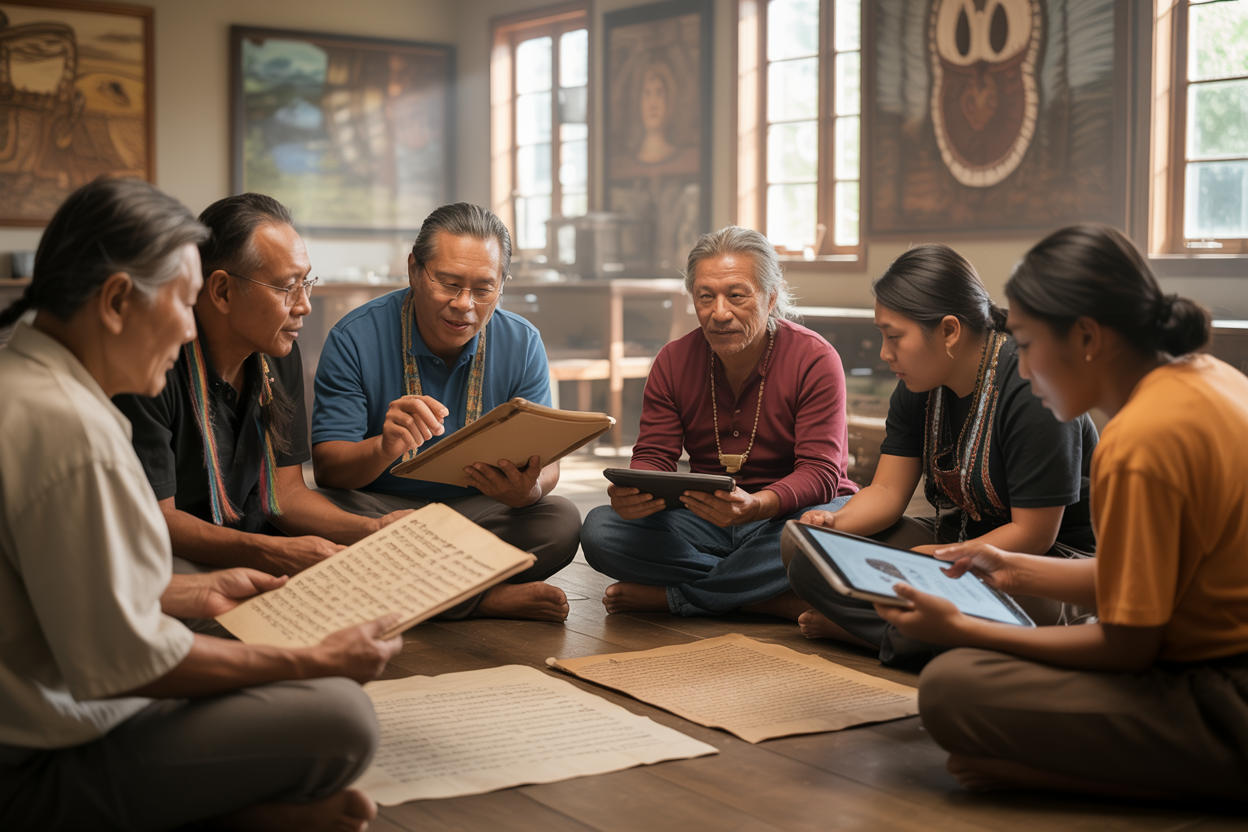
The world’s indigenous languages are disappearing at an alarming rate, but you can play a crucial role in stopping this cultural tragedy. Strong documentation systems, community engagement, and smart use of technology create the foundation for successful language preservation. When you combine these efforts with educational programs that reach both children and adults, you’re building bridges between generations and keeping languages alive in daily conversation.
Your commitment to supporting these preservation efforts matters more than you might think. Start by learning about the indigenous languages in your area, supporting local revitalization programs, or advocating for government funding that makes these projects possible. Every voice counts when it comes to preserving the rich tapestry of human language and culture for future generations.

Share your link, earn rewards—sign up for our affiliate program!
Drive sales, collect commissions—join our affiliate team!
https://shorturl.fm/xDhHu
https://shorturl.fm/McuWw
https://shorturl.fm/mX5hG
https://shorturl.fm/tjOzW